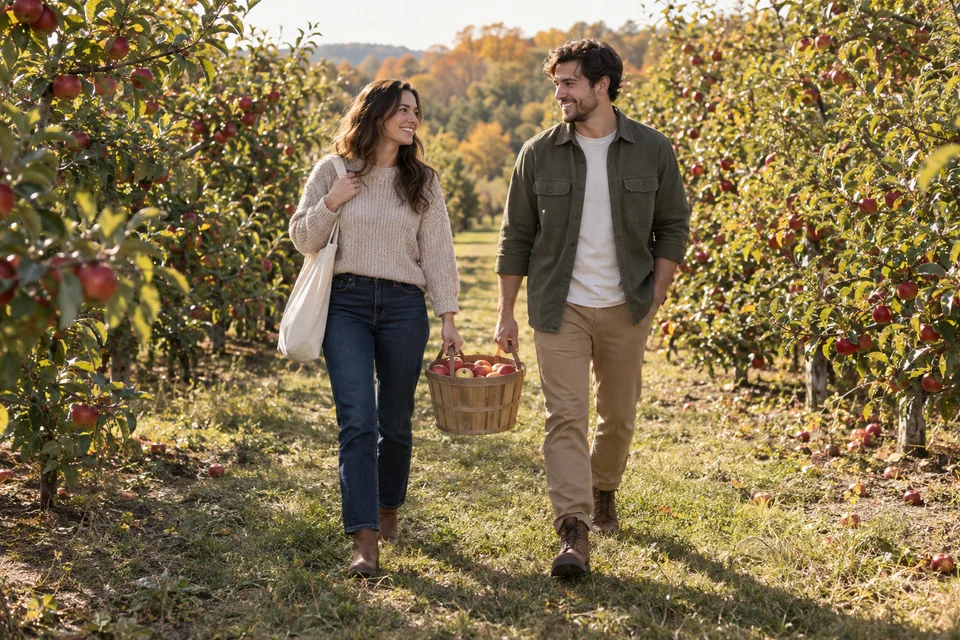
Apple picking sounds like a simple daytime plan, but the right outfit does several jobs at once. You may walk over grass or uneven paths, reach overhead, carry a basket, sit at a picnic table and take more photos than expected. The most useful apple orchard outfit is therefore not the most elaborate one. It is a comfortable base with a layer you can remove, shoes that suit the ground and one or two details that make the whole look feel intentional.
Think of the orchard as a relaxed outdoor occasion rather than a themed costume. Denim, cotton, knitwear, canvas and leather all make sense because they are familiar, durable and easy to move in. Autumnal colors can look beautiful among red apples and green trees, but they are optional; black, navy and soft neutrals work just as well when the proportions are right. Use the suggestions below as a planning framework, then adjust them for your weather, the orchard's rules and your own comfort.
Start with the ground and the forecast
Choose footwear before deciding on the rest of the outfit. Orchard paths can be dry and dusty, dewy, uneven or muddy after rain. Closed-toe ankle boots, trail-inspired sneakers or leather sneakers with a textured sole are practical choices. They also give jeans, a casual dress or relaxed trousers a little visual weight. Avoid a new pair that has not been broken in, thin flat soles and anything you will resent getting marked. If the day may be wet, water-resistant boots and socks that stay in place are a calmer choice than hoping the grass remains dry.
Then make your base layer match the temperature you expect while moving around. A fitted tee, ribbed tank, long-sleeve cotton top or fine knit lets you reach and bend without feeling restricted. Bring one layer you can tie around your waist or place in a tote: an overshirt, denim jacket, cardigan or lightweight utility jacket. Thick coats are useful on genuinely cold days, but a stack of bulky layers can make carrying fruit awkward. The goal is to be able to add warmth at the beginning or end of the visit while still feeling comfortable in the middle.
Build an easy jeans-and-knit formula
A soft knit, straight-leg jeans and boots are dependable because each piece works for the setting. Try an oatmeal crew-neck sweater with dark indigo jeans and brown ankle boots, or an olive knit with ecru denim and clean sneakers. The contrast between the top and bottom keeps the outfit clear in photos, while the simple shapes leave room for movement. If you prefer a roomier sweater, choose jeans with a visible waist or a partial front tuck so the silhouette does not become one large block of fabric.
A sweatshirt can work just as well when it has a relaxed but deliberate fit. Pair a washed charcoal sweatshirt with black straight jeans and a tan cross-body bag, or wear a cream sweatshirt with olive trousers and sturdy sneakers. Add a long-sleeve tee beneath it if the morning is cool. Small choices make this kind of outfit feel considered: clean hems, socks that do not bunch and a jacket in a different texture. You do not need to buy a special apple-picking look when a reliable everyday formula already fits the plan.
Try trousers, a shirt and an overshirt
For an alternative to jeans, begin with chinos, canvas trousers or relaxed corduroys. A pair in khaki, olive, tobacco or navy pairs naturally with a white tee, striped long-sleeve top or thin merino knit. Add an overshirt in denim, forest green, brown or a muted check. This formula is especially useful on a day that starts cool and warms up because the top layer is easy to remove without leaving you underdressed.
Keep the overshirt slightly looser than the base, but not so long that it catches when you reach for a branch. Rolling the sleeves once can make it easier to use your hands and look intentional. If you choose a pattern, keep the remaining items quiet: a checked overshirt with a plain tee and dark trousers has enough texture already. A field jacket or chore jacket can play the same role for someone who wants more pockets. The point is function first, then a balanced mix of soft and structured pieces.
Wear a dress or skirt without sacrificing practicality
A dress is a good orchard option when the forecast is mild and the paths are dry. Look for a knit midi, shirt dress, denim dress or simple long-sleeve cotton dress with enough room through the body and hips. Add ankle boots, sneakers or a flat boot with a reliable sole. If the hem is very light or short, layer bike shorts beneath it so bending, sitting and walking are easy. A cropped jacket keeps the waist visible over a fuller skirt, while a longer utility jacket gives a straighter dress more shape.
For a skirt formula, combine a ribbed top with a denim midi or a sturdy cotton A-line skirt, then add boots and an overshirt. This works best when the skirt is not so narrow that it limits your stride. Avoid keeping a delicate slip skirt for a day when you expect to kneel, sit on hay bales or carry a full bag; save it for a calmer plan. Comfort does not make an outfit less photogenic. It lets you stay present instead of constantly adjusting the clothes.
Use color, texture and accessories with restraint
Red apples, green leaves and golden grass already provide a strong background, so a limited palette is usually more effective than many statement colors. Cream, camel, olive, rust, burgundy, deep blue and brown harmonize naturally, while black or charcoal can add useful definition. Try a cream sweater, dark denim and brown boots; an olive overshirt, white tee and khaki trousers; or a burgundy knit with black jeans. Pick two or three main colors and repeat one in a small detail, such as a belt, bag or beanie.
Choose accessories that solve a real problem. A compact cross-body bag leaves both hands free, and a canvas tote is useful if the orchard allows you to carry one. A cap can help on a bright day, while sunglasses are sensible until you are under the trees. Keep jewelry simple enough that it will not snag when you reach upward. Skip a fragile bag, a large hat that blows away or shoes that force you to watch every step. The outfit should support the day, not turn it into a styling project.
Plan for photos without dressing for the camera alone
Orchard photos tend to look better when clothes have visible shape and a little texture. A chunky knit, denim jacket, corduroy trouser or leather boot reads more clearly than a head-to-toe outfit in one thin fabric. Separate your top and bottom with color so your outline is easy to see against the trees. If you are going with friends or family, coordinate loosely rather than matching: one person in cream and denim, another in olive and brown, and a third in rust or navy will look connected without looking uniform.
Before you leave, take a quick full-length photo in the outfit with the outer layer on and off. It is an easy way to check whether the hems, sleeves and bag placement work together. You can also use the Look Lens AI Outfit Analyzer to review the balance of colors, layers and proportions in a photo of the exact pieces you plan to wear. Treat the feedback as a second set of eyes, then keep the choice that feels most like you. Weather, comfort and personal style matter more than copying a single image.
Make the outfit work after the orchard
The best formula can carry you into the rest of the day. Jeans, boots and a knit are easy for a cafe, farm shop or casual dinner afterward; change only the outer layer or add a cleaner bag if you want a neater finish. A shirt dress with boots can move from apple picking to lunch with a cardigan over the shoulders. Choose pieces you would be happy to wear again rather than treating the day as a one-time theme.
When you have a few candidate combinations, save photos and compare them with the rest of your closet in the Look Lens virtual wardrobe. Seeing the shoes, layers and bag together can reveal that you already own a stronger version of the outfit. The final check is simple: can you walk, reach, carry and sit without fuss? If yes, you have done the important styling work. For more outfit help when you are on the go, get Look Lens on Google Play and keep your ideas in one place.
Frequently asked questions
What shoes should I wear to an apple orchard?
Choose closed-toe shoes with a grippy sole, such as ankle boots, trail-style sneakers or clean leather sneakers. Check the forecast and skip shoes you would not want to get dusty or muddy.
Can I wear a dress apple picking?
Yes, if it is a relaxed length and you pair it with shorts or bike shorts underneath when useful. A knit dress or easy midi with boots works best when the weather is mild and the orchard paths are dry.
What colors look good for apple-picking photos?
Cream, oatmeal, olive, rust, denim blue, burgundy and deep brown sit naturally against green leaves and red fruit. Use one or two of those colors rather than matching every item.
How should I dress for an apple orchard when the weather changes?
Use a breathable base layer and bring one removable outer layer, such as an overshirt, denim jacket, cardigan or lightweight utility jacket. That makes it easier to adjust without carrying a bulky coat all day.