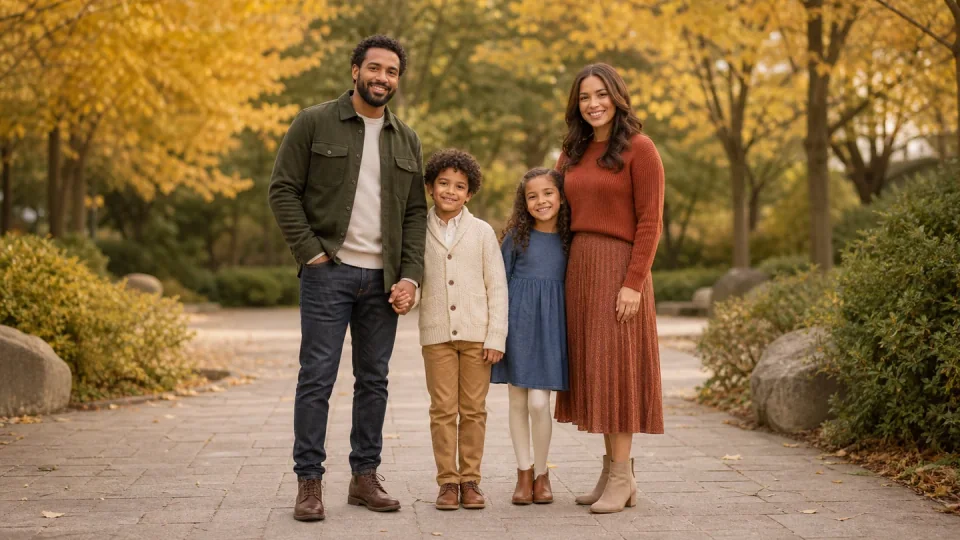
Fall family photos are easier to dress for when the goal is coordination, not a matching set. A group looks considered when the colors relate, the layers suit the weather, and each person still looks like themselves. That leaves room for the cardigan a child loves, the jeans that fit well, and the dress that does not need constant adjusting.
Start with the location and the temperature, then build outward from a small palette. For an autumn park, warm neutrals such as cream, camel, chocolate, denim, olive, and soft charcoal sit comfortably beside the changing leaves. Add one or two muted colors—rust, forest green, dusty blue, burgundy, or plum—and spread them across the group. The result has enough contrast to read in a photograph without competing with the setting.
Choose a color palette before choosing individual outfits
Pick three to five colors, including two neutrals. This is more useful than picking one “family color.” A simple palette might be cream, camel, olive, muted rust, and denim. Another could be charcoal, soft blue, burgundy, stone, and brown. Put the lightest shade near one or two faces, then use the darker shades to give the group some visual weight.
Think in different amounts rather than equal shares. One person can wear the olive jacket, another can carry it in a scarf, and a child can have a small olive detail. The rust can appear in a knit, a skirt, or a hair ribbon. Repeating colors this way makes the group feel connected while keeping everyone from disappearing into one block of the same tone.
If the backdrop is full of saturated orange leaves, use softer versions of autumn color. Cream, navy, faded denim, moss, and cocoa give the scene breathing room. If the location is mostly stone, grass, or evergreen trees, a muted rust or burgundy can bring welcome warmth. Hold fabrics next to one another in daylight when possible; colors that seem close indoors can shift outdoors.
Build each look from a comfortable anchor piece
Begin with the item each person is happiest to wear for an hour or two. It may be well-fitting dark jeans, trousers with room to sit, a midi dress, a favorite knit, or a simple skirt with shorts underneath. The anchor does the practical work. Everything else—an overshirt, cardigan, boots, belt, or scarf—can support it.
For adults, an overshirt or lightweight jacket over a plain knit creates an easy vertical line and is simple to remove between shots. A sweater with dark denim or tailored trousers is another dependable formula. A dress can work beautifully with ankle boots and a layer that does not hide the waist completely, such as a cropped cardigan or a structured jacket.
For children, prioritize movement. Soft trousers, a knit cardigan, a cotton dress with tights, or a collared shirt under a sweater all photograph well when they can climb, walk, and be carried comfortably. Avoid building a look around shoes that are new or stiff. The most polished outfit in the world loses its ease when someone wants to take it off five minutes into the session.
Mix textures and layers so the group has depth
Autumn clothing offers texture without much effort: denim, corduroy, wool-blend knits, brushed cotton, suede, leather, and quilted layers all bring a little dimension. Use two or three of these across the group rather than putting the same fabric on everyone. A cable-knit cardigan next to denim and a smooth dress gives a photograph more depth than four identical crewneck sweaters.
Layers are practical as well as visual. Begin with a base outfit that still feels complete, then add a jacket, cardigan, vest, scarf, or overshirt as the air cools. This gives you an easy way to make a few frames look different without a full costume change. Keep bulky outerwear for the walk to the location if it overwhelms the outfit underneath.
Patterns are welcome in small doses. One subtle plaid shirt, a narrow stripe, a tiny floral, or a textured knit is usually enough. Let the rest of the group wear quieter pieces that borrow a color from that pattern. Large logos, bold slogans, and highly reflective details draw the eye away from faces, so they are worth setting aside for this particular occasion.
Use simple outfit formulas when you are short on time
For a warm-neutral group, try: an olive overshirt with dark jeans; a rust knit with a midi skirt or straight-leg trousers; a cream cardigan with camel chinos; and a muted blue dress with brown boots. The pieces do not have to be new, and the exact shades do not need to match. Their shared warmth is doing the work.
For a cooler palette, start with dark denim, soft gray, cream, and dusty blue. Add a burgundy scarf, a brown belt, or warm leather boots so the group does not feel icy. For a more formal setting, keep the palette but choose cleaner silhouettes: a blazer, tailored trousers, a long-sleeve dress, polished boots, and simple jewelry.
Lay every outfit on the bed or floor together before leaving. Step back and check three things: does every person have at least one color that relates to someone else, is there a mix of light and dark, and can everyone move comfortably? If the answer is yes, stop editing. The point is a family picture, not a perfectly styled display.
Finish with practical photo-day details
Bring a spare layer for small children, a lint roller, and a neutral blanket if the session may include seated photographs. Keep pockets light; bulky phones and keys can change the line of a jacket or trouser. If someone wears glasses, clean the lenses and test whether a hat or brim creates a heavy shadow before the photographer starts.
Most importantly, leave room for personality. A favorite pair of boots, an heirloom necklace, a child’s preferred hair clip, or a jacket that feels unmistakably like its owner can make the finished image feel more like your family. Coordination gives the photo a clear visual rhythm; individuality is what makes it worth keeping.
Frequently asked questions
Do family photo outfits need to match?
No. Choose a small palette and repeat its colors in different amounts. Related shades, fabrics, and layers look more natural than identical tops and trousers.
What colors work well for fall family photos?
Warm neutrals such as cream, camel, brown, olive, and dark denim are flexible foundations. Add one or two muted accents, such as rust, burgundy, dusty blue, or plum.
Should everyone wear patterns in family pictures?
Usually not. One quiet pattern or textured piece is enough. Let the other outfits borrow colors from it, so the group looks coordinated rather than busy.
What should children wear for outdoor family photos?
Use clothes they can sit, walk, and play in comfortably. Soft trousers, tights, layered knits, and familiar shoes are practical choices for outdoor autumn sessions.