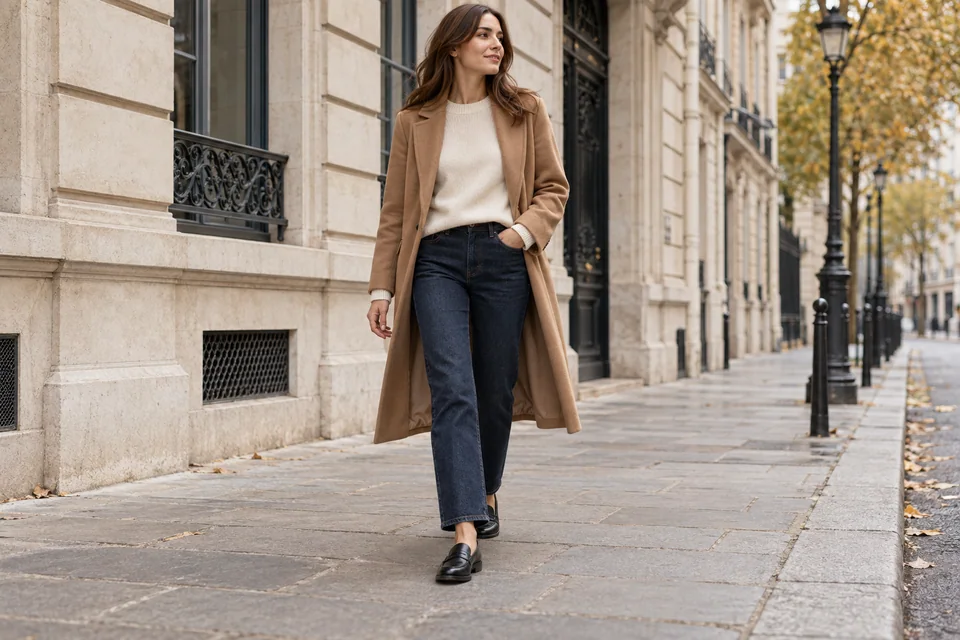
Start with the coat’s shape
A camel coat can be a long tailored wool coat, a belt-tie wrap coat, a shorter car coat or a relaxed oversized layer. The color is the common thread, but the shape decides what works beneath it. Notice where your coat ends, how much room it has in the shoulders and whether it closes comfortably over a knit. A long straight coat gives trousers and jeans a clean vertical line; a belt-tie style brings more waist definition; a roomy coat can take a thicker layer but needs a simpler base.
Fit matters more than a label on the hanger. Raise your arms, sit down and carry the bag you use most often. The shoulders should not pull, the sleeves should leave space for a thin knit, and the hem should not make stairs difficult. If the coat only feels good with a T-shirt, save it for mild weather instead of forcing a bulky sweater underneath. A comfortable coat looks composed because you are not arranging its lapels or sleeves all day.
Choose a calm color base
Camel has warmth, so it sits naturally with cream, ecru, dark indigo, navy, charcoal, black, olive and burgundy. You do not need to match its exact brown note. A cream knit and dark jeans make the coat feel light; a pale blue shirt and charcoal trousers add cool contrast; black gives a sharper evening line. Repeating one warm accessory, such as a brown belt or burgundy bag, can connect the look without turning it into a strict color scheme.
Use contrast with restraint. A camel coat already has visual presence, especially against grey streets or dark trousers. If you add a bright scarf, graphic sweater, patterned skirt and colorful trainer at once, the outfit loses a clear focal point. Start with two or three quiet colors and add one texture: denim, smooth leather, ribbed knit or wool trouser. Check a mirror photo from the front and side. The coat should frame your outfit rather than hide every piece under it.
Build a jeans outfit for walking
For errands, coffee or a day in the city, try a camel wool coat over a cream knit, dark straight jeans and black loafers. The dark denim anchors the coat, while the cream knit makes a small connection between the warm coat and your face. Choose shoes for the pavement, not the photo: loafers with grip, ankle boots or clean low-profile sneakers are all useful depending on rain and distance. A crossbody bag keeps the coat line clear and your hands free.
A softer alternative is a camel coat with ecru jeans, a navy striped knit and brown ankle boots. The navy gives contrast without competing with the coat, and the boots handle a damp day better than thin flats. Keep the jean hem clean instead of letting it bunch over the shoe. If your coat is oversized, use a straight or slightly cropped jean; if it is more fitted, a relaxed straight jean can give comfortable balance. Both versions work because one piece remains easy while the coat supplies structure.
Wear camel with tailored trousers
A camel coat is an easy outer layer for a relaxed office because it can warm up navy, charcoal or black trousers without looking heavy. Pair charcoal tailored trousers with a pale blue shirt, brown loafers and a navy cardigan, then let the camel coat sit open on the commute. The trousers provide the polished line, so do not add every formal signal at once. A clean knit, shirt or simple belt is usually enough unless your workplace calls for a suit.
Pay attention to length when trousers are wide. A long coat over a long wide trouser can look elegant when the coat has enough structure and the shoe is visible as you walk. If both layers are very soft and full, the silhouette may feel like one block. Show a little shirt cuff, define the waist with a belt or choose a straighter trouser. This is about movement, not tightness. Sit, walk and lift your bag before deciding the formula is ready for a full workday.
Use skirts and dresses for contrast
A black column midi skirt, fine black knit and ankle boots create a useful dark base for a camel coat at dinner, an event or a casual office day. The coat becomes the warm frame while the skirt keeps a vertical line beneath it. Check that the coat hem and skirt hem do not finish at exactly the same point; a little difference in length usually makes both pieces easier to read. If the skirt is full, keep the knit closer to the body or show a waistband.
A knit dress can work in the same way. Choose grey, black, deep navy or cream and use boots that suit the weather. A belted camel coat can echo the waist, but there is no need to cinch both the dress and coat tightly. With a shorter dress, opaque tights and boots are practical for cool weather; with a midi, make sure the fabric does not catch on the coat lining. The right combination lets you take your normal stride and sit comfortably through the plan.
Layer for temperature, not drama
A wool coat is an outer layer, not a complete weather strategy. On a mild day, a cotton tee or fine merino under the coat may be enough. In colder conditions, add a thin thermal base, a knit and warm socks before reaching for a second bulky sweater. The goal is adjustable warmth: you should be able to remove the coat indoors without feeling unprepared. A scarf is useful for wind, but choose a solid one when your knit or bag already adds detail.
Consider rain and your route. Wool can handle a brief damp walk, but a long wet commute, heavy wind or a bike ride may call for a different outer layer. Let the coat dry on a wide hanger away from direct heat if it gets wet. The practical question is always whether the coat helps you complete the day comfortably. Looking seasonal is less useful than having sleeves, shoes and a bag that work for the weather you will actually meet.
Make the coat work with your wardrobe
Before buying a new scarf or sweater, gather the camel coat with two jeans or trousers, one skirt, two shoes and the knits you already wear. Photograph a few combinations in daylight. The Look Lens outfit analyzer can help you compare whether a different hem, shoe or open-versus-belted coat gives a clearer proportion with your actual clothes. Use it as a second view, then select the outfit that lets you move freely and fits your destination.
In the Look Lens virtual wardrobe, place your camel coat beside real trousers, dresses, bags and shoes. You may see that the most useful missing link is a dark straight jean or a warm scarf you already own, not another beige top. The coat earns its place when it covers several plans: a walk, a commute, lunch or an evening out. It does not need a completely separate capsule built around it.
Avoid common camel-coat missteps
One common mistake is treating camel as a rule to wear only with every other brown. Head-to-toe beige can be beautiful, but it can also flatten the outfit if the fabrics and values are too similar. Add a darker anchor such as indigo denim, charcoal trousers or black boots, then let cream or a warm accessory soften the transition. Another mistake is piling on every cold-weather layer: large scarf, thick knit, long coat and oversized bag can crowd the shoulders and make the coat hard to wear.
Care also protects the outfit. Brush off surface dirt, empty the pockets before hanging the coat and use a broad hanger to support the shoulders. Check the care label before steaming or cleaning. A small lint roller and a few minutes to smooth the lapels can make a much bigger difference than a new accessory. When the coat is maintained and the base has a clear line, camel looks intentional without feeling precious.
Let the camel coat be the useful layer
Use a camel coat to connect familiar clothes: dark jeans and knitwear for errands, tailored trousers for a relaxed office, or a dark skirt and boots for an evening plan. Begin with the forecast and the distance you will walk, then decide on the shoe, scarf and amount of warmth. Change one element at a time to learn which colors and proportions your own coat supports.
For a quick comparison before you leave, try Look Lens on Google Play and look at two versions of your final outfit side by side. The best camel-coat outfit is not the most complicated one: it keeps you warm, lets you move and gives your existing wardrobe a calm, practical outer layer.
Frequently asked questions
What colors go with a camel coat?
Cream, ecru, dark indigo, navy, charcoal, black, olive and burgundy are reliable partners. Use one darker anchor and one or two quiet supporting colors.
Can I wear a camel coat with black?
Yes. A black knit, trousers or midi skirt gives a camel coat crisp contrast. Add brown or black shoes according to the rest of the outfit and the weather.
What shoes go with a camel coat?
Black or brown ankle boots, loafers and clean low-profile sneakers can all work. Choose for the walking distance, surface and weather before choosing the most polished option.
Should a camel coat be oversized?
It can be relaxed if the shoulders, sleeves and closure are comfortable over your usual knit. Balance a roomy coat with a clear hem, straight bottom or visible waist line.