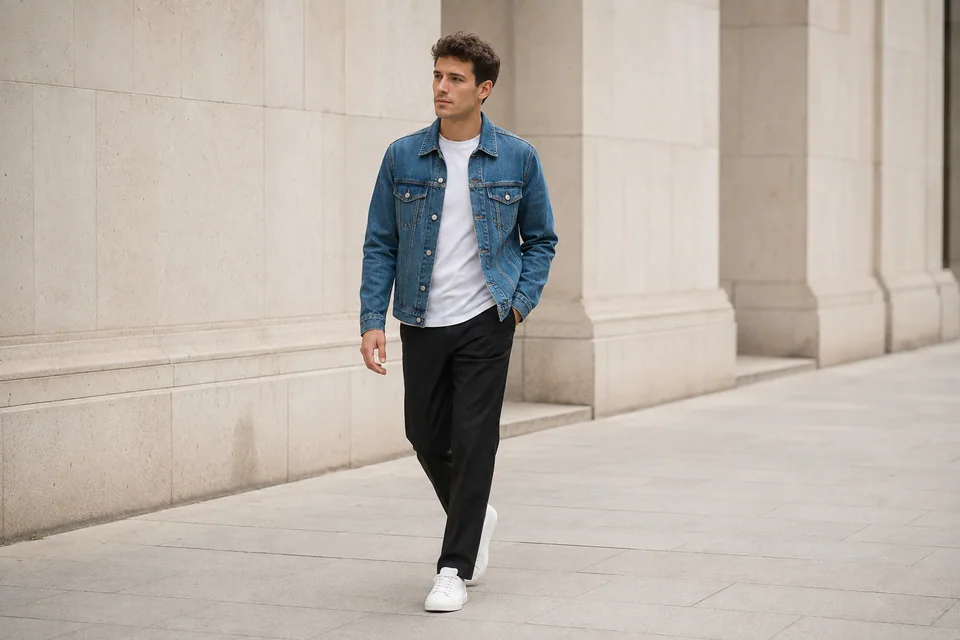
A denim jacket is one of the easiest layers to reach for, but it can still look accidental when every piece in the outfit has the same weight, wash or level of casualness. The useful way to style one is to treat it as a light outer layer rather than the whole idea. Decide where you are going, choose the base outfit first, and use the jacket to add texture and shape.
A classic mid-wash blue jacket is the most flexible starting point. It has enough contrast to sit over white, black, cream, red, olive and soft prints, while still feeling relaxed. The formulas below work with a cropped, regular or slightly roomy jacket. Adjust the balance instead of copying every item exactly: a shorter jacket likes a higher waist, while a longer or boxier one usually needs a cleaner line underneath.
Start with fit and proportion
Before adding accessories, look at where the jacket ends. A cropped style that stops near the natural waist works especially well with high-rise wide-leg trousers, a midi skirt or a dress because it gives the waist a clear place. A regular trucker-style jacket that ends at the hip is an easy companion to straight jeans, tailored trousers and relaxed dresses. If your jacket is oversized, keep one other part of the outfit more defined: a close-fitting tee, a tucked shirt, a slim knit or a trouser waist that is visible.
The shoulder seam matters more than a precise size label. It should let you move your arms without bunching across the back. Try it over the kind of top you actually wear. If you want to layer a sweatshirt or a lightweight knit, leave a little room in the body and sleeves. If the jacket will mostly sit over T-shirts and dresses, a cleaner fit usually looks sharper. Roll the cuffs once only when it makes the sleeve length intentional; otherwise leave them down.
Use contrast to keep the outfit clear
The simplest denim-jacket outfits rely on contrast. Pair blue denim with black trousers and a white tee, with ecru jeans and a navy knit, or with an all-black base. The jacket then reads as a separate layer instead of becoming another blue item competing for attention. Contrast can come from colour, fabric or shape. A smooth slip skirt under structured denim, for example, has a different energy from a denim mini skirt and denim jacket together.
When you do wear double denim, use two washes that are easy to tell apart. A medium-blue jacket with dark indigo straight-leg jeans is a reliable combination. Add a white, grey or black top so there is a visual break between the two denim pieces. Keep shoes simple: white leather sneakers, black loafers or brown ankle boots work better than another statement item. Matching washes can work, but they tend to look more like a set and need a deliberate silhouette to feel convincing.
Build a relaxed everyday outfit
For errands, travel days or an unplanned coffee, use a white or striped T-shirt, black straight trousers and clean sneakers as the base. Put a mid-wash denim jacket over it and add a small cross-body bag. This formula works because every item is uncomplicated, while the dark trousers give the jacket a boundary. If black feels too stark, swap in olive cargo-style trousers with a neat leg, or ecru straight jeans with a darker shoe.
Another easy route is a fine-gauge knit, straight blue or black jeans and the jacket worn open. Choose a knit that is not so bulky that it crowds the sleeves. A burgundy, forest green or soft grey knit gives more depth than a second blue layer. For a warmer day, replace the knit with a ribbed tank and add a belt. The belt need not match the bag exactly; it just gives the outfit a small point of structure.
Make it work for smart-casual plans
A denim jacket can take the place of a cardigan or casual blazer when the setting is relaxed but you still want to look put together. Start with tailored trousers in black, charcoal, navy or stone. Add a plain fitted T-shirt, a fine crew-neck knit or a crisp shirt, then top it with a clean, non-distressed jacket. Loafers, sleek ankle boots or a minimal leather sneaker bring the outfit closer to smart-casual without making it formal.
For a dinner reservation, try a black midi skirt, fitted black top and a blue denim jacket carried on the shoulders or worn open. The jacket softens the skirt and keeps the look from feeling overdressed. A small bag and a simple metal earring are enough; adding a logo-heavy belt, bright shoes and a statement necklace at once can make the outfit feel busy. The jacket is already the casual note, so let the remaining pieces do the quiet work.
Layer a denim jacket over dresses and skirts
A denim jacket is useful with dresses because it changes how much wear you get from them. Over a floral midi dress, it adds a practical daytime layer. Choose a regular or cropped jacket so the dress still has movement below it, then add flat sandals, sneakers or ankle boots depending on the weather. If the dress has volume at the waist, a shorter jacket is often the cleaner option because it does not cut across the widest point of the skirt.
For a slip dress, use the structure of the jacket as contrast. A white or black tank, a satin midi skirt and denim jacket can also achieve the same effect without relying on a full dress. Keep the hem lengths intentional: a jacket that ends at the waist looks balanced with a midi, while an oversized jacket works best when the skirt is straight or the shoes have some visual weight. In cooler weather, add opaque tights and boots rather than trying to squeeze a thick cardigan under the denim.
Use colour and accessories with restraint
Blue denim is close to a neutral, so you do not need to restrict yourself to monochrome. One repeated colour makes an outfit feel connected: a red ballet flat with a small red bag, an olive trouser with a matching cap, or a brown belt echoed in brown boots. Keep the top simpler when the lower half has colour or print. If you are unsure, make the jacket and trousers the strongest contrast, then use the top as the bridge.
Accessories should match the plan, not compete with the layer. White sneakers and a canvas tote make the jacket feel casual. A loafer, compact shoulder bag and watch make it neater. Sunglasses, a cap or a scarf can be useful, but choose one focal accessory at a time. The goal is not to make denim look formal; it is to make a familiar jacket look chosen.
Finish with an outfit check
Before leaving, check the outfit from the side and with the jacket open. Can you see a waist, a long vertical line or another clear shape? Is there one item that is much more casual than the rest? A faded jacket, gym leggings and a dress shoe usually pull in different directions, while a denim jacket, polished leggings, a longer tee and clean sneakers can feel intentional because the levels are closer.
Keep a few dependable bases in mind: white tee plus black trousers, fine knit plus straight jeans, midi dress plus flat shoe, or tailored trousers plus loafers. Your denim jacket can move across all of them. That is its real strength. Once the fit is comfortable and the outfit has contrast, you do not need a complicated formula to make it work.
Frequently asked questions
What colour trousers go with a blue denim jacket?
Black, cream, olive, charcoal and ecru trousers are all easy partners. Pick one that clearly contrasts with the jacket, then repeat a neutral in the shoes or top.
Can you wear denim on denim?
Yes. Make the washes visibly different, such as a mid-wash jacket with dark indigo jeans or pale ecru denim. A simple top between them keeps the outfit easy to read.
Should a denim jacket be fitted or oversized?
Choose a fitted or regular cut when you want a crisp line over dresses or high-rise trousers. A roomier cut works well with straight trousers and light knitwear, provided the sleeves and shoulders still sit comfortably.
What shoes work best with a denim jacket?
Clean sneakers make the most casual version. Loafers, ankle boots or a pared-back flat instantly make the same jacket feel more polished.