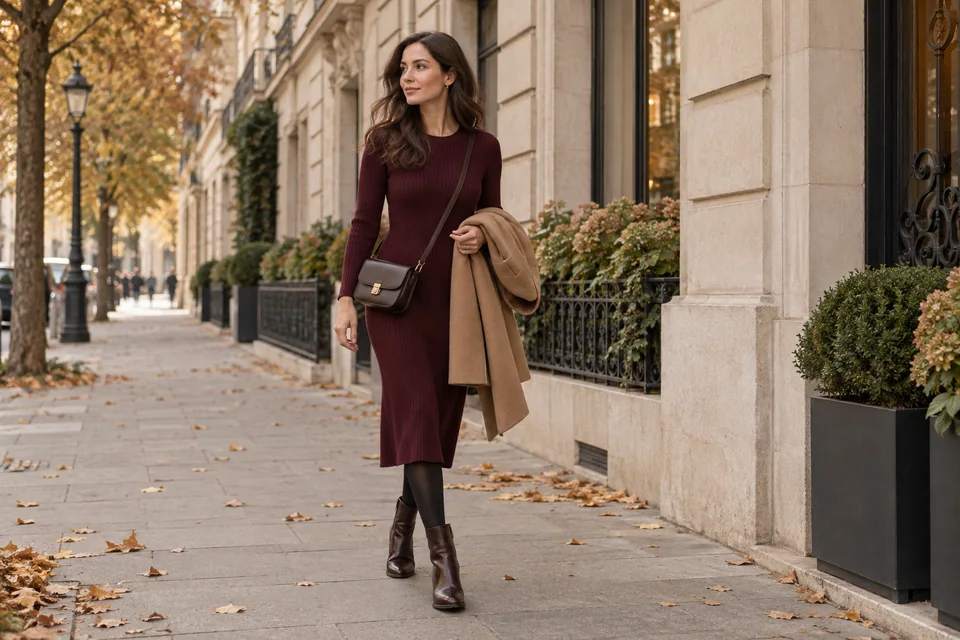
A knit dress can make getting dressed feel wonderfully simple: one piece creates an immediate column of colour, and the rest of the outfit can answer practical questions. Will you be walking? Is the room warm? Do you need a layer that comes off? The shortcut only works when the dress has enough ease, the shoes suit the route and the outer layer does not hide every useful proportion.
Rather than treating every sweater dress as a special occasion item, build a small set of formulas around the shape you already own. A ribbed midi can work with ankle boots and a cropped jacket. A fine, smooth knit can take a blazer for a relaxed office. A heavier dress can make a long coat and knee boots feel intentional instead of merely warm. Start with the day, then choose the formula that gives the dress a job.
Begin with the knit weight, length and ease
Look at the dress before adding anything. A fine-gauge knit usually skims more closely and layers easily under a blazer, trench or long coat. A chunky cable or brushed knit carries more visual volume; it often needs simpler boots, a cleaner bag and fewer competing textures. Neither is inherently smarter or more flattering. The useful choice is the one that lets you sit, take a full stride and keep your arms comfortable under the layer you plan to wear.
Length affects the shoe decision. A midi that ends around the narrow part of the calf often looks calm with an ankle boot whose shaft disappears under the hem. A knee-length dress can work with loafers or tall boots, depending on the temperature and setting. Try the dress while walking and sitting before committing to it for a long day. If it clings when you move, a slip, opaque tights or a slightly roomier underlayer can be more useful than constantly pulling at the hem.
Give the dress a clear outline
Because a knit dress is one continuous piece, it benefits from one deliberate shape choice. You might define the waist with a narrow belt, choose a cropped jacket that ends near the waist, or let a longer coat create one uninterrupted vertical line. You do not need all three. A belt is helpful only when it creates a proportion you like and does not bunch the knit; a dress with ribbing, a seam or a naturally shaped waist may need nothing added.
For a ribbed burgundy midi, try a camel cropped coat and dark-brown ankle boots. The shorter outer layer keeps the waist visible and the boots ground the softer fabric. For a charcoal fine-knit dress, a navy blazer gives the shoulder a little structure without changing the whole outfit. If you prefer a long wool coat over an olive knit, leave the coat open indoors so the dress keeps its line. The goal is a readable silhouette, not a tightly controlled one.
Build colour with purpose, not extra pieces
Knit dresses are easy to over-style because the blank canvas invites every accessory. A focused palette is usually stronger. With a burgundy dress, camel, chocolate, charcoal, cream and muted olive are dependable partners. With charcoal, black, navy, deep green and a small burgundy bag create depth without looking busy. With oatmeal or cream, add contrast through dark boots, a navy coat or a brown belt rather than piling on several pale textures.
Choose one texture to lead. A ribbed dress already gives you texture, so smooth leather boots, a simple wool coat and a compact bag are enough. If the dress is smooth and fine, a suede boot or a subtly textured coat can add interest. A chunky scarf, bulky cardigan, quilted bag, heavy boot and cable knit can all work separately, but together they may make the outfit feel heavy. Remove one thing and see whether the dress has room to do its job.
Make a knit dress practical for weekends
For errands, a coffee meeting or a museum visit, use the outfit that makes the weather easiest: burgundy ribbed midi, opaque black tights, dark-brown ankle boots and a camel cropped coat. Low boots are reliable on pavement, and tights prevent the awkward, chilly gap that can appear between a midi hem and boot shaft. If rain is expected, favour a boot with a grippy sole over a delicate heel, and bring a coat that can close rather than relying on a decorative layer.
For a casual daytime variation, wear a soft grey or navy knit dress with clean leather sneakers and a short utility jacket. This works best when the dress has a straighter shape and a hem that does not compete with the sneaker. Add a cross-body bag when you will be carrying a drink, shopping or taking public transport. A large tote can be useful, but it can also pull a soft knit off the shoulder; practical straps matter more than a fashionable silhouette.
When deciding between your real boots, sneakers and coats, put the complete options together in the Look Lens virtual wardrobe. Seeing the dress with the actual shoe, bag and outer layer can reveal whether the outfit needs a shorter jacket, darker tights or less texture. It is a better test than judging a dress on a hanger.
Adapt the same dress for work and dinner
A knit dress can suit a relaxed office when the fabric is opaque, the fit gives you room to move and the styling follows the workplace dress code. Try a charcoal fine-knit midi with a narrow black belt, navy blazer and black loafers. The blazer creates a clear shoulder, the belt is optional definition and loafers are practical for a commute. If your workplace expects a formal suit or strict business clothing, choose tailored separates instead of expecting a soft knit to carry a more formal requirement.
For dinner, deepen the colour story rather than adding an uncomfortable heel. An olive knit dress, dark knee boots and a charcoal wool coat create a quiet column; a small burgundy bag gives it a warm accent. A fitted mock-neck layer can work under a sleeveless knit dress, while a short cardigan is useful over one with sleeves. Test the full outfit while seated. A stiff belt, high boot shaft or jacket that bunches at the waist will matter far more over a long meal than it does in a mirror.
Choose footwear, tights and layers for real life
Ankle boots are the easy answer for many knit dresses because their weight balances soft fabric. Aim for a shaft that sits neatly beneath a midi hem or creates a deliberate, warm transition with tights. Knee boots work well under a fuller midi or with a dress that ends above the knee. Loafers fit a polished indoor plan, and leather sneakers make sense when the dress shape, walking and weather support them. Do not make a high heel the default if you will stand, commute or walk on uneven ground.
Opaque tights are a practical layer, not a styling failure. Black, charcoal and dark brown can extend the visual line into boots; a close colour is usually more versatile than a bold contrast. For outerwear, use a cropped coat or jacket to keep a waist visible, or a long straight coat to make a column over a midi. Very long, bulky layers over a thick knit can create more volume than you want. If that is the look you enjoy, commit to it; otherwise choose one bulky element and keep the other pieces smoother.
Avoid common knit-dress mistakes
The most common problem is trying to solve proportion with too many accessories. A belt, long necklace, scarf, oversized cardigan, patterned tights and tall boots can make a simple dress feel crowded. Start with the dress, one outer layer and one shoe choice, then add only what improves comfort or function. Another problem is ignoring static and cling. A slip, anti-static layer or tights can make a thin knit feel far more wearable, particularly when you will be indoors and outdoors during the same day.
Take a full-length photo from a few steps away if the hem, boot and jacket balance feels uncertain. Look Lens outfit analysis can give you a second perspective on the colour and proportion of your own finished outfit. It cannot decide whether your boots are comfortable in rain or whether an office allows a knit dress, so use the setting and your body as the final check.
Use the dress as a useful base, not a styling puzzle
The most repeatable knit-dress outfits are built around a simple idea: choose a dress you can move in, define its outline once, then match the shoes and layer to the day. Burgundy ribbing, ankle boots and a camel coat can carry a weekend. Charcoal fine knit, blazer and loafers can make a relaxed office easier. Olive, knee boots and a long coat can handle dinner with warmth and ease. A few reliable combinations are more useful than a closet full of complicated ones.
Want to keep those dependable formulas close to the pieces you own? Get Look Lens on Google Play and save outfit ideas you can genuinely repeat.
Frequently asked questions
What shoes should I wear with a knit dress?
Ankle boots, knee boots, loafers and restrained leather sneakers can all work. Match the shoe to the dress hem, expected walking, temperature and ground rather than choosing only for appearance.
Should I wear a belt with a knit dress?
Use a narrow belt when it creates a proportion you like without bunching the knit. Dresses with ribbing, seams or natural shaping often look better without an added belt.
Can I wear a knit dress to the office?
A fine, opaque knit dress can suit a relaxed or smart-casual office with a blazer and loafers. Follow your actual workplace dress code when formal tailoring is expected.
Do tights work with sweater dresses?
Yes. Opaque tights add warmth and make a cleaner transition into boots. Black, charcoal and dark brown are especially versatile with autumn and winter knit dresses.