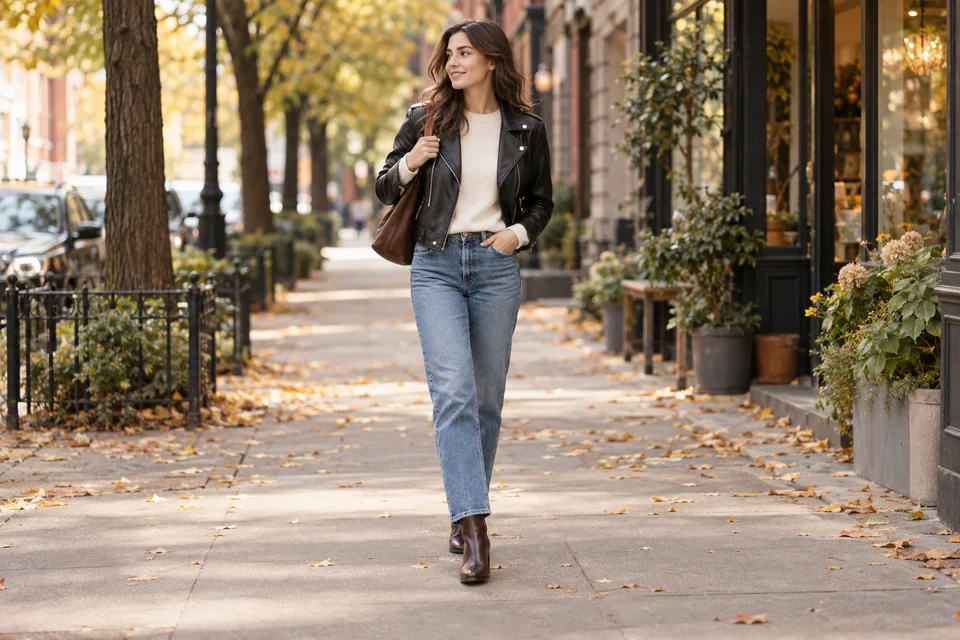
A leather jacket can make an ordinary outfit feel finished quickly, but it can also be the piece that makes getting dressed feel oddly complicated. Its short length, dark surface and metal hardware already carry visual weight. The easiest way to wear it is not to add more attitude around it; it is to build a calm base that gives the jacket one clear job: provide structure and a little contrast.
Start with the jacket you actually own. A close-fitting biker, a relaxed moto, a minimal collarless style and an oversized vintage shape do not ask for the same proportions. Notice where the hem lands, how much room there is in the sleeves, and whether the leather is matte, polished, smooth or textured. Then choose an inner layer, lower half and shoe that answer those details. The goal is a repeatable outfit you can walk, sit and travel in—not a look that only works in the mirror.
Read the jacket before choosing the rest
Most leather jackets end at the waist or high hip. That short line works naturally with high-rise straight jeans, tailored trousers that show the waist, and midi skirts with a defined waistband. If the jacket is cropped, a very low-rise, very loose bottom can make the middle of the outfit feel disconnected. Try a higher rise, a light front tuck, or a closer base layer first. A longer relaxed jacket gives you more room for a wider trouser, but it still benefits from one visible line: a neat neckline, a waistband or a slimmer shoe.
Sleeve volume matters too. A fitted leather jacket needs an inner layer that does not bunch at the armhole: a fine knit, ribbed tee, thin sweatshirt or crisp shirt is usually more comfortable than a bulky hoodie. A roomier style can take a light cardigan or a compact sweatshirt, but test it with both arms bent and the zip partly closed. Comfort changes how an outfit looks. Pulling at the shoulders or a sleeve caught on a knit will make even well-chosen pieces feel less intentional.
Use a full-length photo as a practical check when proportions are hard to judge. Look Lens outfit analysis can help you compare the same jacket with a straight jean, wide trouser or different shoe before you leave. It is a second view for small decisions, not a reason to ignore the combination that feels most like you.
Keep colour and texture deliberate
Black leather is flexible because it gives a dark outline to many familiar colours. Cream, ecru, pale blue, charcoal, medium or dark denim, soft grey, burgundy and warm brown all make easy partners. Begin with two or three main colours. A black jacket, cream sweater, blue jeans and brown boot already has enough contrast; it does not need a loud print, bright bag and heavy jewellery at the same time. If it feels flat, change one support piece instead: swap the sweater for a striped tee, the boot for a loafer, or the bag for a deeper brown.
Texture is just as useful as colour. Smooth or shiny leather looks grounded beside brushed knitwear, cotton jersey, denim, wool trousers and a matte skirt. If your jacket has prominent zips and a glossy finish, let the other surfaces be quieter. A softer suede-like skirt, ribbed knit dress or washed denim can make the outfit feel less severe. You do not need to match every surface; you only need to avoid making every piece compete for the same attention.
Build easy outfits with jeans and trousers
For everyday, use the first quick look: black leather jacket, cream fine knit, straight blue jeans and brown ankle boots. It works because each piece has a different role. The knit brightens the face, the jean offers relaxed structure, and the boot adds enough weight to balance the jacket without turning the outfit into a costume. For a warmer day, replace the knit with a white T-shirt and switch to clean leather sneakers. For rain or a long walk, choose a boot you have worn for several hours rather than a pair that only looks good standing still.
Tailored trousers take a leather jacket toward smart casual. Try a minimal black jacket over a pale blue shirt with charcoal trousers and loafers. Keep the shirt open at the collar or add a thin knit under it so the outfit does not become too formal for the jacket. This formula is useful for a creative workplace, a relaxed dinner or a daytime meeting where a blazer feels too stiff. In a setting that clearly expects a suit, choose the dress code rather than hoping leather will read as tailoring.
Wide trousers can work as well, especially with a cropped or compact jacket. Keep the top relatively close to the body or tuck it lightly so the waist remains visible. If both the jacket and trousers are oversized, simplify everything else: a fitted tee, a smaller bag and a low-profile shoe are enough. When you are deciding among clothes already in your closet, place the jacket and its possible partners in the Look Lens virtual wardrobe. Seeing the same piece beside two trouser shapes can reveal which option you will actually repeat.
Use skirts and dresses for useful contrast
A leather jacket over a skirt or dress works because it mixes a compact, structured layer with a longer moving line. For dinner, wear a fitted dark top, fluid midi skirt, leather jacket and low heeled ankle boot. A black skirt keeps the look streamlined; a deep wine, olive or soft grey skirt adds colour without fighting the jacket. If the skirt is very full, a shorter jacket and simpler top help the waist stay visible. If the jacket is oversized, choose a skirt that does not add another large block of volume.
A knit midi dress is an easy daytime partner. Add the jacket and flat boot or loafer when the temperature drops, then remove the jacket indoors without losing the outfit. A slip-style dress can work too, but a matte leather jacket and practical boot make it feel less precious for public transport or a walk to dinner. The formula is not about making a dress tougher; it is about giving a dress another context in which to be worn.
Let shoes and bags match the plan
Footwear changes a leather-jacket outfit quickly. Brown or black ankle boots are dependable with jeans, trousers and a midi skirt. Loafers create a tidier daytime finish, while clean low-profile sneakers make the same jacket useful for errands, travel and long walking. Tall boots can work with a skirt, but choose the pair that lets you move naturally. A pointed shoe can make the outfit sharper; a rounder toe usually feels more relaxed. Neither is automatically better than the other—match the shoe to the setting and the amount of walking you expect.
Choose a bag that does not fight the jacket's hardware. A compact shoulder bag, crossbody or small structured tote is usually enough. If you carry a laptop, a larger work bag may be necessary, but check that its strap sits comfortably over the shoulder seam. Repeated rubbing can be annoying on any outer layer. Keep accessories edited: a watch, small earrings, scarf or one ring may be all the outfit needs.
Avoid the combinations that overwork the jacket
The common mistake is treating every leather jacket as a statement piece that needs equally loud partners. Heavy studs, a slogan tee, distressed jeans, thick platform boots and a large logo bag can all be intentional separately, but together they may drown out the person wearing them. Begin with one stronger note and let the rest stay simple. Another mistake is relying on black from head to toe without varying texture or fit. It can look excellent, but add a ribbed knit, matte trouser, soft scarf or different shoe shape so the outfit has depth.
Also plan for weather and movement. Leather can be a useful wind-blocking layer on a mild day, yet a short jacket will not replace a longer coat if you will stand outside for an evening. Bring a scarf or choose another outer layer when necessary. Ask a practical question before you go: can you carry your bag, sit down, reach up and take the jacket off without the outfit collapsing? A dependable answer is more valuable than a complicated one.
Make the leather jacket a useful repeat piece
A leather jacket earns its place when it helps familiar clothes do more: a cream knit and straight jean for the weekend, a pale blue shirt and charcoal trousers for a relaxed workday, or a dark top and fluid midi skirt for dinner. Start with the jacket's length and weight, keep the palette focused, and choose shoes for the ground beneath you. Once two or three combinations work, rotate the knit, trouser or bag instead of rebuilding everything.
Want to keep those dependable formulas close at hand? Get Look Lens on Google Play and save the pieces you reach for most. The aim is not a completely different outfit every day; it is an easier answer when you want to wear the jacket again.
Frequently asked questions
What goes well with a black leather jacket?
Cream knitwear, white T-shirts, blue denim, charcoal trousers, soft grey, deep burgundy and warm brown shoes are reliable starting points. Keep the rest of the outfit simple if the jacket has prominent hardware.
Can I wear a leather jacket with jeans?
Yes. Straight or slim-straight jeans with a fine knit or T-shirt are an easy everyday combination. Choose ankle boots, loafers or clean sneakers according to the weather and how much walking you will do.
Can a leather jacket work for the office?
It can suit a casual or creative workplace when paired with a neat shirt, tailored trousers and polished shoes. Where a blazer, suit or formal dress code is expected, it is usually too relaxed.
Should a leather jacket fit tightly?
It should allow comfortable arm movement and a light layer underneath without pulling across the shoulders or zip. A close fit can work, but avoid buying one so tight that you cannot sit or layer comfortably.