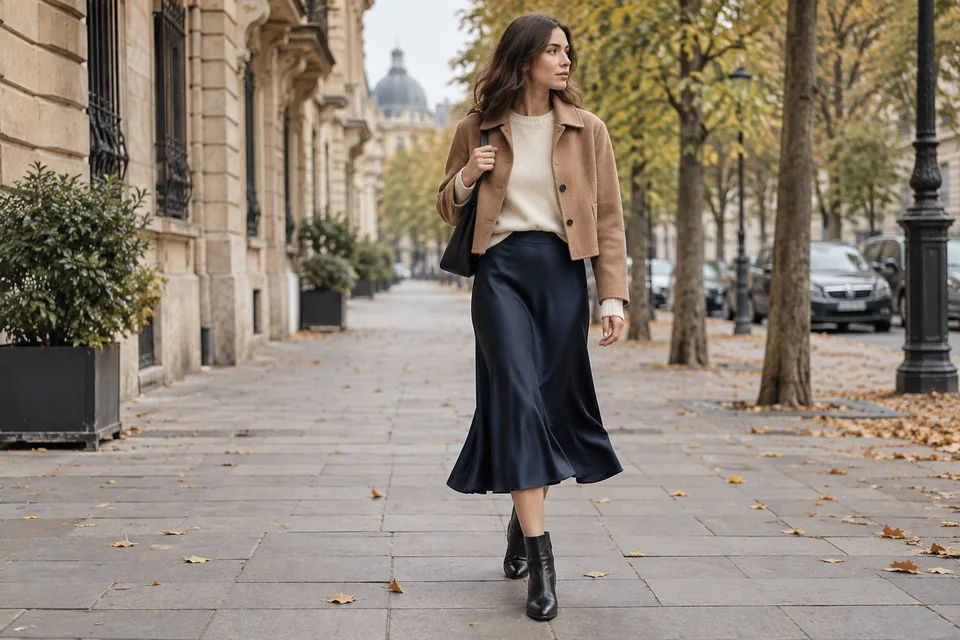
A midi skirt can feel like the awkward middle ground of a wardrobe: longer than an easy mini, less automatic than jeans, and sensitive to whatever happens at the waist and ankle. It is actually one of the most flexible shapes you can own. The key is not finding a universal perfect top. It is deciding what the outfit needs to do, then giving the skirt a clear partner in proportion, texture and shoe weight.
Start by looking at the skirt itself. A straight denim midi, a full cotton poplin shape, a rib-knit column and a bias-cut satin skirt all move differently. Treating them as the same garment is why a formula that looks good online can feel wrong at home. Use the ideas below as building blocks, then adjust for your weather, movement and comfort.
Begin with the skirt's shape and movement
Before choosing a top, check where the skirt sits on your waist, where its hem lands and how much volume it has. A fitted column or slip skirt usually benefits from a little contrast above it: a soft knit, a boxy tee tucked at the front, or a short jacket. A fuller A-line or pleated skirt already has movement, so a closer-fitting tank, fine knit or tucked shirt helps the outfit keep a visible centre.
Hem length matters most at the ankle. If the skirt ends at the narrowest part of your lower leg, many shoes will work. If it ends at the widest part of your calf, a shoe with a little openness at the instep, a pointed toe or a shaft that disappears under the hem can make the line feel less interrupted. This is not a rule you have to obey; it is a practical place to troubleshoot when an outfit feels heavy.
Try the skirt at home with two tops in different volumes. Photograph the combination from a normal standing distance, rather than only looking close-up in a mirror. If the balance is hard to judge, the Look Lens AI outfit analyzer can help you review the overall proportion and color relationship in a photo. Keep the option that lets you move and sit comfortably, even if it is less dramatic.
Give the waist a light point of definition
A midi skirt does not require a sharply cinched waist, but it often looks more intentional when the eye can tell where top ends and skirt begins. A full tuck works with thin tees, shirts and fine knits. A half tuck or a small front tuck is useful when you prefer an easier silhouette. With a heavier sweatshirt or oversized knit, choose a shorter length, fold the hem under, or add a cropped layer so fabric does not gather over the fullest part of the skirt.
For a practical workday formula, pair a black or navy straight midi with a pale blue button-down tucked cleanly at the front, a narrow belt if you enjoy one, and loafers or low boots. If a tucked shirt feels too formal, swap it for a close-fitting crewneck knit. The point is not to make the waist tiny; it is to prevent two loose pieces from reading as one unbroken block.
There are exceptions worth using. A long, relaxed cardigan over a slim midi can look easy when a fitted tee creates a base underneath. A loose overshirt can work over a column skirt if you leave it open and let the inner layer define the centre. When the outfit feels shapeless, change only one variable first: tuck the top, shorten the layer, or switch to a shoe with a clearer shape.
Match the shoe to the skirt's weight and your day
Shoes decide whether a midi skirt reads casual, polished or impractical. Clean sneakers are a strong choice with jersey, denim and cotton midi skirts because their relaxed weight matches the fabric. A white tee, dark denim midi, socks that do not bunch and leather sneakers are enough for a museum, coffee or a day with plenty of walking. If the skirt is very dressy satin, a simple sneaker can still work, but repeat its casual mood with a sweatshirt, denim jacket or knit rather than adding a highly formal top.
Boots are especially useful in cooler weather. Ankle boots with a defined toe look good under fluid midis when the shaft is close enough to the leg that it does not fight the hem. Knee-high boots can disappear under a longer skirt and add warmth without showing much. With a chunky sole, balance the visual weight with a knit, leather belt, denim or a structured jacket; very delicate tops can make the shoe feel disconnected.
For an office or dinner, loafers, ballet flats, slingbacks and low mules are all viable if you can walk in them. A pointed or almond toe often lengthens the line, while a round flat creates a softer effect. Choose based on the ground, commute and how long you will stand. A beautiful heel that changes your stride is rarely the finishing detail that makes an outfit work.
Use three dependable outfit formulas
For a casual weekend, start with a black jersey or denim midi, a white or striped tee, clean sneakers and a denim jacket. Add a canvas tote or small crossbody bag, not several decorative accessories. This formula is comfortable enough for errands but has more movement than jeans. On colder days, trade the tee for a slim long-sleeve top and add socks that intentionally meet the shoe.
For a relaxed office, try a bias-cut dark midi, a fine merino knit in cream or soft grey, a cropped blazer or neat cardigan, and ankle boots or loafers. Keep the colors to two or three families so the outfit looks calm rather than overly coordinated. If your workplace is conservative, choose an opaque fabric and test the skirt in seated light before leaving; some satin fabrics become more revealing than expected.
For dinner, let one material do the work. A chocolate, burgundy or deep green satin midi with a fitted black top and low mules needs only a small earring or a compact bag. If you need warmth, use a cropped leather jacket or tailored coat rather than a long layer that hides the waist. The same formula becomes less dressy with a ribbed knit and flat boots, which is useful when the plan includes walking between places.
Layer without hiding the useful part of the outfit
Midi skirts are easy in changeable weather if the layer ends at a deliberate place. Cropped jackets, waist-length cardigans and tucked-in knits make the waist visible and work with most silhouettes. A longer coat is fine outdoors because it is removed inside. A long cardigan over a full skirt can be comfortable, but it usually needs a slim inner top or a bit of contrast in texture to avoid looking swallowed by fabric.
Think about temperature before you commit to bare ankles. In cool weather, boots or opaque tights may be more useful than a lighter shoe. With a satin skirt, a fine knit and boots make a balanced autumn combination; with a cotton midi, socks and sneakers feel more casual. Rain changes the calculation too: a hem that drags on wet pavement is frustrating, so choose a slightly shorter skirt, boots, or a different outfit when the forecast asks for it.
Lay out the entire look, including coat and bag, before you leave. In your Look Lens virtual wardrobe, saving a successful skirt formula alongside the shoes and layers you actually own can make the next cool morning much faster. It also shows whether you are repeatedly reaching for the same missing layer before you buy anything new.
Use color and texture to make simple combinations feel finished
The easiest color approach is a calm base plus one contrast. Navy skirt, cream knit and black boots is quiet but not flat because each item has a different lightness. Olive skirt, white tee and brown boots creates a similarly grounded combination. If you wear a printed midi, borrow one subtle color from the print for the top or shoe, then keep the rest simple. Matching every color exactly can look more costume-like than connected.
Texture can do the same job. Pair a shiny slip skirt with a matte knit, worn leather or brushed wool. Pair a ribbed knit skirt with a crisp cotton shirt or smooth bomber. If the skirt and top are both fluid, add structure through a belt, jacket or shoe. If both are thick and substantial, expose a little wrist, neckline or ankle so the outfit has some breathing room.
When a look seems almost right, do not start over. Try changing the bag, rolling a sleeve, choosing a less bulky sock or replacing a large jacket with a short cardigan. Small edits are more useful than buying a new version of the same skirt.
Solve common midi-skirt frustrations
If you feel shorter in a midi skirt, first check where the waist sits and whether the top is obscuring it. A front tuck, a shorter layer or a shoe closer to your skin tone can create a clearer vertical line, but you do not need a heel to wear the shape. If the hem clings, a slip, anti-static spray used as directed, or a fabric with more structure may be a better solution than constantly adjusting it.
If the outfit feels too formal, add one relaxed piece: a tee, denim jacket, sneakers or a soft cardigan. If it feels too casual, change only the shoe, bag or top fabric before replacing everything. A midi skirt is versatile because the surrounding pieces can change its message quickly. Your comfort, the venue and your own sense of proportion are more useful guides than a strict trend rule.
The best midi-skirt outfit is one you will repeat
A good midi-skirt formula is not a special-occasion trick. It is a few dependable relationships: a defined enough waist, a shoe that works with the hem and your plans, a layer that does not erase the shape, and textures that give the outfit a little contrast. Once you find two or three combinations that meet those conditions, photograph or note them and use them again with small changes.
For a simple way to keep those combinations close when you are getting dressed, get Look Lens on Google Play and save the skirt, shoes and layers you want to try together. The goal is not a larger wardrobe; it is fewer uncertain decisions with the clothes already in front of you.
Frequently asked questions
What tops look best with a midi skirt?
Fine knits, fitted tees, tucked shirts and short jackets are reliable because they give the waist some definition. With a full skirt, choose a closer top; with a slim skirt, you can add a little more volume above.
Can I wear sneakers with a midi skirt?
Yes. Clean sneakers work especially well with denim, jersey and cotton midi skirts. Repeat the relaxed mood with a tee, knit or denim jacket so the shoe feels part of the outfit.
What boots work with a midi skirt?
Ankle boots with a defined toe, close-fitting shafts or knee-high boots under a longer hem are practical options. Choose a sole and heel height that fit the walking you will actually do.
How do I keep a midi skirt from looking too formal?
Use one casual counterweight, such as a T-shirt, sneakers, a denim jacket or a soft cardigan. Keep accessories simple and choose fabrics that fit the setting rather than making every piece dressy.