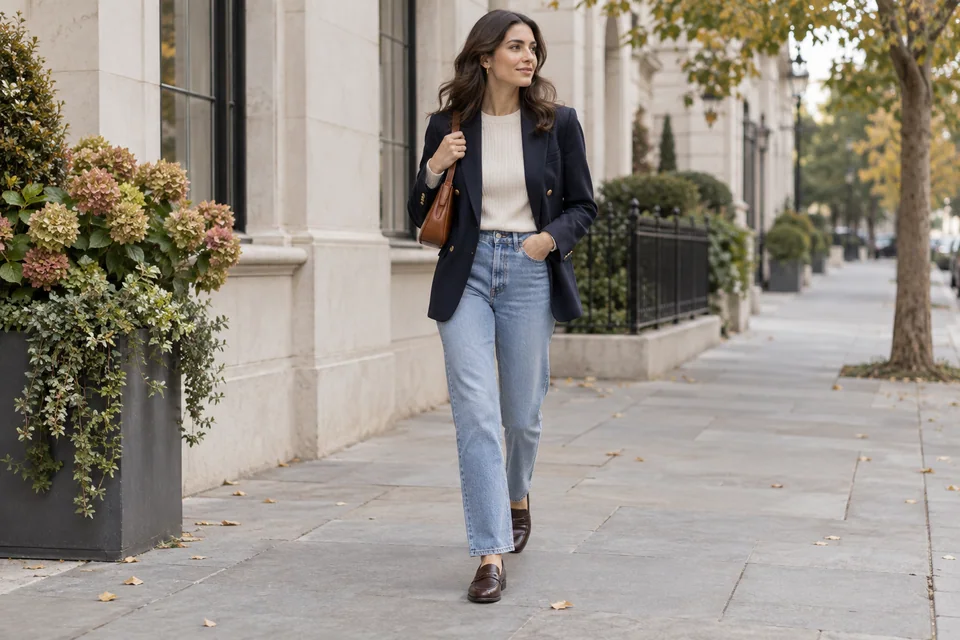
A navy blazer is often described as a wardrobe essential, but that label can make it sound more formal and less useful than it really is. The best navy blazer outfits do not depend on copying a boardroom uniform. They depend on noticing the jacket you own: where its hem lands, whether its shoulders are sharp or soft, how much room it has for layers, and whether the fabric is crisp, brushed or relaxed.
Once you treat the blazer as a flexible layer rather than a rule, it works across a surprising number of plans. It can make jeans feel considered for a coffee meeting, give soft trousers a clean outline for work, or add structure over a moving skirt for dinner. Start with a calm base, let one line of the outfit stay visible, and choose shoes for the distance and weather ahead. That is enough to make the blazer feel like yours.
Read the blazer before building the outfit
Look first at length and shape. A blazer that ends near the high hip works naturally with high-rise jeans, trousers with a visible waistband and midi skirts. A longer blazer can create a smooth column over a closer top and straight or wide trousers. Neither is automatically more flattering; the useful question is whether the jacket and bottom create a deliberate line instead of two unrelated blocks.
Shoulders and sleeves affect comfort as much as appearance. A structured shoulder looks especially good over a fine knit, T-shirt or crisp shirt because the layers do not bunch. A relaxed, unlined blazer can take a soft cardigan or thin sweatshirt, but try it while sitting, reaching for a bag and closing the front. If it pulls across the back or sleeves, reduce one layer. A jacket you keep adjusting will not make a reliable everyday uniform.
Notice the buttons too. A double-breasted navy blazer has more visual weight and often works best with a simple inner layer and clean bottom. A single-breasted or unstructured style accepts more ease. You do not need to wear it closed; wearing it open gives the outfit a vertical line and lets the base layer do some work.
Build a focused navy palette
Navy is easier than it looks because it can sit beside both warm and cool neutrals. Ivory, cream, white, pale blue, soft grey, charcoal, camel, stone, dark brown and muted burgundy are all useful partners. Begin with two or three main colours. A navy blazer, ivory knit, light-blue jeans and brown loafers already has contrast in colour, texture and form; adding a bright bag, large print and heavy jewellery at once can distract from the useful simplicity of the formula.
Texture helps the colour feel alive. Smooth navy wool or twill looks grounded beside denim, ribbed cotton, suede, fine merino or a matte skirt. If the blazer has shiny buttons, choose quieter hardware elsewhere. If the fabric is soft and relaxed, a crisp shirt, leather belt or structured bag can give the outfit definition. You are not trying to match every surface; you are making sure every piece has enough space to be noticed.
Black can work with navy, especially when you use the difference on purpose. A navy blazer over a charcoal or black fine knit with black trousers or a black skirt creates a deep, calm base. Add an ivory top or brown leather detail if you want more separation. Avoid assuming navy must always be paired with white; that familiar combination is useful, but it is only one option.
Use jeans and trousers for different kinds of polish
For the most repeatable casual formula, wear a navy blazer over an ivory fitted knit with light-blue straight jeans and dark brown loafers. The knit gives the jacket a clean starting point, the jeans keep it relaxed, and the loafers have enough presence for a long hem and a city pavement. On a warmer day, replace the knit with a white T-shirt. For more walking, choose loafers or sneakers you have already worn comfortably rather than a new pair that only works in a mirror.
Dark denim takes the same blazer toward smart casual. Choose a clean dark wash, a pale blue tucked shirt and a simple belt, then add black flats, loafers or low ankle boots. This can work for a creative office, daytime appointment or meal out where a full suit would feel stiff. If the setting clearly expects formal tailoring, wear tailored trousers instead of hoping the blazer will make denim read as a suit.
Charcoal, stone or soft grey trousers give a navy blazer more structure without requiring a matching colour. Keep the inner layer close enough to show the waistband, especially when the trousers are wide. If the blazer and trouser are both relaxed, use a fitted knit, a smaller bag or a cleaner shoe as the counterpoint. When you are comparing your own options, place the blazer beside two trousers and the shoes you would really use in the Look Lens virtual wardrobe. Seeing complete combinations is more useful than judging a jacket on a hanger.
Add structure to skirts and dresses
A navy blazer is a helpful outer layer over a skirt because it gives a moving silhouette a clear frame. For dinner, try a fine grey top, fluid black midi skirt, navy blazer and low ankle boots. The skirt carries movement; the blazer keeps the upper half composed; the boot is practical when you will walk before or after the meal. A cream or soft blue skirt can lighten the same jacket for daytime, while a dark skirt makes the result quieter.
A knit dress is another easy partner. Choose a dress with enough shape that it still works when you take the blazer off indoors, then add a flat boot, loafer or simple sneaker according to the plan. If the dress is very loose and the blazer is oversized, use one visible line—a belt, open front or closer shoe—to avoid losing the body entirely under fabric. A blazer does not need to make a dress more serious; it can simply make the dress wearable in another setting.
Match the finishing pieces to your actual day
Footwear changes the message quickly. Dark brown loafers work naturally with light jeans and cream knitwear. Black flats or loafers make charcoal trousers feel neat. Clean leather sneakers make a relaxed blazer useful for travel and errands, while low ankle boots work well with a skirt or cold pavement. A heel can be beautiful for an evening, but it is optional. A shoe that lets you walk, use stairs and stand in line comfortably is usually the stronger choice.
Keep accessories edited. A cognac shoulder bag, simple watch, small earrings or thin belt can repeat the warmth of brown leather without competing with navy. A larger work bag may be necessary, but check that its strap sits comfortably over the blazer shoulder. If you are unsure whether the jacket, bag and shoes are balanced, take one full-length photo. Look Lens outfit analysis can help you compare a loafer and sneaker version before you leave, especially when the difference is subtle.
Avoid making the navy blazer feel like a costume
The most common mistake is making every piece too formal at once: rigid blazer, crisp shirt, very sharp trouser, pointed heel and structured bag can be right for a specific professional setting, but it may feel disconnected from a casual plan. Let one part relax. Jeans, a fine knit, flat shoe or softer bag can keep the blazer from becoming a costume. The reverse also happens: a very oversized jacket with a huge sweatshirt, loose jeans and bulky shoes can hide the person wearing it. Preserve one clear line with a tucked top, fitted base or compact shoe.
Also avoid treating navy as a colour that needs exact matching. Navy trousers and a navy blazer can make a suit-like effect, but only when the fabrics and shades cooperate. If they do not, use contrast deliberately with grey, stone or denim. Finally, plan for weather. A blazer is useful in mild temperatures and indoors, but a lightweight one is not a substitute for a raincoat or warm coat on a long cold evening.
Make the navy blazer an easy repeat layer
A navy blazer earns its place when it helps ordinary clothes do more: ivory knit, jeans and loafers for day; pale blue shirt and charcoal trousers for a relaxed office; or a fine top and midi skirt for dinner. Start with its length and fabric, keep colours focused, and pick shoes for where you will walk. Once two or three combinations feel comfortable, rotate the inner layer, trouser or bag instead of rebuilding the whole outfit.
Want to keep those dependable combinations close at hand? Get Look Lens on Google Play and save the pieces you reach for most. The goal is not a different look every day; it is a blazer that answers more than one real-life plan.
Frequently asked questions
What colours go with a navy blazer?
Ivory, cream, white, pale blue, soft grey, charcoal, camel, stone, dark brown and muted burgundy are reliable partners. Start with two or three main colours and use texture for interest.
Can I wear a navy blazer with jeans?
Yes. Light-blue straight jeans with an ivory knit and brown loafers are an easy daytime formula. For a smarter setting, choose clean dark denim, a tucked shirt and polished flats or loafers.
Can a navy blazer work at a casual office?
It can work well with trousers or, where denim is accepted, clean dark jeans. Match the outfit to the actual dress code; a formal presentation or uniformed setting may require a suit or tailored trousers.
Should I wear black with a navy blazer?
You can. Navy looks considered with charcoal or black when the contrast is intentional. Use an ivory top, textured knit or brown leather detail if you want a little more separation between dark pieces.