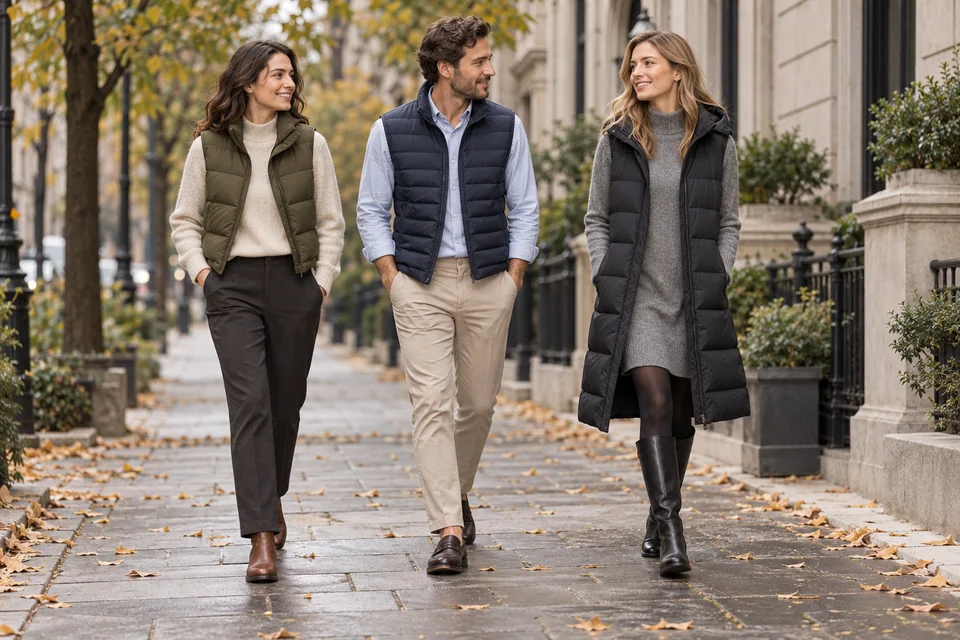
A puffer vest can be the most useful layer in a cool-weather wardrobe—and the easiest one to make feel bulky by accident. It adds insulation across the torso but leaves your arms free for carrying a bag, driving, or moving through a busy day. The styling question is less about making it look formal and more about making the volume make sense. Give the vest a slim or clearly shaped partner underneath, then choose trousers, a skirt, or a dress that keep the whole outline readable.
Start with the plan rather than the weather forecast alone. A short dog walk, a train commute, a casual office, and an evening meal can all call for a different version of the same vest. Think about whether you will take it off indoors, whether rain is likely, and which shoes you can actually walk in. The formulas below use ordinary wardrobe pieces and leave room for the preferences, temperatures, and dress codes that make an outfit feel personal.
Choose the puffer vest shape before the outfit
Length changes what a puffer vest can do. A cropped or hip-length style is easy with high-rise straight jeans, tailored trousers, or a midi skirt because the bottom layer begins close to the vest hem. It is a natural choice for a mild commute or a day when you will sit indoors. A longer vest gives more coverage on a cold walk and can look especially balanced over a column of similar-colored clothes, such as a grey knit dress with dark tights or a black knit with slim trousers.
Also notice the quilting, collar, and fill. Large horizontal channels, a shiny fabric, and a high stand collar create a stronger sporty message; keep the rest of the outfit quieter. A lightweight, matte quilted vest is easier to wear with a shirt and trousers because it behaves more like an extra layer than outerwear. Check the armholes over the sweater you intend to use. If the knit bunches at the shoulder or the zip pulls across the chest, the outfit will feel restrictive before you leave home.
Build a close base layer to manage volume
A puffer vest does not require a skin-tight top, but it benefits from a base that has a visible shape. Fine crew-neck knits, ribbed long-sleeve tops, simple sweatshirts, shirts, and thin turtlenecks are reliable choices. In cream, grey, navy, black, or soft blue, they let the vest be the textured piece. If your vest is already oversized, avoid pairing it with both a thick hoodie and very loose trousers on the first try; that combination can work, but it needs an intentional color story and a more defined shoe.
Use the hem as a small proportion check. A tee or knit that extends a little below a short vest can look relaxed, especially with straight denim. If it extends much farther, the layers may appear accidental unless the difference is deliberate. With a long vest, a close knit dress or tucked top creates an uninterrupted line underneath. Raise your arms, sit down, and put on the bag you plan to carry. The best base layer is one that stays comfortable after the vest is zipped, unzipped, and worn indoors.
Wear a puffer vest with jeans for everyday plans
Jeans make a puffer vest feel immediately familiar. Try an olive, navy, black, or camel vest over a cream knit with mid- or dark-blue straight jeans. Brown ankle boots, clean leather sneakers, or loafers determine the direction: boots add useful weight for a damp day, sneakers keep the outfit casual, and loafers make it suitable for a coffee meeting or relaxed office. Keep the jean straight or gently tapered if the vest is broad through the body; a clear trouser line is often all the balance you need.
For a softer weekend version, put a short vest over a striped long-sleeve tee and ecru denim. A dark vest and light denim create enough contrast to keep the layers visible. If you prefer a hoodie, use a lighter-weight one and let the hood sit flat rather than piling up under a high collar. Before repeating the formula, save the versions of your own jeans, knitwear, and shoes in the Look Lens virtual wardrobe. Seeing the pieces together can make it easier to notice whether you already have a warmer base layer or a better shoe option than the one you usually reach for.
Make trousers and a shirt feel considered
A puffer vest can work for a casual workplace if the pieces beneath it have a little structure. Start with a pale blue or white shirt, a navy lightweight vest, stone or charcoal chinos, and dark loafers. The shirt collar gives the top half a cleaner edge, while the trousers prevent the vest from reading like gym gear. On a colder morning, replace the shirt with a fine merino crew neck and add a simple watch or leather belt rather than multiple sporty accessories.
Do not force this formula into a formal office. A shiny, oversized vest with athletic joggers is a different proposition from a matte, trim vest with trousers. Check your workplace dress code, then use the vest for the commute and remove it when you arrive if needed. If you are unsure whether the outer layer changes the balance of a shirt-and-trouser outfit, take a full-length photo of both options. Look Lens outfit analysis can help you review color, proportion, and the practical effect of the extra layer; it is a second set of eyes, not a substitute for the rules of your workplace or your own comfort.
Pair a puffer vest with skirts and dresses
A quilted vest is useful beside a softer skirt or dress because it brings a matte, practical surface to the outfit. For a cool daytime plan, wear a short dark vest over a fine knit and a fluid midi skirt, then add ankle boots. The boot grounds the lighter fabric and makes the outfit more believable for walking. Choose a vest that ends above or near the waist of the skirt; a long vest over a full midi skirt can work, but it needs enough length difference that the layers do not bunch together.
A long puffer vest is especially effective with a knit midi dress. Choose related tones—charcoal with black, camel with chocolate, or navy with dark denim blue—and let the dress make one long line beneath the vest. Opaque tights and boots solve the temperature question without turning the outfit into a collection of unrelated layers. For dinner, remove the vest indoors and make sure the dress, shoes, and bag still form a complete look. That is what makes the outer layer useful rather than necessary camouflage.
Choose colour and texture with restraint
Neutral puffer vests earn their place because they can repeat across many outfits. Black and navy are quiet against denim, grey, stone, and burgundy. Olive works well with cream, dark brown, soft blue, and black. A pale beige vest can look fresh with charcoal, navy, or dark denim, but it benefits from a darker shoe or trouser to keep the outfit anchored. You do not need matching accessories; repeating one color in a small way, such as brown boots with a brown belt, is enough.
Let quilting be the strongest texture. If the vest has glossy nylon, contrast zips, or oversized channels, use smoother trousers and a plain knit. A matte, fine-quilted vest can sit beside corduroy, denim, or a ribbed sweater more easily. Be cautious with a large plaid scarf, heavily distressed jeans, and a very padded vest in the same outfit: each may be useful alone, but together they can compete. One main texture plus one subtle texture is usually more than enough.
Make shoes and weather do real work
The shoe is not a finishing touch with a puffer vest; it tells the outfit how practical it is. For a wet or uneven route, use ankle boots with a sole you trust. For a dry urban day, loafers or clean leather sneakers keep cropped vests light. Tall boots work with a long vest and dress because they continue the vertical line. Avoid choosing a very thin shoe solely to make the outfit look less outdoorsy if you will spend an hour walking; a comfortable shoe is part of the styling, not a compromise after it.
Layer for the temperature you will actually experience. A puffer vest is excellent in changing conditions, but it does not replace a waterproof shell in rain or a truly warm coat in freezing weather. If you will be outside for long periods, add gloves, a hat, or a weather-appropriate top layer rather than relying on an unzipped vest. If you will be indoors most of the day, choose the lightest vest that does the job so carrying it later is not a nuisance.
Avoid the common puffer-vest mistakes
When a puffer-vest outfit feels too bulky, change one variable before replacing everything. Try a finer sweater, straight instead of wide trousers, or a shorter vest over a high-rise bottom. When it feels overly sporty, switch the athletic shoe for a loafer or simple boot, or exchange the hoodie for a shirt or fine knit. When it feels too stiff, leave the vest unzipped and use a softer base layer. These are small corrections, but they make the piece adaptable.
Another common mistake is treating the vest as an excuse to ignore the rest of the silhouette. Check the back view, the side view, and the seated view. Does the hem catch on a bag? Does the collar hit your chin? Can you move your arms without the vest riding up? A worthwhile outfit survives those ordinary moments. It does not need to look like a fashion editorial to be successful; it needs to let you get through your day without constant adjustment.
The takeaway: let the vest solve one problem
A puffer vest is at its best when it solves a simple problem: an extra layer for a cool walk, a removable layer for a commute, or a way to make a dress practical in a shifting temperature. Start with a close base, balance the vest with a clear trouser or dress line, and choose shoes for the ground you will cover. Jeans and boots, chinos and loafers, or a knit dress and tall boots are complete starting points—not rules you have to copy exactly.
Keep the version that makes you feel warm enough and able to move freely. Once you have identified a few repeatable combinations, you can plan them ahead with the clothes already in your wardrobe. For an easy way to compare those choices before heading out, get Look Lens on Google Play and start with the pieces you already wear.
Frequently asked questions
What should I wear under a puffer vest?
A fine knit, ribbed long-sleeve top, light sweatshirt, shirt, or thin turtleneck all work well. Choose a layer with enough room at the armholes and avoid piling a very thick hoodie under a bulky vest unless the rest of the outfit is intentionally simple.
Can I wear a puffer vest with jeans?
Yes. A puffer vest with a close knit, straight jeans, and boots, loafers, or clean sneakers is a reliable everyday formula. Use a short vest with high-rise jeans or a longer vest with a slim, clear jean line.
How do I make a puffer vest look less bulky?
Use a finer base layer, a straight or tapered bottom, and shoes with a clear shape. Open the vest if the weather allows, or choose a shorter, lighter-quilted style when you want less volume around the torso.
Can a puffer vest work for a casual office?
A lightweight matte vest can work over a shirt or fine knit with chinos or tailored trousers in a relaxed workplace. Check the dress code first and remove the vest indoors if your office is more formal.