Start with the shirt’s shape
A rugby shirt is more substantial than a striped tee and more relaxed than a crisp polo. Its woven collar, button placket, ribbed cuffs and weighty cotton give the upper half a lot to say before you add trousers, shoes or a jacket. That is why it looks best when the rest of the outfit has a simple job. Begin with the shirt you actually own: notice whether it is cropped, hip length or deliberately oversized, and whether its stripes are high contrast or almost neutral.
Fit is the first practical decision. You should be able to raise your arms, sit and layer a thin tee underneath without the shoulders dragging. An oversized rugby shirt can be comfortable, but if it reaches the widest part of your hip and is paired with equally wide trousers, the whole outfit may read as one block. Instead of sizing down automatically, create a line with a front tuck, visible waistband, straighter trouser or more defined shoe. The goal is room to move, not tightness.
Let the stripes do one job
Wide stripes and a white collar already create contrast. Give them space by choosing one or two quieter pieces in colors already present in the shirt. A cream-and-forest-green rugby works with dark indigo, ecru, navy, charcoal and brown; burgundy and cream pair easily with black jeans, mid-blue denim or tobacco corduroy. You do not have to match every color exactly. Repeating one warm note in a leather belt, bag or shoe is enough to make the outfit feel joined up.
Avoid adding another loud stripe, giant logo, busy scarf and technical trainer all at once. Each item might be good on its own, but the rugby shirt is already the focal point. If you want more texture, choose denim, smooth wool trousers, leather shoes or a simple knit rather than another graphic pattern. Take a quick mirror photo from the front and side. If the shirt is still the first thing you see and your outline is clear, the balance is working.
Build three reliable formulas before buying anything
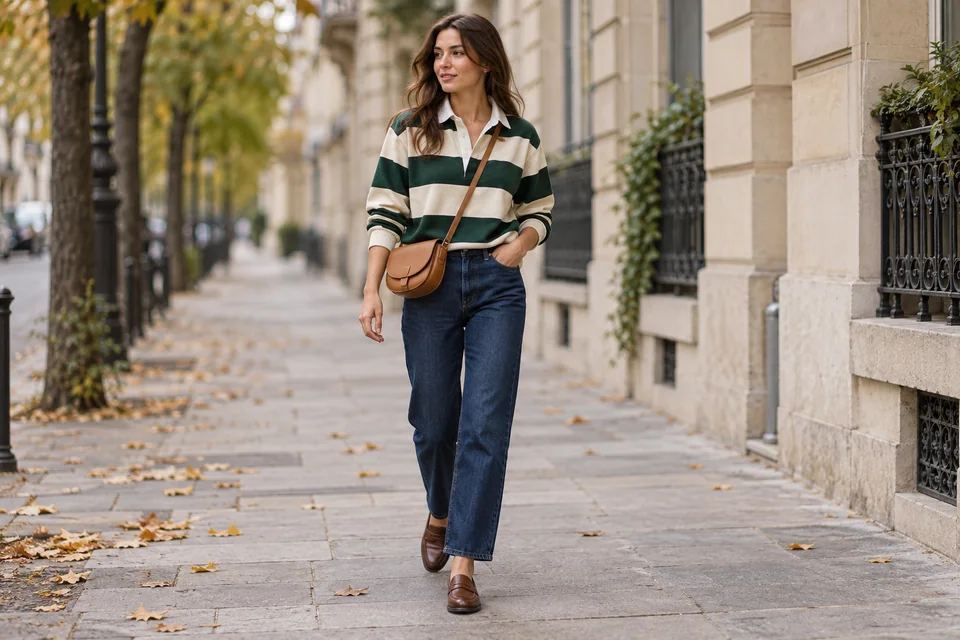
For an easy walking day, use a cream-and-forest-green rugby shirt with straight indigo jeans, brown loafers and a tan crossbody bag. The jeans give the shirt a darker base and the loafers feel polished without making the outfit formal. If the weather turns wet, swap to brown ankle boots with a grippy sole. A small bag matters here because a bulky backpack can sit awkwardly over the collar and make the top half feel crowded.
For a relaxed office or studio, try a navy-and-ivory rugby shirt with charcoal tailored trousers, a simple black belt and black ankle boots or loafers. The trouser crease is doing the smartening work, so resist adding a blazer unless the room really calls for one. This formula suits a casual dress code, not a formal presentation, uniformed role or conservative client meeting. When the requirement is tailoring, choose a shirt or knit that belongs under tailoring rather than forcing a rugby shirt to do a blazer’s job.
For dinner after errands, half-tuck a burgundy-and-cream rugby shirt into a black midi skirt and add pointed flat boots. The waist break and cleaner shoe keep the heavier cotton from overwhelming the skirt. If a skirt is not your preference, use dark straight trousers and a small shoulder bag instead. Keep the sleeve cuffs visible and avoid a long coat hem that lands exactly at the same point as the shirt.
Choose bottoms by length and movement
Straight jeans are the easiest starting point because their line is stable beside a boxier top. Dark indigo feels sharper, while faded blue makes the outfit more casual. A cropped ankle length shows a loafer or boot clearly; a longer hem should fall cleanly rather than pooling on the shoe. Chinos and tailored trousers work in the same way, especially in navy, stone, charcoal or olive. With a very wide trouser, use a shorter rugby shirt or tuck a small section at the front so the waist does not disappear.
A midi skirt gives a rugby shirt a useful contrast without asking you to dress up. Choose a column, denim or softly A-line shape, then check your stride before leaving. A full skirt can work with a more fitted rugby shirt, but a long loose shirt over a very full skirt can hide every proportion. Leggings are another practical option for travel or errands: choose an oversized rugby shirt that covers the area you want covered, then add low-profile trainers, loafers or boots rather than a highly technical running shoe.
Layer for the forecast, not a costume
Heavy cotton makes a rugby shirt useful on a cool morning, but it also means you rarely need a thick knit underneath. Start with a breathable tee or tank if you expect to remove the shirt indoors. For a breezy commute, add a trench, simple coat, denim jacket or barn jacket with enough space through the sleeves. Let the rugby collar sit neatly outside or just inside the outer layer; if three collars bunch at your neck, remove one layer rather than trying to arrange it all day.
On milder days, roll the placket open slightly and keep the rest of the outfit light: ankle-length jeans, a skirt or cotton trouser and shoes that suit the ground. On colder days, use a thin thermal layer and wool socks inside boots. A scarf can be useful, but choose a solid color and tuck it under the coat so it does not compete with the stripes. A good layer should solve temperature, wind or rain; it does not need to advertise every possible style reference at once.
Pick shoes for the plan
Brown loafers connect naturally with cream, green, navy and red rugby shirts, especially alongside denim. Black loafers or ankle boots give charcoal trousers and dark skirts a cleaner edge. Clean low-profile sneakers are the best choice when the day includes more walking; their simple shape keeps attention on the shirt. Check the trouser hem with each option. It should meet the shoe cleanly or show a little ankle, not collapse across the vamp.
Think about the surface as well as the outfit. A thin-soled ballet flat may look great with a midi skirt for an indoor lunch but be frustrating on wet paving. A chunky hiking boot can be practical, yet it may make a heavy rugby shirt and loose jeans feel overly rugged. Choose the least bulky shoe that can handle the distance, weather and your own comfort. Try walking around at home with the full outfit, bag included, before calling it finished.
Use your wardrobe as the test
Before buying a new stripe, build a small group around the rugby shirt you already have: two bottoms, two pairs of shoes, one light layer and one outer layer. Photograph the combinations in natural light. The Look Lens outfit analyzer can give you a second view of whether a tuck, shoe swap or layer creates a clearer proportion with the exact pieces you own. Treat it as a comparison tool, then choose the version that feels comfortable and right for your plan.
In the Look Lens virtual wardrobe, group the rugby shirt with your real jeans, trousers, skirts and coats so you can spot repeats and useful gaps. You might learn that the shoe you already wear with dark denim is the missing link, not another top. This keeps the guide practical: a rugby shirt earns its place when it can cover a walk, casual workday, travel day or dinner without demanding a completely separate wardrobe.
Avoid the common missteps
The most common misstep is treating the rugby shirt as an entire theme. A striped rugby, varsity jacket, baseball cap, cargo trousers and giant trainers can turn several good practical items into competing signals. Remove one or two: keep the rugby shirt and jeans, choose a plain jacket, or use a quieter shoe. You are not making the outfit boring; you are making the individual pieces easier to see.
Another mistake is ignoring the hem. When a long rugby shirt, long coat and long wide trouser all end near the same point, the outfit can look heavy. Show a waistband, choose a shorter outer layer, cuff the sleeve once or switch to a straighter bottom. Small adjustments are more useful than buying a replacement. Keep comfort at the center: the best version lets you sit, carry a bag and move through your day without having to keep fixing the collar or shirt hem.
Make the rugby shirt the useful focal point
Start with one formula that fits your routine: jeans and loafers for walking, tailored trousers for a casual workplace, or a midi skirt and boots for an evening plan. Then change one piece at a time so you can see which proportions and colors your own rugby shirt supports. Its relaxed character is an advantage when the rest of the outfit stays clear and practical.
For a quick side-by-side check before you leave, try Look Lens on Google Play and compare two photos of your final outfit. Keep the simple rule: let the rugby shirt bring the color and structure, while your bottom, shoes and layers answer the real needs of the day.
Frequently asked questions
What trousers look best with a rugby shirt?
Straight jeans, chinos and tailored trousers are dependable because they create a clear line beside the shirt’s boxier shape. With wide trousers, show a waistband or use a shorter shirt.
Can I wear a rugby shirt to work?
It can suit a relaxed office when paired with tailored trousers and polished shoes. For formal meetings or strict dress codes, choose a shirt, knit or blazer that fits the requirement.
Should a rugby shirt be oversized?
It can be relaxed, but check shoulder comfort and hem length. If the shirt is oversized, balance it with a straighter bottom, a partial tuck or a defined shoe.
What jacket goes over a rugby shirt?
A simple coat, trench, denim jacket or roomy barn jacket works well. Avoid crowded collars and choose an outer layer that has enough room for the rugby shirt’s thicker cotton.