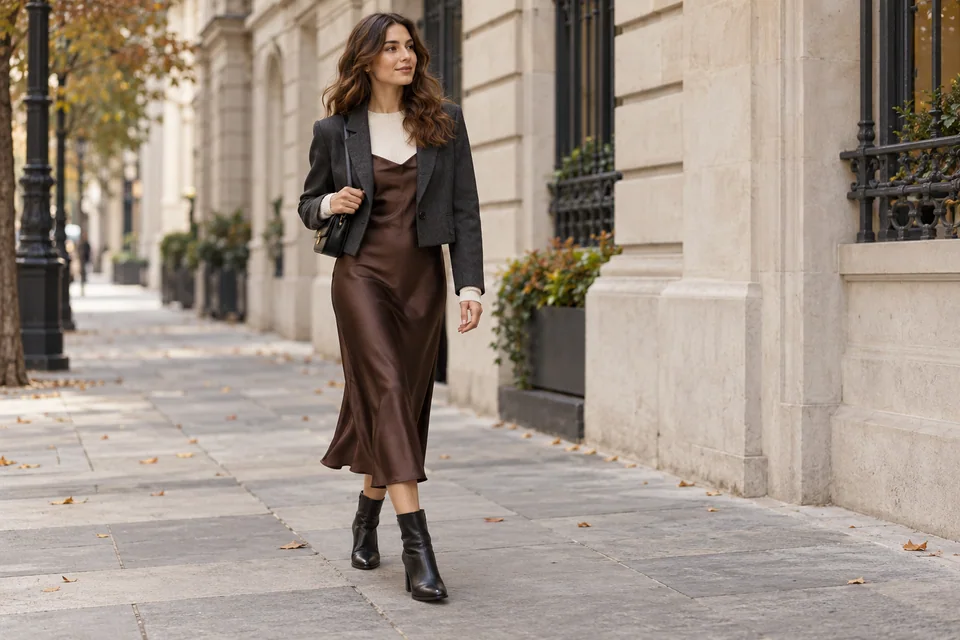
Start with a layer, not more accessories
A slip dress is cut to move close to the body, often on the bias, so it can look intentionally minimal or unexpectedly like nightwear depending on what surrounds it. The most useful styling decision is to add one garment with a different texture or shape. A fitted cotton T-shirt, fine merino knit, crisp shirt, denim jacket or short blazer creates a readable contrast with satin or viscose.
Choose the layer for the actual plan. A white T-shirt under a dark midi slip dress makes sense for a dry, informal afternoon; a fine long-sleeve knit is warmer and more covered for October; a cropped jacket is useful when you want definition at the waist. You do not need every option at once. One clear layer and a considered shoe normally look better than a pile of necklaces, belts and bags competing for attention.
Check the neckline and armholes before leaving. Underlayers should lie flat, not bunch at the straps or pull the dress forward. If a dress is very fitted, a slim knit or bodysuit may feel better than a bulky jumper. If it is more generous, a regular T-shirt can work. Comfort is a useful editing tool: if you keep tugging the layer into place, change the layer rather than trying to style around the problem.
Make a slip dress feel daytime-ready
To make a shiny dress feel less formal, introduce matte fabric. Blue denim, cotton jersey, a wool cardigan and brushed leather each interrupt the evening association without disguising the dress. For a dependable formula, use a black or brown slip midi dress, a white crew-neck T-shirt, a mid-blue denim jacket and clean trainers. The dress supplies movement; the jacket and trainers make the destination clear.
For coffee, errands or a gallery visit, keep the bag medium-sized and practical. A large tote or structured crossbody often works better than a tiny evening bag, especially if you are carrying a jacket. If trainers make the dress feel too casual for your taste, switch to loafers or flat ankle boots. The same dress can change character without requiring a separate wardrobe.
Pay attention to the hem. A midi length that ends above the boot shaft or around the narrowest part of the calf usually reads cleanly. If the fabric catches around your knees while walking, try a shorter jacket or a shoe with a little more weight. There is no need to force a flat shoe with a long, heavy hem; a boot can be the more balanced and more weather-ready choice.
Add structure for a relaxed office or meeting
A slip dress can work in a creative or relaxed workplace when its layers and coverage do the practical work. Begin with a dark, non-sheer midi dress, then add a fine knit underneath or a cardigan and a blazer over it. Black, navy, charcoal, olive and chocolate are straightforward bases because shoes and outerwear are easy to repeat with them.
Try a chocolate slip dress over an ivory fine knit, a cropped charcoal blazer and black ankle boots. The blazer stops at or near the waist, so the dress still has a shape rather than becoming a column of loose fabric. For a warmer office, remove the knit and choose a blazer over the dress with a closed neckline or add a silk-like camisole only if it stays invisible and comfortable.
Dress codes vary, so treat this as a starting point rather than a rule. A very narrow strap, deep neckline or high-shine fabric may be better for after work. Bring a longline blazer or a shirt layer if you need more coverage, and choose shoes you can commute in. Being able to walk to the station without protecting the hem is part of an outfit working.
Choose shoes for the plan, not the picture
Ankle boots are the easiest cool-weather partner because their leather gives a soft dress some visual weight. Black boots work with black, brown, burgundy and printed dresses; dark brown is especially good with chocolate, olive, cream and mid-blue layers. A low block heel or flat sole is more realistic for a full day than a heel you only tolerate for one photograph.
Trainers make the dress casual, but choose a clean pair with a reasonably low profile so the hem does not catch. Loafers are useful for a tailored mood, while slingbacks or small heels can carry the same dress to dinner. In wet weather, do not assume a thin satin hem and open shoe will be pleasant. Boots and a longer coat may be the sensible substitution, not a failure to dress up.
Repeat one note rather than matching everything. A black boot can echo a black bag or belt; a brown boot can meet a chocolate dress without making the outfit monochrome. If the dress has lace trim, print or strong shine, let the footwear be plain. If the dress is simple matte satin, a textured boot or metallic flat can add a controlled point of interest.
Solve underwear, movement and temperature first
Good slip-dress styling begins beneath the visible outfit. Choose underwear in a tone close to your skin or the dress, with smooth edges if the fabric clings. A bra, bralette, camisole or built-in support can all be right depending on the dress and your comfort. The aim is not to meet a trend image; it is to wear the garment without spending the day worrying about straps, transparency or support.
Static can make a lightweight skirt cling to tights or a coat. Test the outfit while walking and sitting before you commit to it. A simple slip or smooth tights may improve movement under a clingy dress, and a light layer helps when the temperature changes between outdoors and heated rooms. Keep a compact cardigan in your bag if you expect a cool evening rather than hoping bare arms will stay comfortable.
Use a mirror or a photo to inspect the whole line, including the hem and bag position. With Look Lens outfit analysis, you can compare a proposed shoe or jacket in a photo and ask a focused question about proportion or contrast. It is a way to notice a specific adjustment; the best final choice is still the one that lets you move, sit and walk comfortably.
Avoid the pyjama effect by making one choice deliberate
The so-called pyjama effect usually comes from several relaxed signals arriving together: shiny fabric, loose straps, a soft cardigan, slippers or an evening bag used in daylight. You do not have to avoid those pieces. Just give the look one grounding item, such as a denim jacket, defined belt, leather boot, crisp shirt or structured bag. That contrast tells the eye the softness is intentional.
Do not overcorrect by adding every tough accessory you own. A leather jacket, heavy boot, large belt and oversized bag can overwhelm a delicate dress and make it hard to wear. Start with one contrasting piece, look at the outfit from a few steps away, then stop if the silhouette already feels settled. A small change, such as swapping a tiny bag for a tote, can do more than another layer of jewellery.
If you are building from clothes you own, photograph the dress beside your jackets and shoes in Look Lens Virtual Wardrobe. Comparing three real options can reveal that a jacket you already wear with jeans is also the useful partner for your slip dress. That is more practical than shopping for a highly specific look you may only wear once.
Build three repeatable formulas
A slip dress earns its place when it works across more than one occasion. Keep a daytime formula: dress, T-shirt, denim jacket and trainers. Keep a polished formula: dress, fine knit or cardigan, blazer and boots. Keep an evening formula: dress, simple cardigan or bare shoulders if comfortable, a small bag and shoes you can actually walk in. These are frameworks, not uniforms.
Change only one variable at a time when you want variety. Swap black boots for burgundy, a denim jacket for a cropped cardigan, or a white T-shirt for a striped knit. The dress remains the reliable base, so you can learn which combinations feel like you instead of buying a new outfit for every plan.
Before an event, take a quick photo in natural light and make the small adjustment you can name. For more help comparing your real wardrobe, try Look Lens on Google Play. The useful rule is simple: give the fluid dress one practical counterweight, then let comfort and the day’s plan finish the outfit.
Frequently asked questions
Can you wear a slip dress in autumn or winter?
Yes. Add a fine knit or T-shirt underneath, a jacket or coat over it, and boots chosen for the weather. A heavier outer layer keeps a light dress practical.
What shoes go best with a slip dress?
Ankle boots are especially useful in cool weather. Trainers make it casual, loafers feel tailored, and low heels or slingbacks work for many dinners.
How do you stop a slip dress looking like nightwear?
Add one structured or matte item such as denim, a blazer, a leather boot or a practical bag. Avoid adding every contrast at once.
What can you wear under a slip dress?
A fitted T-shirt, fine long-sleeve knit, bodysuit or smooth camisole can work. Choose the option that sits flat at the neckline and feels comfortable.