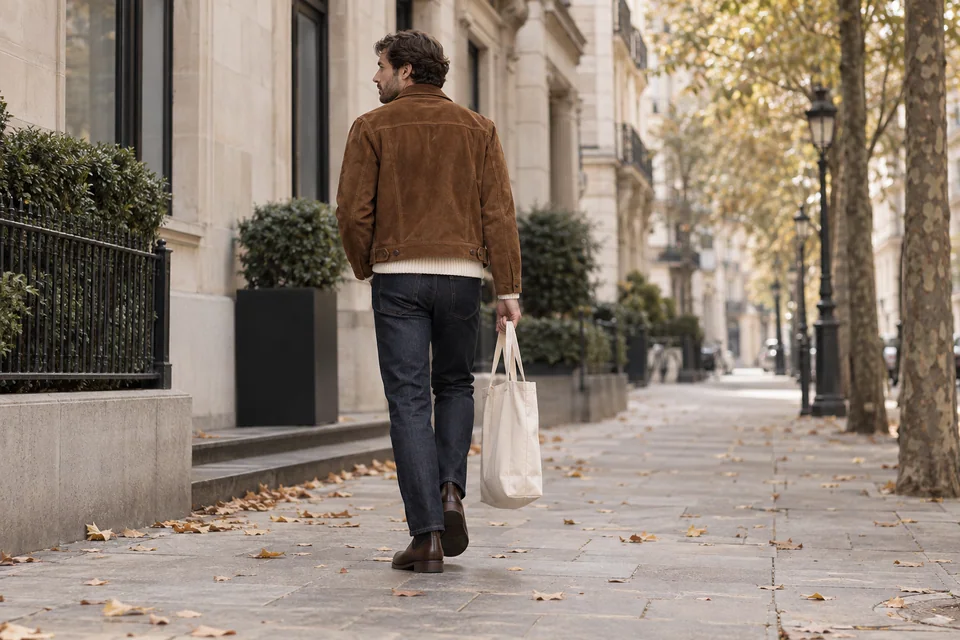
A suede jacket has enough texture to make a simple outfit feel considered, but that texture can also make it seem harder to wear than a denim jacket or blazer. The useful approach is to treat it as a warm neutral layer, not as a costume piece. Brown, tan, tobacco and dark chocolate suede all work with familiar wardrobe colors: cream, white, navy, charcoal, faded blue, olive and black. Start with a comfortable base, then let the jacket add the interest.
There is no single suede-jacket personality. A cropped trucker, a shirt-shaped overshirt, a clean bomber and a longer Western-inspired shape have different proportions. Before you copy a look, notice the jacket's length, collar, shoulder width and how heavy the fabric feels. The formulas below are designed to be adjusted for your own jacket, weather and plans rather than followed as fixed rules.
Start with the jacket's shape and weight
The length of a suede jacket decides much of the outfit. A short trucker that ends near the waistband works easily with straight jeans, wide trousers and higher-waisted skirts because it gives the body a visible break. A roomy overshirt has more ease, so it benefits from a simpler layer underneath: a fine knit, a T-shirt or a shirt without a bulky collar. A bomber is naturally casual and usually looks best when its trousers and shoes are not trying to be formal at the same time.
Look at the jacket's structure too. Thick, lined suede has visual weight; match it with denim, twill, wool trousers or leather shoes rather than a very thin, floaty bottom layer. A lighter unlined jacket can sit over a striped tee, poplin shirt or knit polo without feeling heavy. If the sleeves or body are generous, avoid piling on a bulky hoodie and an oversized scarf at once. Choose one relaxed element, then keep the rest of the outfit readable.
Try your jacket with two different bases in daylight. A quick photo will often reveal whether the hem is cutting at an awkward point or whether the colors are working as expected. If you want a second view of the overall balance, the Look Lens AI outfit analyzer can help you review a photo of the complete look. Use that feedback as a prompt to test a different trouser length or shoe, not as a reason to abandon clothes that feel good to wear.
Build a quiet color palette around the suede
Brown suede is already a strong color and texture, so a limited palette tends to look more natural than a lot of competing accents. Cream or ecru is an easy first layer because it brightens tobacco and chocolate without the sharp contrast of bright white. Indigo denim gives a reliable dark counterweight. Charcoal creates a more urban, understated effect, while olive and muted rust add warmth when you want variation without introducing a loud color.
For a dependable everyday combination, wear a tan jacket over a cream crewneck, dark straight-leg jeans and brown or black ankle boots. The knit softens the suede; the darker jean stops the outfit from becoming one large block of brown. If you prefer black denim, repeat a little warmth in your belt, shoe, bag or knit so the jacket feels intentionally included rather than placed on top of an all-black outfit.
Blue is useful when brown feels too expected. A pale blue Oxford shirt with charcoal pleated trousers and dark brown suede looks relaxed but still tidy. For a more casual version, use a faded chambray shirt, off-white jeans and suede sneakers or loafers. Rather than matching every brown exactly, aim for related depth: a tan jacket can live with espresso boots, and a dark chocolate jacket can work with a cognac belt.
Use denim and trousers for the easiest outfit formulas
Jeans are the most straightforward partner because denim has enough sturdiness to meet suede halfway. Dark straight or relaxed jeans make a suede trucker feel clean and slightly polished; medium-blue jeans make the same jacket feel easier and more weekend-ready. Keep the leg shape in proportion. With a short, fitted jacket, a straight or gently wider jean gives balance. With a roomy overshirt, a cleaner straight leg prevents the outfit from becoming volume on volume.
For errands or a coffee plan, put a white or cream T-shirt under a tan jacket, add olive chinos and clean off-white sneakers. The formula is simple but not bland because suede supplies the texture. If the day involves rain or a long walk, swap delicate suede sneakers for leather sneakers or ankle boots; the most stylish choice is the one you can actually use without worrying about every puddle.
Tailored trousers can make suede look more grown-up without becoming stiff. Try dark brown or chestnut suede with charcoal pleated trousers, a tucked pale-blue shirt and loafers. Keep the shirt collar neat and the trouser break clean. If your office is very formal, reserve this for a casual day or wear a blazer instead. Suede reads inherently relaxed, which is its strength when the setting welcomes a little softness.
Layer without making the outfit bulky
A suede jacket is usually warm enough to be the visible outer layer on a cool, dry day. Under it, a T-shirt, thin merino crewneck, fine roll neck or Oxford shirt is often plenty. If you need more warmth, choose a base layer that adds insulation without adding bulk at the sleeve: a thin thermal top under a knit works better than two thick sweaters fighting under the jacket.
For more changeable weather, think in removable layers. A cream knit and dark jeans under the suede jacket work for a mild afternoon; bring a longer wool coat if the evening will be colder. When the coat comes off, the suede still looks complete indoors. A scarf can work well, especially in charcoal, navy or muted plaid, but leave it loose rather than wrapping it so high that it competes with the jacket's collar.
Pay attention to the jacket's hem when adding longer pieces. A shirt that hangs far below a short trucker can be a deliberate casual choice, but it should look intentional and fairly straight, not accidental. If the jacket is cropped and your top is long, try a partial tuck or a shorter knit. If the jacket is an overshirt, let the base layer sit close to the body and keep the overshirt open for a clear vertical line.
Choose shoes for the occasion, not just the photo
Suede jackets are flexible because the shoe can change their message. Brown leather ankle boots, loafers and low-profile sneakers all make sense, but they suit different days. Boots work especially well with denim and more substantial trousers because their weight echoes the jacket. Loafers make an overshirt-and-trouser combination feel sharper. Clean leather sneakers keep the jacket easy for a walk, travel day or low-key lunch.
For a casual dinner, wear a dark suede jacket over a black fine-knit top, black or charcoal trousers and loafers or sleek boots. A simple watch, small hoop or compact bag is enough; suede already creates detail. For a weekend market, switch to a striped tee, relaxed jeans and sneakers. For an outdoor date, choose a knit, darker denim and boots with a sole you trust on uneven ground. The jacket adapts when the supporting pieces answer the venue.
If you like skirts or dresses, use contrast in shape. A short suede jacket over a simple knit midi dress can define the waist and make a soft silhouette less precious. With a satin or flowing skirt, choose a close-fitting top and a boot or loafer so there is some structure beneath the textured jacket. Check the full look while sitting and walking; a photograph is useful, but movement is the real test.
Plan for weather and care without overprotecting the jacket
Suede is best saved for dry days or brief, light exposure to moisture. That is not an invitation to keep it hidden: it just means looking at the forecast before building the outfit. If steady rain is likely, a waxed cotton, leather or technical jacket may be the more practical choice. When you do wear suede, allow it to dry naturally if it gets damp and use a brush appropriate for suede after it is dry to lift the nap gently.
Keep the rest of the outfit practical too. A jacket that looks great with open shoes may be less useful when the pavement is wet. Boots, leather sneakers and a bag you can close make more sense in uncertain weather. Avoid overloading light-colored suede with a dark, rough strap that repeatedly rubs the same spot; a small crossbody worn carefully or a tote carried by hand can be easier on the surface.
Save combinations that genuinely work before you buy more. In the Look Lens virtual wardrobe, group your suede jacket with the jeans, trousers, knits and shoes you already reach for. Seeing the real combinations can reveal whether a simple cream knit or a practical boot is more useful than another statement layer.
Make the jacket the interesting part, not the difficult part
The best suede-jacket outfits are built from familiar pieces: a clean base layer, denim or trousers that suit the jacket's shape, and shoes that meet the day's conditions. Keep the colors calm, use texture as the main detail, and change one element when a look feels too heavy or too dressy. Once you find a couple of formulas you can repeat, suede stops being a special item and becomes one of the easiest ways to make ordinary clothes feel finished.
To keep your successful combinations handy when you get dressed, get Look Lens on Google Play and save the jacket with the pieces you actually own. A useful wardrobe is not about collecting more options; it is about recognizing the combinations that already make your day easier.
Frequently asked questions
What colors go with a brown suede jacket?
Cream, ecru, indigo, navy, charcoal, olive, muted blue and black are dependable partners. Keep the palette to a few related colors and use the jacket's texture as the main point of interest.
Can I wear a suede jacket with jeans?
Yes. Dark straight-leg, medium-blue relaxed and black jeans all work well. Match the jacket's shape with the jean's volume, then finish with boots, loafers or clean sneakers for the occasion.
What shoes should I wear with a suede jacket?
Leather ankle boots, loafers and clean low-profile sneakers are practical options. Choose based on the ground, the weather and the level of polish you need rather than matching the shoe to the jacket exactly.
Can suede jackets get wet?
Brief light moisture is usually manageable, but suede is best for dry conditions. Let it dry naturally if it gets damp, then use an appropriate suede brush once it is dry. Choose another outer layer for sustained rain.