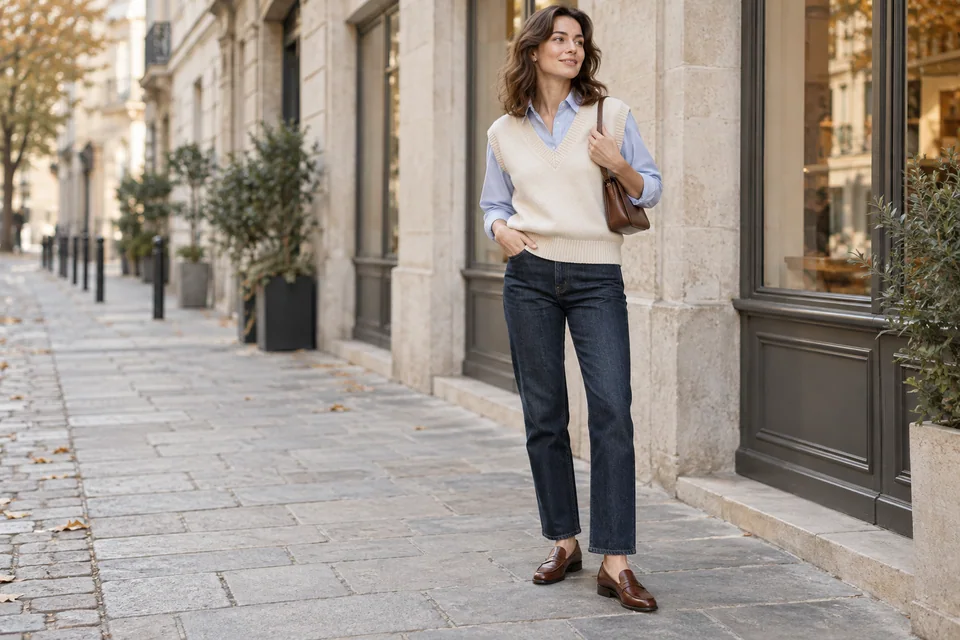
A sweater vest is most useful when it does one clear job: it adds a little warmth and texture while the rest of the outfit stays legible. Treat it as a sleeveless knit, not as a costume piece. A plain shirt, tee or fine long-sleeve layer underneath gives it a modern setting; a considered trouser, jean or skirt determines where the outfit can go.
The easiest route is to choose one calm vest and let the base layer do the work. Cream, charcoal, navy, camel and soft gray are especially easy to repeat. Then adjust the formula for temperature, dress code and how much walking is on the plan. The ideas below make those choices concrete.
Start with fit before adding layers
A vest that fits at the shoulder is easier to style than one that is merely oversized. The shoulder seam or armhole should sit close enough that it does not slide away from the shirt beneath it. Around the torso, leave room for one light layer, but avoid so much extra fabric that the sides billow over your trousers.
Hem length changes the balance. A cropped vest usually works best with high-rise jeans, trousers or a skirt because the waist is already defined. A hip-length vest is more flexible over a shirt with straight jeans or relaxed tailoring. If the vest is long and boxy, use a slimmer base layer and a bottom with a visible waist rather than adding another oversized piece.
Neckline is also practical. A V-neck frames a shirt collar and looks less crowded with a button-down. A crew neck is easy over a tee, a thin turtleneck or a collarless blouse. If your shirt collar is fighting the neckline, button it one notch lower or choose a crew-neck vest instead of forcing a very high collar into a narrow V.
Choose the base layer for the occasion
A pale-blue or white poplin shirt is the reliable answer for work, meetings and a lunch where you want to look intentional. Let the collar and cuffs show, but keep the shirt fairly smooth. A very oversized shirt plus a thick vest can create a lot of fabric around the arms and waist. If you like a roomy shirt, choose a thin merino or cotton vest and tuck just the front of the shirt into your bottoms.
For weekend errands, swap the shirt for a fitted white tee, striped tee or fine ribbed long-sleeve top. The more casual base prevents a neutral knit vest from feeling overly academic. A crew-neck tee under a V-neck vest is simple; make sure the tee neckline sits cleanly inside the V rather than bunching up.
For a dinner plan or a more minimal look, wear a fitted knit vest over bare skin only if the armholes and neckline feel secure to you. Otherwise, a close-fitting long-sleeve top gives the same clean column without asking you to adjust the vest all evening. Comfort is a better guide than trying to make every sweater vest work as a top on its own.
Build casual outfits with jeans and trousers
Dark straight jeans are the most forgiving partner for a cream, gray or patterned sweater vest. Try a cream V-neck over a pale-blue shirt, dark-indigo straight jeans and brown loafers. The contrast between the light top and dark denim keeps the layers visible, while loafers make the formula suitable for a café, gallery or casual lunch. On a cold day, add a camel coat that is roomy enough through the armholes.
For a softer weekend outfit, use a charcoal vest over a white tee with relaxed black jeans and clean leather sneakers. Keep the sneaker shape simple if the vest has cables, checks or another obvious texture. When both the knit and the shoes make a strong statement, the outfit can feel busier than the occasion needs.
Tailored trousers make a sweater vest feel less preppy and more contemporary. A fine navy vest over a white shirt, charcoal wide-leg trousers and low black boots works for a relaxed office. The useful tradeoff is proportion: wide trousers need either a vest that ends near the waistband or a small front tuck, so the torso does not become one long block of fabric.
Use skirts and dresses to change the mood
A sweater vest does not have to be paired with denim. For a calm evening outfit, wear a fitted black or chocolate vest over a fine long-sleeve top with a satin midi skirt and ankle boots. The matte knit makes a shiny skirt feel less formal, and the boots make sense when the pavement is cool or the plan involves walking between places.
With a pleated or A-line midi skirt, choose a shorter vest or tuck a thin vest lightly at the front. This shows where the waist begins and avoids covering the shape created by the skirt. A cream vest, white tee, olive midi skirt and brown ankle boots is an approachable option for a weekend market or informal family lunch.
Layering a vest over a shirt dress can work when the dress is not too voluminous. Pick a shirt dress with a defined waist or add a narrow belt over the vest only if it lies flat. If the dress has puffed sleeves, ruffles and a large collar, the vest may compete with all of those details. In that case, a simple cardigan or jacket is the cleaner layer.
Keep color and pattern deliberate
Use the vest as either the quiet anchor or the visual focus. A neutral vest over a blue shirt gives you room for darker denim, brown shoes and a bag in a similar warm tone. You do not need an exact color match; repeated undertones are enough. For example, a camel bag and medium-brown loafers can connect even when they are not identical shades.
If the vest has argyle, stripes or a bright color, make the base layer plain. A burgundy argyle vest can sit over a white shirt with charcoal trousers and black boots; there is no need to add a patterned scarf as well. If you love a bold vest but worry about cost per wear, start by repeating it with your existing white tee, denim and one neutral shoe.
Check contrast in daylight before leaving. A white shirt under a very pale beige vest can look washed out in some light, while a deep navy or charcoal vest gives clearer separation. The goal is not high contrast every time; it is making the neckline, sleeves and hem look intentional.
Plan for weather and outerwear
A sweater vest is helpful in mild weather because the arms remain free, but it is not a coat. For a cool morning, add a trench, relaxed wool coat or roomy blazer and take it off indoors. A close-fitting vest is easiest beneath outerwear; thick cables and wide armholes can catch on a narrow jacket sleeve.
Think about the fabric before you commit to a full day. Cotton and cotton blends are comfortable in heated rooms and on mild days. Fine wool or merino can add warmth without much bulk, while a chunky wool vest is better for an outdoor-heavy plan. Follow the care label rather than assuming every knit can be washed the same way; the Woolmark care guidance is a useful reminder to check fiber-specific instructions.
For wet weather, protect the practical parts of the outfit first: choose boots with grip, keep the hem off puddles and take a bag that closes. The vest can stay stylish, but footwear and outer layer do more work than a delicate finishing touch.
Solve the common sweater-vest problems
If the outfit feels dated, remove one traditionally preppy signal rather than abandoning the vest. You might keep the shirt but choose dark straight jeans instead of slim chinos, or keep loafers but swap a checked vest for a plain crew-neck version. One classic element looks intentional; several at once can make the outfit feel themed.
If the middle looks bulky, the fix is usually a thinner base layer or a shorter vest, not a tighter waistband. Smooth the shirt at the sides, choose trousers with a clean front and leave the hem untucked if tucking creates a thick ridge. If the vest still rides up, it may simply be too short for that particular bottom.
If you are unsure which layers you already own work together, use the Look Lens virtual wardrobe to group your neutral shirts, knitwear, denim and shoes before getting dressed. Seeing the colors and silhouettes together can reveal an easy repeat formula, such as one vest with two base layers and two pairs of shoes.
Make one vest work across the week
Choose three reliable base layers and two bottoms before buying another sweater vest. For example, one cream vest can cover a blue shirt with dark jeans, a white tee with black trousers and a thin black top with an olive skirt. That gives you different levels of polish without needing a new outfit every time the temperature changes.
Take a quick photo when a combination feels balanced. The Look Lens outfit analyzer can help you review the visible proportions and color balance of a sweater-vest look before you leave, especially when you are deciding between a sneaker and a loafer or whether an outer layer overwhelms the outfit. Use its suggestions as a check, then prioritize your comfort and the actual plan.
A sweater vest earns its place when it makes familiar clothes easier to use: it gives a tee and jeans more structure, makes a shirt feel warmer and can soften a dressy skirt. Start with a fit that lets you move, keep one layer quiet and choose shoes for the ground you will actually cover. For more outfit planning help, download Look Lens on Google Play and build looks from the pieces already in your wardrobe.
Frequently asked questions
What should I wear under a sweater vest?
A crisp button-down is useful for work and smart-casual plans, while a fitted tee or fine long-sleeve top makes the vest more relaxed. Choose a smooth base layer so the armholes and neckline do not bunch.
Can I wear a sweater vest with jeans?
Yes. Dark straight jeans are an especially easy partner for a neutral vest. Add a shirt and loafers for a smarter look, or a tee and clean sneakers for a casual one.
How should a sweater vest fit?
It should sit comfortably at the shoulder and leave room for one light base layer without ballooning at the sides. Match a cropped length with high-rise bottoms, or choose a hip-length vest for more coverage.
How do I keep a sweater vest outfit from looking too preppy?
Use one classic element at a time. Pair the vest with dark denim, relaxed trousers, boots or simple sneakers, and keep the remaining colors and patterns restrained.