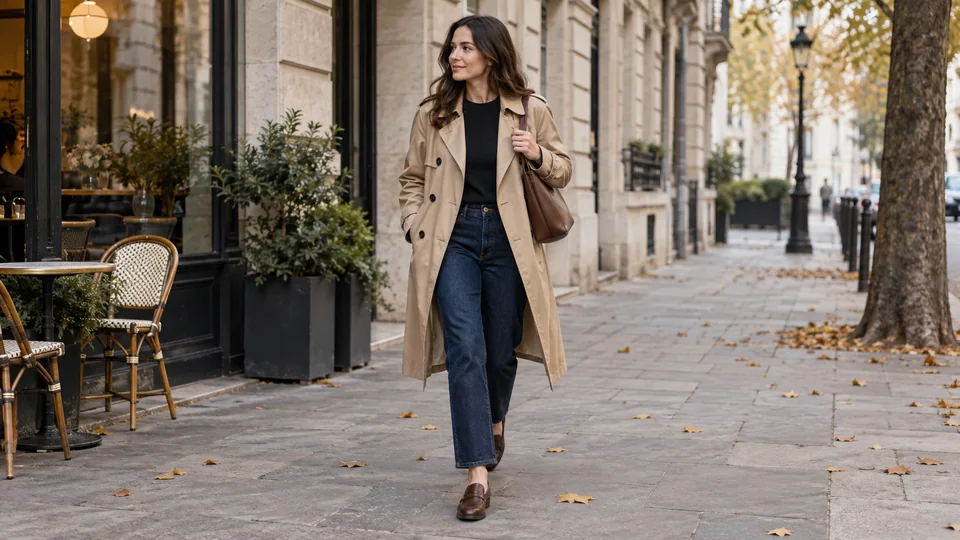
A trench coat is one of the rare outer layers that can make an ordinary outfit look intentional in seconds. It is useful when the morning is cool, the forecast is uncertain and you still want to feel put together at work, on a walk or over dinner. The trick is not owning a particular famous version or wearing it in only one way. It is learning how its length, volume and belt relate to the clothes already in your wardrobe.
Start by thinking of the trench as a lightweight frame rather than the whole look. A classic beige or camel coat works with denim, black, navy, cream, olive and soft red; a navy, black or olive trench can be just as flexible. Below are practical ways to choose the right proportions, build easy outfit formulas and make the coat work beyond the two weeks of perfect in-between weather.
Start with fit and length
The most wearable trench is one that leaves room for the layer beneath it. Put it on over the knit or blazer you would genuinely wear, then move your arms, sit down and fasten the belt. If the shoulders pull or the sleeves are tight over a light sweater, it will be frustrating once temperatures drop. A slightly relaxed fit is usually more useful than a sharply tight one, but it should still sit cleanly across the shoulders.
Length changes the visual balance. A hip-length trench feels casual and works well with straight jeans or wide trousers. A knee-length style is the simplest all-rounder for commuting and daily errands. A longer midi trench creates a strong vertical line and looks especially good with slimmer trousers, a knit dress or a short skirt with tall boots. If you are petite, check that the hem does not overwhelm your stride; showing some ankle or choosing a shoe with a little shape can keep the proportions clear.
Make the belt work for you
You do not need to tie the belt the same way every time. Wear the coat open with the belt knotted at the back when you want the outfit underneath to show and the day is mild. For wind or rain, fasten it loosely at the waist and let the collar stay open. A simple front knot gives a softer outline than pulling every button tight, while a fully buttoned trench can look especially polished over a dress or tailored trousers.
Notice where the belt lands. If it sits at your natural waist, it can give structure to looser jeans, a wide-leg trouser or a flowing dress. If it lands lower, keep the rest of the outfit streamlined so the coat does not feel bulky. The goal is comfort, not a posed silhouette: you should be able to sit on public transport, carry a bag and reach for your keys without retying it all day.
Build an easy jeans-and-trench outfit
Jeans are the most dependable starting point. Try dark straight-leg jeans, a black or ivory fine knit, brown loafers and a beige trench. The contrast between the clean top, denim and leather shoe gives the coat enough structure without making the outfit feel formal. For a more relaxed version, use mid-wash jeans, a striped long-sleeve top and clean low-profile sneakers. Keep the sneaker simple and in good condition so it reads as a deliberate choice rather than a last-minute errand shoe.
Wide-leg jeans can work beautifully with a trench when you clarify the top half. Choose a fitted tee, a light tuck or a shorter knit, then leave the coat open or belt it softly. With a very oversized sweatshirt and wide denim, a long loose trench can add too much volume at once. Use a closer top, a shorter trench or a more defined belt instead. When comparing pieces from your closet, Look Lens outfit analysis can provide a useful second view of the coat, shoe and silhouette together; treat the result as a prompt to notice balance, not as a fixed rule.
Take a trench to work
A trench is an excellent bridge between a commute and an office because it looks composed over simple clothes. For a smart-casual workday, pair navy ankle trousers with a pale blue shirt, a soft grey knit layer and black loafers. A camel trench keeps the colors calm without matching everything exactly. Another easy formula is black tailored trousers, a cream T-shirt, a lightweight cardigan and pointed flats, finished with a navy or stone trench.
For a more formal workplace, wear the coat over a single-color column: a charcoal suit with a white shirt, a black midi dress with opaque tights, or matching trousers and a fine top. Let the trench be the outer layer rather than trying to make it replace a blazer indoors. A structured work tote is useful here, but check that its shoulder strap does not constantly catch on the epaulettes or collar. Small practical details are what make a polished outfit feel easy to repeat.
Wear a trench with dresses and skirts
A long trench is a natural partner for dresses because both create one clean vertical line. Over a ribbed knit midi dress, add ankle boots in a similar depth to the coat belt or bag. Over a printed dress, choose a trench in a quiet neutral and repeat one color from the print in your shoe or bag. The coat gives an airy dress enough weight for a breezy day without hiding the outfit completely.
With a shorter skirt, consider the hem relationship before leaving. A trench that is much longer than the skirt can look deliberate, especially with knee boots or tights, but a tiny sliver of skirt plus bare legs may feel visually unsettled in cool weather. Try a mini skirt, opaque tights, loafers or boots and a close-fitting knit. For a midi skirt, a tucked top and a belted trench prevent the middle of the outfit from becoming too loose.
Choose colors, shoes and bags
A beige trench is forgiving because it behaves like a warm neutral. Pair it with navy and white for a classic crisp look, black and cream for contrast, olive and denim for a softer casual combination, or burgundy and chocolate for depth. You do not need every accessory to match the coat. A brown leather bag and black loafer can coexist when each appears intentional and the outfit has a calm base.
Choose shoes for the route as well as the photo. Loafers and ankle boots are easy with straight trousers, sneakers work with relaxed denim, and low heeled boots give dresses a little more presence. Avoid a shoe you have not walked in simply because it photographs well with the coat. If you want to identify the colors and layers you use most, save your dependable pieces in the Look Lens virtual wardrobe and test a few combinations before a busy morning. The useful discovery may be that one coat already works with more outfits than you thought.
Adjust for changing weather
A trench is most helpful when you plan the layer underneath. On a mild day, use a cotton tee, thin knit or shirt and leave the coat open. For a colder morning, add a merino sweater or a slim cardigan that does not bunch at the sleeves. A scarf can add warmth, but choose one with enough softness that it sits inside the collar rather than fighting it. In rain, protect suede shoes and use a bag that closes securely.
Check the fabric label before assuming every trench is waterproof. Many traditional cotton-gabardine styles resist a light shower but are not designed for a long downpour. A coated or technical trench may be better for a wet commute, while a lightweight cotton version is ideal for dry, breezy days. Hang the coat after wear, empty its pockets and let it dry away from direct heat; that small routine helps its shape stay crisp.
The takeaway: repeat the formula, change one piece
The best trench-coat outfits are uncomplicated. Begin with clothes that already fit well, use the coat to add a long clean line, and choose one detail—shoe, bag, stripe or color—that makes the combination feel like yours. Jeans and a knit, tailored trousers and a shirt, or a midi dress and boots are enough to create many distinct looks. You do not need to reinvent the coat each time you wear it.
Save the combinations that feel comfortable, then switch just one component on the next outing. If you would like a quick way to compare your familiar layers before leaving, try Look Lens on Google Play and build from the wardrobe you already enjoy wearing.
Frequently asked questions
What looks good under a trench coat?
A trench works with simple layers such as fine knits, shirts, T-shirts, jeans, tailored trousers and midi dresses. Choose the underlayer for the weather, then use the coat to add structure.
Should a trench coat be fitted or oversized?
It should be comfortable enough to layer over a knit or light blazer without pulling at the shoulders. A relaxed fit is practical, but very large shoulders or sleeves can overwhelm the rest of the outfit.
Can I wear sneakers with a trench coat?
Yes. Clean, low-profile sneakers pair well with a trench, straight jeans and a simple knit or striped top. Keep the rest of the outfit tidy so the sneakers feel intentional.
How do I style a beige trench coat for work?
Wear it over tailored trousers, a shirt or fine knit, and loafers or ankle boots. Navy, charcoal, cream and black all work well with beige, and a structured bag finishes the commute-friendly outfit.