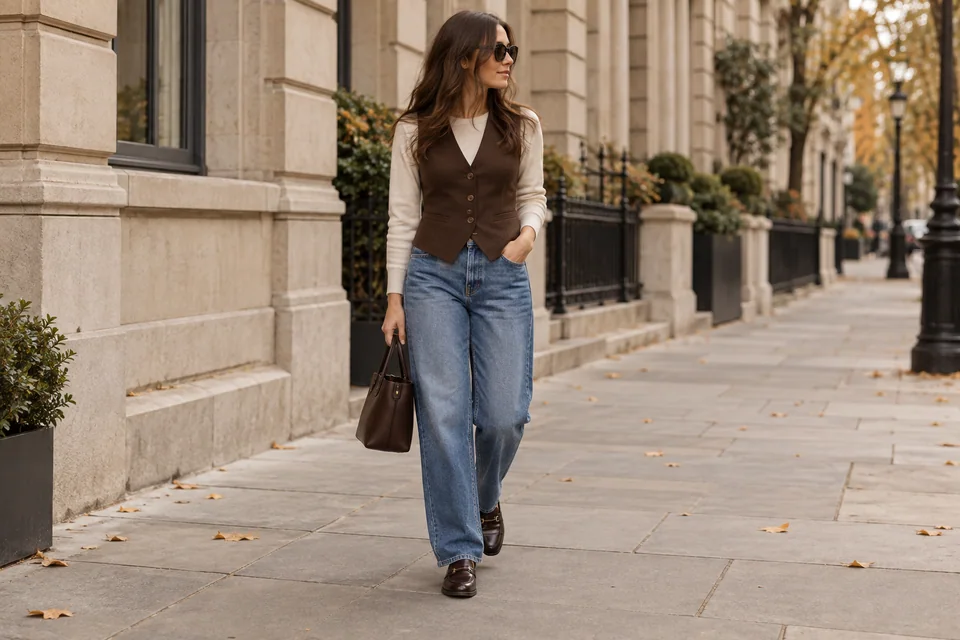
A waistcoat is one of those pieces that can look surprisingly easy in a photo and slightly puzzling on a hanger. It has the tailoring of a blazer but none of the sleeves, and it can feel dressed up before you have chosen a shoe. The simplest way to make it wearable is to give it a clear job: let it bring structure to jeans, make trousers feel intentional, or add a neat line over a softer skirt or dress.
That does not mean every waistcoat needs to be fitted tightly or worn as part of a formal three-piece suit. A relaxed wool-blend style, a linen version, or a simple black vest can work with clothes you already reach for. Start by deciding the occasion, the temperature, and how much movement your day involves. These waistcoat outfit ideas focus on proportion, layers and practical substitutions so the piece feels like yours rather than borrowed from a costume rail.
Start with fit and fabric
A waistcoat should sit smoothly when you breathe, sit and reach for a bag. Button it over the kind of top you actually plan to wear beneath it, then check that the front does not pull into horizontal lines. A close shape can be elegant, but it should not make lunch, a commute or a long desk day uncomfortable. If you prefer a relaxed silhouette, choose a style with enough room at the armholes and a hem that still meets your trousers or skirt in a deliberate place.
Fabric changes the message. Wool, twill and suiting fabrics feel structured and are useful for office outfits or cool weather. Linen and cotton are lighter choices for dry, mild days; they crease more readily, which is part of their casual character. A knit waistcoat has a softer, less tailored effect and can replace a cardigan. Before buying another neutral, inspect what you already own: a brown, charcoal, navy or black waistcoat will usually pair with more outfits than a very specific novelty print.
Balance the waistcoat with the right base
Because a waistcoat is cropped or waist-defining by nature, the base layer matters. For an uncomplicated daytime outfit, begin with an ivory tee, fine crew-neck knit or ribbed long-sleeve top. The close neckline keeps the area under the V-neck tidy without asking you to show more skin than you want. A crisp white or pale blue shirt adds a sharper mood, while a thin turtleneck makes sense on a cold day.
Then think about the line below the hem. High-rise straight jeans, tailored trousers and midi skirts are especially dependable because they meet the waistcoat near the waist and keep the outfit visually connected. If your waistcoat ends short, low-rise trousers can create an accidental gap when you move. That can be a deliberate look, but for an easy first formula, choose a higher rise or add a longer underlayer. A loose waistcoat and very loose trousers can work in one color, but a fitted knit or visible shoe shape helps the silhouette read as intentional.
Wear a waistcoat with jeans
Jeans are the fastest route to making a waistcoat less formal. Try a chocolate, charcoal or navy waistcoat over an ivory long-sleeve tee with medium-blue straight jeans and loafers. The tailored layer gives the denim a little polish, while the flat shoe keeps the outfit useful for a train ride, a lunch meeting or a long walk. If the weather is warm, trade the long sleeve for a fitted cotton tee; if it is cool, use a thin merino knit rather than piling a thick sweatshirt underneath.
For a more relaxed version, choose a slightly roomier waistcoat, a striped tee, faded straight jeans and clean low-profile sneakers. Keep the sneaker simple enough that it does not fight the vest's buttons and pockets. A belt can be helpful when it repeats the shoe color, but it is not compulsory. If you want a second view of how a shoe, bag or outer layer changes the full proportion, Look Lens outfit analysis can help you compare the combinations you are already considering; treat the result as a prompt to notice details, not a rule about what you should wear.
Use matching trousers without feeling overdone
A matching waistcoat and trouser can be one of the most flexible work formulas. Start with charcoal, navy, black or soft brown, then add a pale shirt, fine knit or simple shell top. The set looks composed because the fabric creates a continuous vertical line, but it is generally lighter and easier to move in than a full suit jacket. For a relaxed office, leather flats, loafers or clean minimal sneakers may suit the dress code; for a more formal appointment, choose a pointed flat, low block heel or polished derby.
The pieces do not have to match exactly to work together. A black waistcoat with charcoal trousers, or a brown waistcoat with cream trousers, can look more relaxed than a perfect set. Keep the rest of the palette calm: one light base, one dark tailored layer and perhaps a small burgundy or forest-green accessory. If you add an oversized blazer over the waistcoat, check the armholes and shoulders first. It is a useful cold-weather option, but bulky seams under a fitted jacket will make the whole outfit uncomfortable.
Pair it with skirts and dresses
A waistcoat is useful when a skirt or dress needs a little definition. Over a fluid midi skirt, use a closer waistcoat and a fine top in a related color; the waistcoat creates a clear middle without relying on a belt. Black with charcoal, brown with cream, or navy with soft blue gives you depth without becoming fussy. Pointed flats and ankle boots both work, but choose the latter when the skirt is heavier or the weather is cool.
Over a shirt dress, leave the waistcoat open if you want the dress's shape to remain visible, or button it when you want a stronger waist. Try it at home and sit down before committing: a waistcoat that is comfortable standing can feel restrictive over gathered fabric. With a denim midi skirt, an ivory tee and a dark waistcoat make an easy smart-casual alternative to a cardigan. Avoid solving every outfit with another tight layer; a little air around the arm and neck keeps this tailored piece from feeling rigid.
Choose shoes and accessories for the plan
The shoe tells a waistcoat where it is going. Loafers and slim sneakers make jeans practical. Ballet flats lighten a matching trouser set in an indoor office. Ankle boots give a skirt outfit enough visual weight for autumn, while a low heel can make the same pieces feel ready for dinner. Choose for the route rather than the mirror: polished leather shoes are only a useful choice if you can walk and stand in them comfortably.
Accessories work best when they do not compete with the waistcoat's buttons and neckline. Small hoops, a watch, one pendant or a structured bag are usually enough. A long scarf can be useful outside, but take it off indoors so it does not cover the line you built. Saving your waistcoat, shoes and repeat basics in a Look Lens virtual wardrobe is a practical way to spot colors and pieces you already own that can make new formulas, instead of buying a duplicate just to recreate one outfit.
Layer for weather and comfort
A waistcoat is a middle layer, not always an outer layer. On a mild day, it can sit over a tee or fine knit without anything else. For a cooler commute, add a trench, wool coat or roomy blazer on top, then remove that outer layer indoors. Make sure the outer piece has enough space around the armholes; forcing a fitted coat over a thick waistcoat can bunch the fabric and limit movement.
Temperature is not the only comfort question. Consider whether you will carry a laptop, sit in a car, visit a warm restaurant or walk in rain. A waistcoat with decorative metal buttons may look great for dinner but feel less useful under a heavy crossbody strap. A simple unlined style may be more comfortable for travel. The best outfit formula is the one that works after the first ten minutes, not only in the mirror before you leave.
Avoid common waistcoat styling traps
If a waistcoat outfit feels costume-like, remove one overly literal element. You do not need matching pinstripes, a pocket watch, dramatic boots and a crisp shirt all at once. Keep one tailored cue and mix in a familiar basic such as denim, a jersey tee or a simple skirt. If it feels too severe, soften the palette with ivory, faded blue, cream or a small touch of color rather than adding more accessories.
If the outfit feels unfinished, change one proportion before buying anything. Tuck the top, switch a low-rise jean for a high-rise pair, choose a shoe with a clearer toe, or try a shorter outer layer. And if the waistcoat simply feels too structured for a casual day, leave it for another plan. A versatile garment should offer an option, not turn getting dressed into a performance.
The takeaway: let the waistcoat add structure
A waistcoat earns its place when it makes familiar clothes easier to combine. Build from a comfortable base, connect it to a high-rise jean, trouser or skirt, and select shoes that match your actual plan. Denim and loafers, matching trousers and flats, or a midi skirt and boots are three complete starting points; you only need to adjust one part at a time.
Keep the formulas that feel natural and adapt them for temperature, walking and your own color preferences. When you want to compare a few pieces from your wardrobe before a busy morning, try Look Lens on Google Play for a helpful styling starting point.
Frequently asked questions
What should I wear under a waistcoat?
A fine knit, fitted T-shirt, ribbed long-sleeve top or crisp shirt all work under a waistcoat. Choose the layer according to the temperature and the formality you want, and make sure it does not bunch at the armholes.
Can I wear a waistcoat with jeans?
Yes. A waistcoat with a close tee or knit, straight jeans and loafers is an easy smart-casual formula. Clean sneakers make it more relaxed, while a darker jean and leather shoe feel more polished.
Should a waistcoat be tight or loose?
It should be comfortable enough to button, sit and breathe without pulling. A closer waistcoat creates a defined line; a relaxed one can work well over a thin layer as long as the shoulder and armholes still sit neatly.
Can I wear a waistcoat to work?
Yes, especially with matching trousers or tailored ankle pants. Add a shirt, fine knit or shell top and choose shoes that suit your workplace. A waistcoat can feel polished without the warmth or formality of a full blazer.