Start with proportion, not a trend
Ballet flats are small, low and close to the foot. That is their charm, but it means the rest of an outfit needs a little definition. The easiest route is a clean ankle, an intentional trouser hem, or a skirt that clearly ends above or below the narrowest part of the calf. When fabric collapses onto the shoe, the whole look can feel accidental even when every separate piece is good.
Begin by deciding what job the flat has. A black leather pair can be the quiet finishing note beneath denim; a red, silver or mesh pair can be the point of contrast in a neutral outfit. Do not make every item delicate at once. If the shoes are soft and rounded, a straight jean, crisp shirt, belt, blazer, denim jacket or structured bag gives the outfit enough counterweight.
The aim is not to make your feet look smaller or to obey a body rule. It is to make the visual line easy to read. Try the outfit in a full-length mirror, take a few steps, and notice whether the hem catches on the shoe or whether you would spend the day adjusting it. That small practical test is more useful than copying a look unchanged.
Wear ballet flats with jeans by controlling the hem
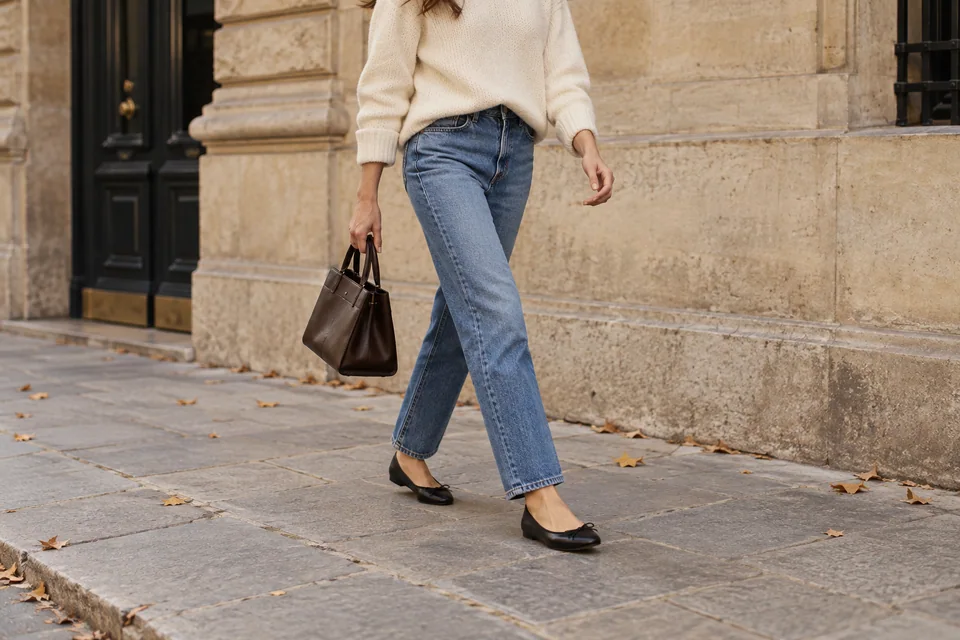
Straight, slim-straight and gently tapered jeans are reliable companions because they leave room for the shoe to show. Choose an ankle-length pair, turn up one neat cuff, or have a long hem shortened rather than letting it pool. Medium or dark blue denim with black flats is a calm everyday formula; ecru denim with tan or burgundy flats reads a little softer.
For a simple weekday outfit, combine straight blue jeans with a cream crew-neck knit, black ballet flats and a dark-brown bag. The knit adds texture while the bag repeats the outfit's polish. On warmer days, swap the knit for a white T-shirt and an open blue shirt. If you prefer a sharper outline, add a cropped navy blazer instead of a long cardigan.
Wide-leg jeans can work too, but the proportions need more attention. Choose a hem that nearly skims the top of the shoe without dragging, and use a flat with a defined toe or a small strap so it does not vanish beneath the denim. If the jean is very long or heavy, a loafer or a sturdier shoe may be more comfortable and visually balanced. That is a useful substitution, not a styling failure.
Use tailored trousers for a relaxed office
Ballet flats are a sensible alternative to heels when the day includes a commute, standing or several meetings. A pressed ankle-length trouser, a tucked-in shirt and a leather flat create an office-appropriate line without looking overly formal. Navy, charcoal, black and chocolate trousers make a natural base; the shoe can match the trouser for a long, quiet column or contrast gently with it.
Try navy ankle trousers, a white poplin shirt, black leather flats and a narrow black belt. For a creative workplace, replace the shirt with a fine striped knit and add a roomy blazer. A pointed or almond toe makes the combination feel slightly more tailored, while a rounded toe feels softer. Neither is universally better; choose according to the clothes already in your wardrobe.
Check the dress code and the weather before relying on a very open vamp. A pair that feels fine at a desk may be less useful during a wet walk from the station. Carrying a simple pair of socks and changing at work can be more realistic than pretending a thin shoe suits every commute.
Pair skirts and dresses with one grounding element
Ballet flats and skirts are an obvious match, but they do not need to look costume-like. Ground a floaty midi skirt with a chunky knit, a denim jacket or a compact leather bag. With a short skirt, an opaque tight and an oversized shirt or blazer can make the proportions feel settled in cooler weather. With a column or slip skirt, a fine cardigan and a flat in the same colour family create a clean evening line.
For dinner, try a black midi skirt, a fitted black cardigan and red ballet flats. The red is enough colour, so keep the bag simple. For a daytime dress, choose a cotton shirt dress with a belt and neutral flats; add a light trench if the forecast is changeable. A dress with a very long, full hem can hide the shoes entirely, so either embrace that relaxed effect or choose a slightly shorter length.
Straps, bows and mesh are details, not requirements. If your dress already has print, ruffles or shine, a plain leather flat may let the clothes lead. If your outfit is plain black, navy or denim, a textured or coloured pair is an easy way to add interest.
Choose colour and texture with a clear role
Black leather is the most flexible starting point because it works with blue denim, grey trousers, black skirts and white shirts. Tan or warm brown feels natural with ecru, olive, camel and mid-blue. Burgundy works well when you want a deeper colour that still behaves like a neutral; red, metallic silver and printed flats are better treated as an accent.
Repeat one small note rather than matching every accessory. A black flat can echo a black belt; a burgundy pair can meet a lip colour, sweater stripe or small bag detail. The rest of the outfit does not need to be the same shade. In fact, exact shoe-and-bag matching can make a modern casual look feel overly formal unless that polished effect is the point.
Texture changes the message too. Matte leather is calm and versatile, patent leather has more shine, suede is softer but less practical in rain, and mesh is airy but may ask for careful sock choices. Choose the version that fits the day rather than buying a shoe for an imagined lifestyle.
Plan for comfort, walking and weather
A flat silhouette does not automatically mean a comfortable shoe. Check the toe box, heel grip and sole before committing to a long day. Wear a new pair indoors first, then for a short errand. If the heel slips, a thin heel grip or a different size may help; if your toes feel compressed, do not assume the leather will solve it after several painful outings.
For dry autumn days, a thin cotton sock in a tonal colour can make a cropped jean and ballet flat feel considered as well as warmer. For rain, choose leather with a more substantial sole or take a different shoe. Ballet flats are not a moral test of personal style: shoes that suit the pavement and temperature make an outfit more wearable.
Use the advice you already own by photographing a few candidate combinations in Look Lens Virtual Wardrobe. Seeing the same flat beside two pairs of jeans and a skirt makes it easier to spot which hem lengths you reach for. The tool can support comparison; your comfort on the day remains the deciding factor.
Solve the common ballet-flat outfit problems
If the shoes feel too sweet, add contrast instead of abandoning them. Try a boxy denim jacket, a loose striped shirt, a straight trouser or a simple leather belt. If they disappear under your trousers, shorten the hem, add a cuff or choose a shoe with a little more toe definition. If the outfit seems flat, add one texture such as knitwear, denim, leather or a woven bag rather than piling on accessories.
When you are unsure about a colour, compare the complete outfit before leaving home. The Look Lens outfit analyzer can help you review how the shoe, hem and layers read together in a photo, then you can make a specific adjustment such as changing the bag or cuffing the jeans. It is more useful to ask one practical question than to chase a vague verdict.
Finally, do not reserve your flats for only skirts or only spring. Their lightness can soften a tailored trouser, finish a denim outfit or make a knit dress easier for a normal day. Let the weather, walking plan and fabric weight decide the rest.
Build three dependable outfits, then vary them
A good ballet-flat wardrobe does not need endless formulas. Start with straight jeans and a knit, ankle trousers and a shirt, and a midi skirt with a cardigan. Once each works with your own bag, coat and walking routine, vary colour or texture slowly. That gives you outfits you will actually wear rather than a collection of one-photo ideas.
For a quick final check before you leave, you can also use Look Lens on Google Play to review a photographed outfit and compare a small adjustment. Keep the useful rule: show the shoe, balance its lightness, and choose comfort for the real plan.
Frequently asked questions
Can you wear ballet flats with wide-leg jeans?
Yes. Keep the hem just above the ground and choose a flat with a visible toe or strap so it does not disappear beneath heavy denim.
Which ballet-flat colour is most versatile?
Black leather is the easiest first pair for denim, tailoring and skirts. Tan, burgundy or a metallic pair can follow if they connect with clothes you already wear.
Are ballet flats suitable for work?
They can be, especially with ankle trousers and a shirt. Check your workplace dress code and choose a supportive closed pair for a commute.
What socks work with ballet flats?
Invisible liners are discreet; a thin tonal sock can look intentional with cropped jeans in dry, cool weather. Test that the shoe still feels comfortable.