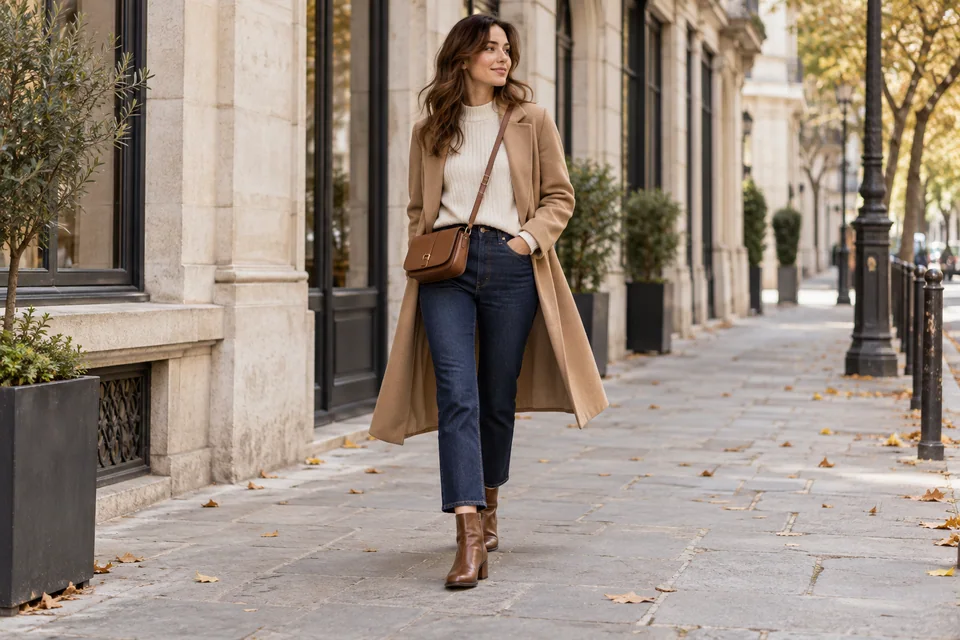
Brown ankle boots become easy to wear when you stop treating brown as a matching challenge and start treating the boot as the outfit's anchor. The color can be espresso, chestnut, tan or cognac; what matters first is the boot's shaft, toe and heel. A sleek Chelsea boot reads differently from a chunky lace-up boot, even when both are dark brown. Let that shape set the level of structure, then build the rest of the outfit around a clear hem and a practical plan.
For everyday outfits, the simplest route is one dark or neutral bottom, one lighter top and a second warm detail somewhere above the ankle. A coat, belt, bag or small leather watch strap can echo the boot without making everything the same shade. The formulas below work with clothes many people already own, and each can be adjusted for rain, walking and different dress codes.
Start with the boot shape
Before choosing jeans or a skirt, look at where the boot ends on your leg. A close-fitting ankle boot with a narrow shaft works neatly under straight jeans, wide trousers and long skirts because it adds very little bulk. A wider western or lace-up shaft needs more air around it: cropped jeans, a midi skirt or trousers with enough width at the hem make it look deliberate instead of squeezed in.
The toe also changes the message. A round toe and low block heel are useful for errands, commuting and uneven pavement. A pointed toe or slim heel lengthens the line under tailored trousers or a midi dress, but it is only a good choice if you can genuinely walk in it. If you need to cover a long distance, choose the stable pair and use a sharper trouser crease, fine knit or structured bag to restore polish.
Dark espresso and deep chocolate boots can function almost like black footwear, especially with navy, charcoal and black. Lighter tan and cognac are more visible, so they often look best when the outfit includes cream, ecru, denim, olive or another warm note. You do not need a perfectly matching bag; matching leather exactly can look more formal than the occasion requires.
Get the jean and trouser hem right
With straight jeans, aim for a small clean break above the boot or a hem that just touches the top of it. Dark-indigo straight jeans, chestnut ankle boots and a cream knit are a reliable starting point for a café, museum or casual lunch. If the jean is long, make one tidy cuff only when the denim is not too stiff; multiple thick rolls can make the ankle look heavy and hide the boot you chose.
Wide-leg jeans and trousers can work beautifully with a boot, but the hem must be long enough to skim the front of the shoe and short enough not to drag. Try the outfit indoors with the exact boot you plan to wear. If you can see a large gap at every step, either shorten the hem, choose a higher-shaft boot or switch to a shoe with more visible toe. A small heel is often helpful here because it keeps fabric off wet pavement without changing the outfit's ease.
For an office-friendly version, pair dark-brown Chelsea boots with charcoal tailored trousers, an ivory shirt and a navy blazer. Keep the trouser leg straight or gently wide rather than tight around the shaft. A crisp hem makes the boot appear chosen for the outfit; fabric that bunches over elastic panels makes even expensive pieces look unfinished.
Wear brown ankle boots with skirts and dresses
A midi hem is the most forgiving partner for brown ankle boots because it leaves a considered band of leg or tights and lets the boot provide visual weight. For dinner, combine cognac ankle boots with a black satin midi skirt, a fine black knit and a brown belt. The boot's matte leather calms the shine of satin, while the belt repeats the color in a quiet, useful way.
With a sweater dress, choose the boot based on the dress's volume. A fitted ribbed midi can take a chunkier lug-sole boot, especially with a wool coat. A floaty printed dress usually needs a slimmer boot or a clean almond toe so there is still contrast between the soft fabric and the shoe. If the dress stops exactly at the widest part of the boot shaft, test a slightly longer or shorter hem; that small change can make the line feel much less awkward.
Opaque tights are practical in cool weather, but their color matters. Black tights make an espresso boot feel cohesive under a dark skirt. Semi-opaque brown, charcoal or deep olive tights can connect a warmer boot to a neutral outfit. Avoid using a skin-tone tight simply to make an ankle boot disappear; a visible transition is often what gives this pairing its shape.
Use color without overmatching
Brown boots are especially flexible with cream, oat, camel, olive, denim blue, burgundy and soft grey. A medium-brown boot, faded-blue jeans, white tee and olive overshirt is casual without becoming beige from head to toe. For a more tailored outfit, try espresso boots with charcoal trousers and an off-white shirt; the dark shoe is grounded but not as stark as black.
Black and brown can sit together when there is a reason for the transition. A black knit and black satin skirt can take cognac boots if a brown belt or bag creates a bridge. A black leather jacket over dark jeans with deep-brown boots also works because the boot remains in the same visual depth. What usually looks accidental is one light tan shoe under an otherwise very cool black outfit with no other warm note at all.
If you are unsure whether a boot color belongs, lay the intended pieces out in daylight or take a quick mirror photo. The Look Lens outfit analyzer can give a second view of visible color balance and proportions when you are deciding between two pairs. Use that check to spot a disconnect, then prioritize the pair that fits your walking and weather plan.
Dress for weather and walking
A polished outfit is less useful when damp hems, slippery soles or cold feet take over the day. For rain, choose a boot with a grippy sole, keep the jean hem above puddles and carry an outer layer that can handle a shower. Smooth leather is usually simpler to wipe down than pale suede; if you wear suede, reserve it for a dry forecast and use a protective treatment that is suitable for that material.
For a day that moves from transit to a meeting to dinner, build one removable layer around the boot. A cream tee, dark jeans, chestnut boots and a camel coat can lose the coat indoors without becoming unfinished. If your boots are new, do not make their first outing a full day on hard pavement. Bring a familiar flat shoe for a longer commute or break the boots in on a shorter route first.
Solve common brown-boot outfit problems
If brown boots make your legs look cut off, the problem is usually a hard contrast at the ankle. Try a darker boot with dark denim, a trouser that covers more of the shaft, or a skirt hem that creates a longer vertical line. You do not need to abandon a lighter boot; simply repeat its warmth in a coat, knit or accessory so it reads as part of the outfit rather than a separate block at the floor.
If the combination feels dated, remove one themed detail. A western boot plus fringe bag plus distressed denim can compete with itself. Keep the boot, then choose clean straight jeans and a simple knit. If the outfit feels too rugged for work, exchange a heavy sole for a smooth Chelsea boot and use trousers with a clean front.
Your existing pieces can make these adjustments faster. In the Look Lens virtual wardrobe, group brown footwear with your denim, tailored trousers and coats, then notice which colors and hem lengths repeat successfully. It is a useful way to plan three outfits before buying a second pair that does the same job.
Make one pair work harder
A versatile brown ankle boot earns space when it covers more than one setting. Use it with dark straight jeans and cream knit for errands, charcoal trousers and an ivory shirt for a relaxed office, and a satin midi with a fine sweater for dinner. Keep the boot clean, let it dry fully after rain and give it a rest between long wears so the leather and lining can recover.
The best formula is not the one with the most matching accessories. It is the one that lets you move comfortably, keeps the hem under control and repeats the boot's warmth once or twice. Start with the pair you already own, test it with your most-used bottoms and save the combinations that feel natural. For help arranging those clothes into more repeatable looks, get Look Lens on Google Play and build from your own wardrobe.
Frequently asked questions
Can I wear brown ankle boots with black clothes?
Yes. Deep espresso boots work easily with black, while cognac boots look more intentional when a brown belt, bag or warm-toned coat repeats the color.
What jeans look best with brown ankle boots?
Straight jeans with a clean hem just above the shaft are the easiest option. Wide jeans also work when their hem skims the shoe without dragging.
Should jeans go inside ankle boots?
Usually no. Straight or wide jeans generally look cleaner over ankle boots. Tucking works only with very slim jeans and a shaft designed to sit over them.
Which brown boot is most versatile?
A medium- to dark-brown leather ankle boot with a stable low heel, simple toe and minimal hardware works across jeans, trousers, skirts and dresses.