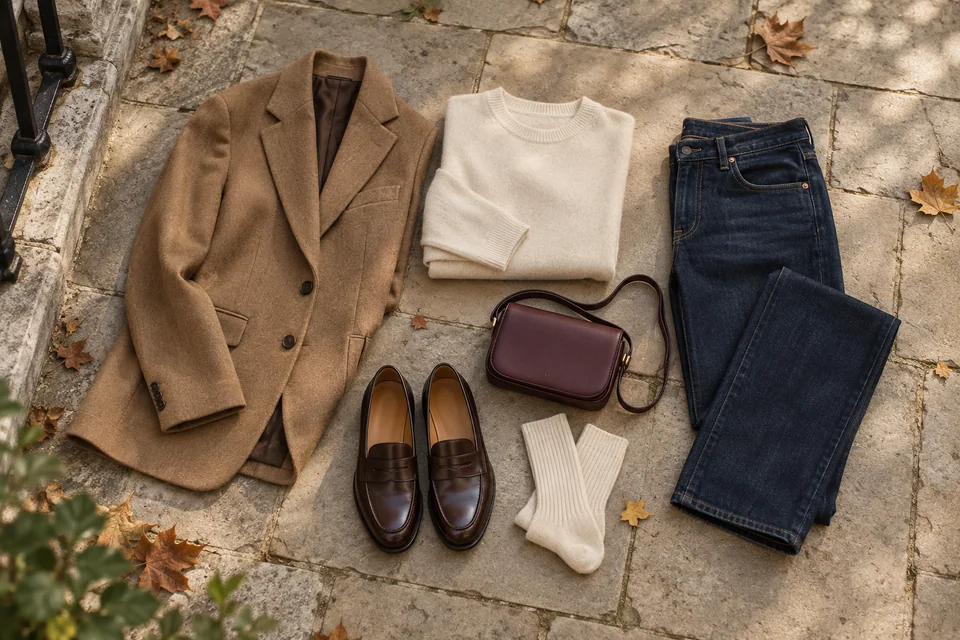
Loafers are useful because they bring a little structure to clothes you already wear. A pair can sharpen a white T-shirt and jeans, settle a wide trouser, or give a simple skirt a more deliberate finish. The trick is not to make every part of the outfit polished. Let the loafers be the neat element, then balance them with a relaxed fabric, an easy layer, or a little visible skin at the ankle.
Begin with the pair you can genuinely walk in. Penny loafers, tassel loafers, chunky lug-sole styles and slim leather pairs all create different weight at the bottom of the outfit. The best formula depends on the shoe's shape, the weather and where you are going. The ideas below are starting points rather than a uniform: use the colors, proportions and accessories that feel like you.
Start with the loafer's shape
A slim, low-profile loafer has a quiet, classic effect. It works easily with straight jeans, cropped trousers, fine knits and skirts because it does not take up much visual space. A chunky sole feels more substantial and can anchor wider trousers, an oversized shirt or a longer coat. If your trousers are generous through the leg, a very delicate shoe can sometimes disappear; a loafer with a defined toe or a thicker sole gives the hem a clearer finish.
Color also changes the mood. Black loafers are the simplest choice with charcoal, navy, black denim and crisp white. Dark brown or oxblood loafers soften denim, cream, olive and camel. Suede reads more relaxed but needs more thought on wet days, while smooth leather can look more polished with minimal effort. You do not need a matching bag. Repeating a brown, burgundy or black tone in a belt, watch strap or small bag is enough to make the shoe feel connected.
Make jeans and loafers look intentional
Straight-leg jeans and loafers are a reliable place to start. Choose a hem that either reaches the top of the shoe cleanly or ends just above the ankle. A long, bunched hem can hide the loafer's shape; a very short hem can leave an accidental-looking gap. Try dark straight jeans, a white tee, brown loafers and a relaxed cardigan for errands, or black jeans, a fine striped knit and black loafers for a sharper version.
Wide jeans can work beautifully too, especially with a chunkier loafer. The practical check is movement: walk across the room and make sure the hem does not catch under the shoe. A closer top, partial tuck or shorter jacket gives the wider bottom half definition. With cropped jeans, decide deliberately whether you want a bare ankle, a thin sock, or a textured sock to show. Treating that small area as part of the outfit makes the combination feel finished rather than incomplete.
Take one full-length photo when you are choosing between two jean lengths. Look Lens outfit analysis can help you notice how the shoe, hem and top balance in your exact combination. Use that observation as a second set of eyes, not a rule: the pair that stays comfortable when you walk and sit is usually the better choice for your day.
Pair loafers with trousers and tailoring
Loafers are a natural partner for tailored trousers because both pieces have a clean line. Start with trousers that skim rather than pool over the shoe. A tapered ankle length shows a slim loafer clearly, while a full-length wide trouser benefits from a shoe with enough toe shape or sole weight to hold its own. Navy trousers with a cream knit and brown loafers are calm for a relaxed office; charcoal trousers, a pale blue shirt and black loafers create a slightly crisper version.
When you add a blazer, keep one element soft. A T-shirt, fine merino, ribbed tank or open collar prevents the outfit from becoming overly formal. If you prefer a monochrome base, vary the textures: black loafers, soft black trousers, a grey knit and a leather belt read more layered than four identical black surfaces. For a workplace, the dress code and your commute matter more than any formula. Choose a shoe you can wear on stairs and a trouser length that stays comfortable while seated.
Wear loafers with skirts and dresses
A loafer can give a skirt or dress useful contrast. A soft midi skirt with a structured shoe feels grounded, while a short skirt with a chunkier loafer and socks can make the proportions feel playful and intentional. For an easy everyday look, try a black midi skirt, fitted striped top, burgundy loafers and a short jacket. If the skirt is full or flowing, a closer top helps show the waist; if it is a straight column, a relaxed shirt or light knit can add softness.
With a dress, consider the amount of vertical line you see between hem and shoe. A knee-length shirt dress and slim loafers can look clean with a bare ankle or sheer sock. A long knit dress works well with a more substantial loafer, especially when the dress is fitted enough that the silhouette does not become one large block. There is no need to force a loafer into every occasion: if the plan involves wet grass, a long walk or a formal dress code, boots, sneakers or another shoe may serve you better.
Choose socks with a purpose
Socks with loafers work best when they answer a practical or visual question. On a cool day, a thin ribbed sock keeps the shoe more comfortable. With cropped trousers or a short skirt, a cream, grey, burgundy or navy sock can create a small, deliberate color bridge. Match the sock loosely to one other item, such as the knit, bag or stripe in a top, rather than matching every accessory exactly.
For a quieter look, choose a no-show sock that stays in place or show a small bare ankle with a trouser length that is clearly intentional. Avoid a sock that is bulky enough to make the shoe pinch; comfort affects posture and that changes the entire outfit. White athletic socks can be a good contrast with black or brown chunky loafers and relaxed denim when the rest of the look is casual. They are less useful when you want a refined trouser outfit. The point is clarity, not following a single sock rule.
Build five repeatable loafer formulas
First, wear brown loafers with dark straight jeans, a white tee and a camel cardigan for coffee or a casual day. Second, pair black loafers with navy tapered trousers, a cream knit and a narrow belt for work that is not strictly formal. Third, try burgundy loafers with a black midi skirt, a fitted striped top and a cropped jacket for dinner. Fourth, combine chunky black loafers with relaxed ecru jeans, a grey sweatshirt and visible white socks for a more casual contrast. Fifth, wear slim black loafers with a pale blue shirt, charcoal trousers and an open cardigan when you want a light layer.
Save photos of these formulas alongside the pieces you own in the Look Lens virtual wardrobe. Comparing your actual trousers, skirts and shoe colors makes it easier to spot a useful substitute: perhaps a dark cardigan instead of the blazer, or a striped tee instead of the fine knit. Changing one component at a time is more practical than buying an entire new outfit around one pair of shoes.
Finish with comfort and context
Before leaving, put on the exact socks, outer layer and bag you plan to use. Walk up and down stairs if you can. Check whether the heel slips, whether the leather rubs, and whether your trouser hem catches the shoe. Loafers often improve with gradual wear, but a pair that already hurts indoors is unlikely to feel better after a long commute. A small heel grip, thin sock or different insole can be useful only if it genuinely improves the fit.
A good loafer outfit is not about looking more formal than you are. It is a comfortable base, a deliberate hem and one or two colors that belong together. Start with the shoe you enjoy wearing, balance it with relaxed clothes, and let the setting decide how polished the rest should be. For a quick way to compare your own versions before you go, get Look Lens on Google Play and build from the pieces already in your rotation.
Frequently asked questions
What jeans look best with loafers?
Straight, slim-straight and cropped jeans are easy because they show the shoe clearly. Wide jeans work well with a more substantial loafer when the hem does not catch under the sole.
Can I wear loafers with socks?
Yes. Use a thin sock for comfort or warmth, or choose a visible ribbed sock when you want a deliberate contrast with cropped trousers or a skirt. Avoid socks that make the shoe pinch.
Are loafers smart casual?
Many loafers suit smart-casual settings. Pair a clean leather style with neat jeans or trousers, a simple knit or shirt, and check the specific workplace or venue dress code.
How should loafers fit?
They should hold the heel without painful rubbing and leave enough room across the toes. Walk in them indoors with the socks you plan to wear before relying on them for a long day.