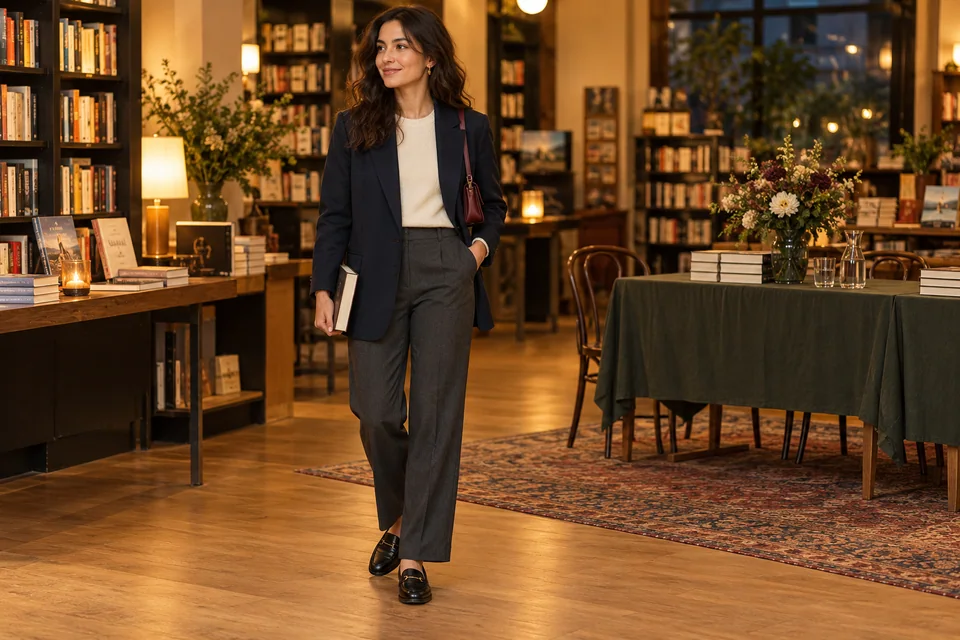
Start with the invitation and the venue
A book launch can be a short daytime reading in an independent bookshop, an evening party at a publisher's space, a library discussion, or a larger festival event. The words on the invitation matter more than a generic rule about literary events. Look for a stated dress code, the venue, the start time and whether there is a dinner, reception, panel or signing afterwards. A cocktail or formal instruction always takes priority over this guide.
When there is no instruction, polished smart casual is the useful middle ground. Think dark straight jeans with a fine knit and blazer, tailored trousers with a soft shirt, or a simple midi dress with a structured coat. You may be standing in a queue, moving between shelves, holding a drink or book, and talking closely with people. An outfit that needs constant tugging, balancing or explanation will take attention away from the event.
Build a reliable guest outfit
For a relaxed bookstore launch, begin with clean dark denim. Straight or relaxed-straight jeans, an ivory merino or cotton knit, a navy or charcoal blazer and black loafers form an easy base. The denim keeps the look friendly; the knit and blazer add enough structure that it does not feel like errands. If the bookshop is informal, swap the blazer for a neat cardigan or an overshirt with shape.
Tailored trousers are a good choice when the invitation feels more evening-focused or when you may meet colleagues. Try charcoal trousers, a burgundy or deep green fluid top, a cropped black jacket and low ankle boots. The color at the top gives the formula warmth without requiring elaborate accessories. Keep one part relaxed: a soft knit, a lower heel or an unstructured bag. Full office suiting can look too businesslike unless you are coming directly from work or the invitation suggests it.
Dress for reading, signing and photographs
If you are the author, speaker or moderator, build from the activity rather than from a fantasy of a red carpet. You may sit at a table, hold a microphone, turn pages, sign books and greet people one after another. Choose a neckline that stays in place when you look down and a fabric that is not so delicate that you worry about pen marks, chair arms or a glass of water. Matte knit, crepe, substantial jersey and soft wool generally feel composed without being precious.
A navy knit midi dress with pointed flats is a dependable signing formula. A belt can define the waist if you like shape, and a long wool coat gives the outfit a complete arrival and departure layer. Another option is a matching trouser-and-jacket set with a fine T-shirt or silk-feel shell; it photographs as one intentional silhouette but separates easily if the room becomes warm. Avoid choosing a new shoe or restrictive waistband for the first time on an evening when you will be on display.
Match the formality, not a literary stereotype
There is no need to dress as a version of a novelist. A plaid blazer, vintage brooch, bold glasses or patterned scarf can be personal choices, but none is required for a book launch. The most convincing outfit is usually a normal outfit of yours made a little more deliberate through fit, fabric or one accessory. A good dark jean and polished shoe can be more appropriate at a neighbourhood reading than an elaborate dress that makes you feel unlike yourself.
Use the book, venue and host as gentle clues, not strict themes. A formal literary prize event may call for a tailored suit, dressier dress or sharper shoe; a children's-book event in the afternoon can welcome color, washable fabrics and a flat shoe. If you are a guest, you do not need to match the cover or the author's style. If you are hosting, a subtle color echo can be lovely, but comfort and recognisability still matter more than a forced concept.
Plan for weather, travel and the room
A warm reading room can make a substantial coat feel unnecessary once you arrive, while the queue outside and the walk home may be cold. Build the outfit in layers: fine knit under a blazer, a shirt under a cardigan, or a dress with a long coat. Choose a layer that looks intentional when it comes off. A bulky puffer may be practical for the journey, but a coat check or a shoulder you can carry it over will make the event easier.
Check the route as well as the forecast. Cobblestones, rain, public transport and a crowded pavement change the usefulness of an open shoe or thin heel. For an evening launch, low leather ankle boots, loafers, pointed flats or refined low-profile sneakers are usually stronger than a shoe that only works from car to chair. Carry a compact umbrella if rain is likely and choose a bag that can hold it without becoming a cumbersome tote in a narrow aisle.
Let shoes and the bag support the evening
Book launches can involve more standing than expected: a welcome drink, a reading, a line for a signature and conversations on the way out. Wear shoes you have already tested for a comparable amount of walking. Black loafers, sleek ankle boots, pointed flats and stable low heels all make sense depending on the temperature and formality. A heel is not automatically dressier if it changes your posture or stops you moving naturally.
Bring a small shoulder bag, crossbody or compact top-handle bag that leaves a hand free for a book or programme. A large backpack can be awkward around closely packed shelves, and a heavy tote often slides off a blazer. Your bag does not need to exactly match your shoes. Repeating one leather tone or one metal finish is enough. Before leaving, make sure there is room for your phone, keys, ticket and any book you plan to have signed.
Use color and detail with purpose
Deep neutrals are simple because they photograph calmly and work with a coat: navy, charcoal, black, chocolate and cream are all useful. They are not the only options. A burgundy top, cobalt cardigan, green bag or patterned scarf can add personality if the rest of the outfit has a quieter line. Choose one element to carry the interest, rather than combining a strong print, statement jewellery, theatrical shoe and novelty bag at once.
For photos, think more about contrast than perfection. A black outfit against a dark evening venue can disappear, while an ivory knit under a navy blazer gives the face some light without being loud. Test the outfit in the mirror from sitting and standing positions, then take a simple daylight picture. Check whether hems catch, whether the jacket keeps a clean line and whether the bag strap cuts across a detail you wanted to show.
Test options with the clothes you already own
Lay out two complete versions before buying anything: include outerwear, shoes and the bag, not just the top and trousers. The Look Lens outfit analyzer can help you compare small changes such as a loafer versus an ankle boot, a tucked versus untucked knit, or a cropped versus long jacket with your actual pieces. Use it as a second viewpoint, then let the venue, weather and your own comfort make the final decision.
You can also sort likely trousers, dresses, coats and shoes in the Look Lens virtual wardrobe before the event. Seeing familiar items together often shows that you do not need a special 'literary' purchase; you may only need the better coat length or a shoe you already trust. Save the formula that worked. A repeatable event outfit is more useful than a one-night costume.
Choose a look that lets you join the conversation
The strongest book-launch outfit fits the invitation and the practical evening: polished enough to feel present, relaxed enough to browse, stand and speak without managing your clothes. Start with a dark jean or tailored trouser, a comfortable top, one thoughtful layer and a shoe that handles the route. Then add one personal color, texture or piece of jewellery if you want it.
For a quick last comparison before you leave, try Look Lens on Google Play. Choose the option that lets you focus on the author, the readers and the conversation rather than on your outfit.
Frequently asked questions
What is the usual dress code for a book launch?
Many book launches fall between polished smart casual and cocktail-casual. Check the invitation and venue first: an independent bookstore is often relaxed, while an evening publisher party or formal venue may be dressier.
Can I wear jeans to a book launch?
Yes, especially for a casual reading or bookstore event. Choose dark, clean straight jeans and pair them with a fine knit, shirt, blazer, polished shoe or structured bag.
What should an author wear to a signing?
Choose a comfortable outfit that works seated and standing: a knit midi dress with flats, or tailored trousers with a relaxed jacket. Test the neckline, fabric and shoes before the event.
What shoes work best for a book launch?
Loafers, ankle boots, pointed flats, refined sneakers or stable low heels work well. Consider queues, hard floors, weather and how you will travel to the venue.