Read the invitation before choosing the outfit
A gallery opening can mean a small neighbourhood exhibition, a crowded evening vernissage, a museum members’ preview or a benefit with a stated dress code. Those are different plans, even if each involves art and a glass in your hand. Look for a dress-code line, the venue, the start time and whether the invitation names a reception, dinner or ticketed fundraiser. A printed cocktail or black-tie request wins over any general gallery rule.
When there is no instruction, smart casual is the useful middle. Choose clothes that look intentional but not ceremonial: a dark clean jean with a blazer, tailored trousers with a fine knit, a simple midi dress, or a column skirt and a neat top. You are likely to stand, move through a room and meet people, so a comfortable finish is more valuable than a dramatic one that needs constant adjustment.
Aim for polished, not costumed
The artwork supplies the visual event; your outfit does not need to compete with every wall. A quiet color story, a good fit and one point of personality are usually enough. Try black, charcoal, navy, deep brown, cream, olive or a muted jewel tone, then add one element with character: an unusual earring, a sculptural shoe, a textured jacket or a vintage bag. This feels personal without asking strangers to notice five things at once.
That does not mean everyone must wear black. A cobalt knit, rust scarf or patterned silk blouse can work beautifully when the rest of the outfit is calm. What matters is proportion and context. A sequinned mini dress may be right for a gallery party with a clear festive brief, but it can feel louder than intended at an informal Thursday opening. If you are unsure, use a simple base and keep the expressive piece removable.
Build a reliable trouser outfit
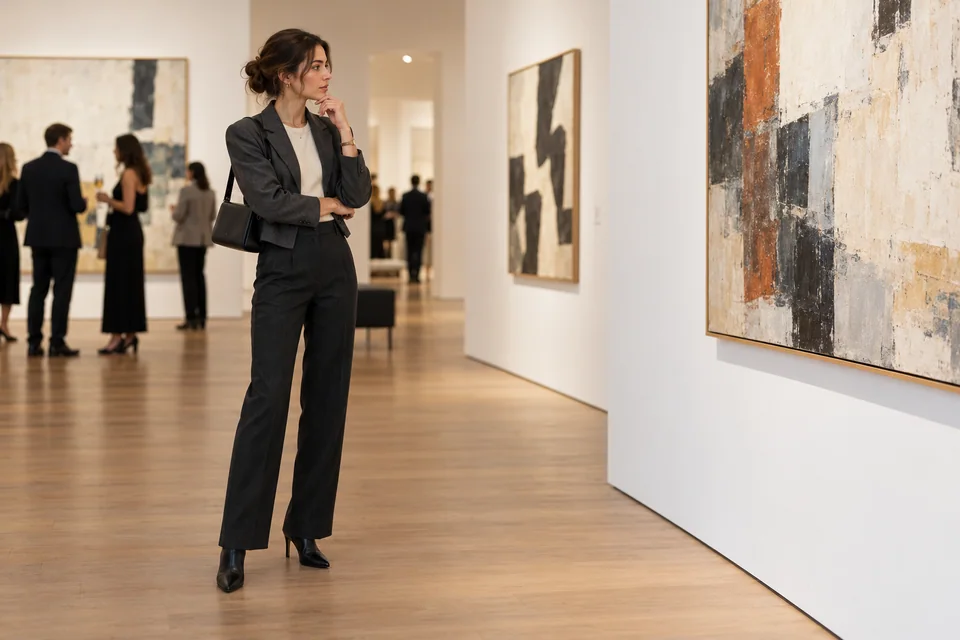
Tailored trousers are an easy starting point because they adjust to many kinds of openings. For a relaxed gallery, combine dark straight trousers with an ivory fine knit, a charcoal cropped blazer and black loafers. The knit softens the tailoring, while the blazer gives the outfit a purposeful line. If the gallery is warm or the invitation feels informal, leave the blazer open or substitute a tidy overshirt.
For a more evening-focused vernissage, try navy trousers, a fluid black blouse and pointed flats or low heel boots. The contrast at the top keeps the look from reading like office uniform, especially when you add one small metal earring or a compact shoulder bag. Avoid buying an entirely new ‘art person’ outfit for one night. A comfortable pair of trousers that already fits at the waist will look better than something more theatrical that you cannot relax in.
Wear denim with enough structure
Dark, clean denim can be completely appropriate for a casual opening, especially at an artist-run space or daytime event. Choose straight, slim-straight or relaxed jeans without heavy distressing, then make one other element deliberate: a fine merino, a crisp shirt, a blazer, a leather jacket in good condition or a polished loafer. The goal is not to erase the casual nature of denim; it is to give it a clear companion.
A dependable formula is dark straight jeans, an ivory knit, a charcoal blazer and black loafers. In cool weather, add a long wool coat and carry the gallery layer rather than piling a bulky puffer over it indoors. If sneakers are your most comfortable choice, select a clean low-profile pair and make the rest of the outfit quieter. Athletic shoes, a graphic hoodie and faded jeans together can read too casual; change one or two of those pieces instead of abandoning comfort completely.
Choose a dress or skirt that moves with you
A midi dress or skirt is a strong option when you want a softer silhouette without formal eveningwear. A black or navy knit midi with ankle boots and a structured coat is simple, warm and easy to repeat. For a little more texture, use a column midi skirt with a silk-feel top and cropped jacket. Keep hems practical for stairs, pavement and the moment you sit on a bench or high stool.
Think about the difference between a dressy fabric and a delicate one. Matte crepe, jersey, wool, cotton poplin and substantial knitwear handle a crowded room better than a slippery piece that catches on chair arms or requires special underlayers. If you wear a shorter hem, opaque tights and a lower boot can give it balance in cooler weather. Try the complete outfit with the coat and bag you will actually bring; a beautiful dress can lose its ease under an awkward outer layer.
Let shoes and bags handle the evening
Gallery openings often involve hard floors, a walk from transport and more standing than expected. Loafers, sleek ankle boots, pointed flats, refined sneakers and low stable heels are all sensible depending on the plan. New stilettos are a poor trade for a polished photo if they change how you stand by the first speech. If you love a heel, choose a pair you have worn before and take the route into account.
Bring a small shoulder bag, crossbody or clutch that leaves one hand free for a drink, programme or coat. Large backpacks can be awkward in a narrow, busy gallery, and a huge tote may keep sliding off a blazer. The bag need not match your shoes exactly. Repeating one dark tone or metal is enough; comfort and easy movement are the better styling details here.
Adjust for venue, weather and your role
A contemporary gallery in the afternoon may be more relaxed than a formal museum preview after dark. A gallery in a converted industrial space may be cold, and an opening followed by dinner needs a coat that still works in a restaurant. Check the address, forecast and route, then make the outfit serve those facts. A long coat, thin base layer and ankle boots can look more composed than bare arms and a borrowed wrap when the entrance queue is outdoors.
Your role changes the priorities too. If you are meeting colleagues or clients, lean toward clean trousers, a shirt or fine knit, and quiet shoes. If you know the artist, wear something that lets you greet people, carry flowers or help without anxiety about a fragile hem. Guests are not expected to dress like artists or collectors. Looking comfortable and attentive is a more convincing signal than adopting a uniform that is not yours.
Test the outfit with your own wardrobe
Lay out two complete choices, including outerwear, shoes and bag, then take a quick photograph in daylight. The Look Lens outfit analyzer can help you compare whether a different shoe, jacket length or open-versus-tucked top creates the cleaner proportion with the pieces you already own. Treat it as a second perspective; it cannot know whether the gallery has stairs or whether your feet need a flatter shoe.
You can also group likely options in the Look Lens virtual wardrobe before the event. Seeing your black trousers, coats and shoes next to one another often shows that a better outfit is already there. Make a short note of the combination that worked. The next opening will be easier when you have a reliable formula instead of starting with an empty wardrobe rail.
Choose a look that leaves room for the evening
The best gallery-opening outfit respects the setting without becoming a performance: a polished base, one personal detail and shoes that support the actual plan. Start with the invitation, build for standing and travel, and adjust the formality by one piece rather than changing everything. If you are between two options, the one you can move and talk in comfortably is usually the stronger choice.
For a last quick comparison before you leave, try Look Lens on Google Play. Then put your attention on the work, the people and the evening—not on an outfit that needs managing.
Frequently asked questions
Can I wear jeans to a gallery opening?
Yes, for many casual openings. Choose dark, clean jeans with a polished top, jacket or shoe so the outfit feels intentional rather than like everyday errands.
Do I have to wear black to a vernissage?
No. Black, navy and charcoal are easy bases, but cream, olive, deep brown or one muted color also work. A calm outfit with one personal detail is usually enough.
What shoes are best for a gallery opening?
Wear shoes you can stand and walk in: loafers, ankle boots, pointed flats, refined low-profile sneakers or low stable heels. Consider hard floors, weather and your route.
Is a gallery opening formal?
It depends on the invitation, venue and time. A small local opening is often smart casual, while a museum preview, benefit or event with a stated dress code may be more formal.