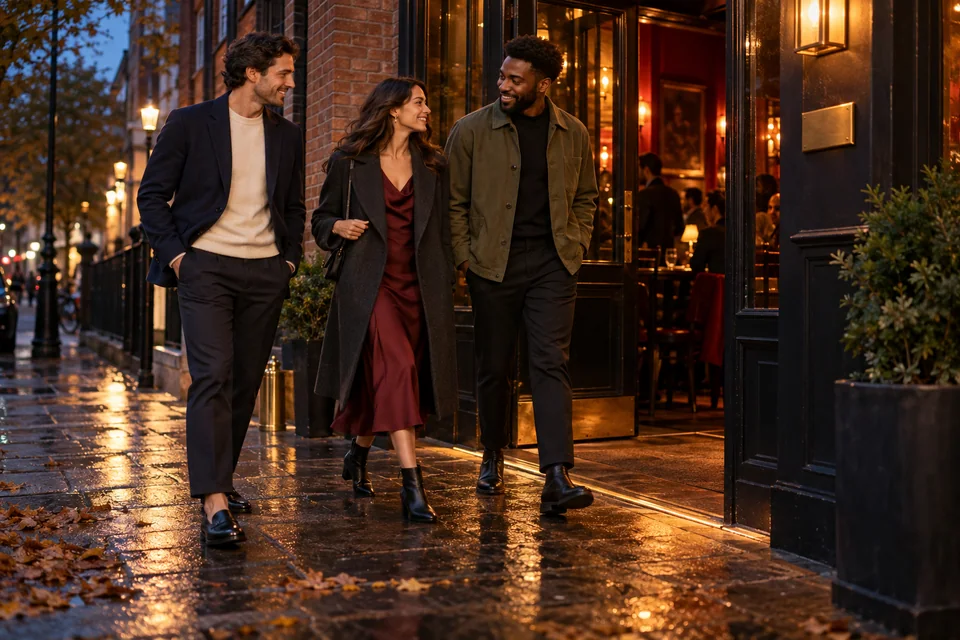
Start with the room, not a jazz stereotype
There is no single jazz-club uniform. A neighbourhood listening room, a ticketed show in a hotel lounge, a concert hall and a venue with dinner service can all feel like a jazz night while asking for different levels of polish. The useful starting point is the ticket page: look for a stated dress code, dinner booking, coat check, seating arrangement and the route you will take there. A specific venue instruction always outranks a general outfit rule.
When the invitation gives no direction, polished smart casual is a dependable middle ground. Think dark trousers or clean dark denim, a fine knit, shirt or fluid top, a layer that can come off indoors and shoes you already know you can walk in. The aim is not to dress like a performer or recreate another decade. It is to make a little more effort than an errands outfit while leaving room to listen, sit close to other guests and move through the evening easily.
Build a base that works for a seated set
Most jazz sets reward clothes you can forget about. You may be seated for a full set, share a small table, squeeze past chairs or stand during a break, so begin with a waistband, hem and neckline that have already proved comfortable. Dark straight jeans, tapered trousers, a knit midi skirt, a column dress or relaxed chinos all work. Fit matters more than whether a piece is called dressy: a restrictive waist or slipping strap will feel louder than the music after an hour.
For a reliable gender-neutral formula, combine black or deep-indigo trousers with an ivory, charcoal or burgundy knit and a navy blazer, cropped jacket or overshirt. Add loafers, low boots or clean leather sneakers if the venue is relaxed. If you prefer a dress, a burgundy or dark-green midi with opaque tights and ankle boots has the same balance. Avoid choosing an entirely new outfit for the night; a familiar base lets you add one polished element without discovering a comfort problem halfway through the set.
Adjust the level for the actual venue
A small local club often suits clean, thoughtful everyday clothes: dark denim, a neat knit or open-collar shirt, a simple dress and good shoes. A room inside a restaurant, theatre or hotel usually benefits from a step more structure, such as tailored trousers, a blazer, a satin-like top or a sharper flat. If the ticket mentions cocktail attire or a formal policy, follow it rather than assuming jeans will translate. The address, programming and price do not replace a published dress code.
The easiest way to change level is to adjust one item. Keep a black knit and trousers, then add a blazer and loafers for a more dressed room; switch to a soft overshirt and leather sneakers for a casual one. A dark midi dress can move between both with boots and a wool coat, or with a small bag and a more defined shoe. This approach avoids the two common extremes: athletic clothes that feel accidental in a considered room, and elaborate partywear that makes a close, seated evening harder than it needs to be.
Use colour and texture without competing with the night
Low lighting makes a small amount of texture more useful than a loud print. Navy, charcoal, black, deep olive, burgundy, espresso and cream all read clearly together and are easy to rewear. A fine merino knit, matte leather boot, brushed wool jacket, satin-feel camisole or simple silver earring can add depth without becoming a theme costume. If one piece is glossy or richly coloured, keep the rest quiet so the outfit still feels like you.
That does not mean everyone needs a dark outfit. A cream shirt with black trousers, a muted blue dress with a charcoal coat or a warm rust top under a navy jacket can look equally at home. Test the formula in ordinary light: can you remove the coat and still feel complete? Can you sit without constantly arranging the fabric? A strong jazz-club outfit looks composed from the doorway but has no part that asks for attention during the performance.
Plan the journey, weather and coat check
Even a warm listening room begins outside. Check the evening forecast and the travel plan before deciding on bare legs, open shoes or a heavy layer. A compact wool coat, trench or leather jacket over a breathable inner layer usually handles a cool commute better than building the entire outfit around a bulky sweater. If the venue has a coat check, use it as a convenience, not an assumption; where it does not, choose a layer that folds neatly beside you rather than occupying the whole chair.
Shoes deserve the same practical check. Loafers, low ankle boots, supportive flats, clean leather sneakers and stable low heels can work depending on venue rules and weather. A long walk from transit, wet paving or stairs might make a shoe that looked elegant at home a poor choice. Bring a small bag that holds a ticket, phone, keys and lip balm without needing a second chair. The better your arrival plan, the less your outfit has to solve once the music starts.
Three formulas for real jazz-club plans
For a casual club with friends, wear black straight jeans, an ivory fine knit, a navy blazer and black loafers. It is polished enough for dim lighting yet relaxed enough for a stool or a quick walk home. Replace the blazer with an olive overshirt when the room is explicitly casual, or trade loafers for clean leather sneakers if the route is long and dry. A charcoal knit midi skirt and ankle boots deliver the same ease if you do not want denim.
For dinner before an evening set, build around a burgundy midi dress, charcoal wool coat, low black boots and a compact shoulder bag. The deep colour gives the outfit a little occasion without requiring sparkle or a high heel. If dresses are not your preference, choose charcoal trousers, a fluid burgundy top, cropped black jacket and loafers. For a last-minute worknight ticket, leave black tapered trousers on, add a black T-shirt and olive overshirt, then change into polished boots. The result travels well from a desk to a small table.
Avoid costume and comfort traps
Jazz does not require a vintage costume, a fedora, theatrical jewellery or a head-to-toe black look. Personal style is welcome, but a reference that feels forced can be less comfortable than your own familiar formula. Likewise, a venue that calls itself relaxed is not necessarily asking for gym clothes, beach slides or a baggy hoodie. Aim for clean garments with one clear finishing detail instead of trying to signal the genre through many accessories.
Another common mistake is dressing only for the first photograph. New high heels, a stiff jacket or a tiny bag can become tiring during a two-hour set and the trip home. Sit down in the proposed outfit, raise your arms, walk around your home and test whether the coat works with the bag. If two outfits are equally attractive, take the one that lets you concentrate on company and music. Ease is not the opposite of polish; it is what makes polished clothes feel convincing.
Compare your own options before you leave
Lay out two complete versions of the outfit, including coat and shoes, rather than comparing isolated tops. A quick full-length photo can make it easier to see whether a dark boot grounds the trousers better than a sneaker or whether the jacket balances the skirt. The Look Lens outfit analyzer can give you a second perspective on the colours, layers and proportions in the pieces you already own, which is useful when the venue information is vague.
For recurring evenings out, arrange possible jackets, trousers, dresses and shoes side by side in the Look Lens virtual wardrobe. You may notice that a reliable coat and one comfortable shoe make several outfits viable, so there is no need to buy something themed for one performance. The goal is a combination that fits the room and is still recognisably yours.
Choose clothes that leave space for the music
A good jazz-club outfit is venue-aware, comfortable and slightly more intentional than an ordinary casual look. Start with a base you can sit in, adjust one element for the venue, build for the actual weather and choose shoes for the journey as well as the doorway. Rich but quiet colour and texture will do more than a literal jazz costume ever could.
Before your next set, compare the two most practical versions you already own and try Look Lens on Google Play if you would like help sorting those options. Then choose the outfit that lets the room, the people and the music take centre stage.
Frequently asked questions
What is the dress code for a jazz club?
It depends on the venue. A small club may be relaxed, while a restaurant, theatre or hotel room can be dressier. Check the ticket and venue policy; polished smart casual is a useful default when no code is stated.
Can I wear jeans to a jazz club?
Clean dark jeans can work well at many relaxed jazz clubs when paired with a knit, shirt, structured layer and considered shoes. Follow a venue’s published policy if it calls for a sharper dress code.
What shoes work for a jazz-club outfit?
Loafers, low ankle boots, supportive flats, clean leather sneakers or stable low heels can all work. Choose for the stated dress code, weather, walking route and length of the set.
Do I need to dress in a vintage style for jazz?
No. Jazz does not require a costume or period look. Familiar clothes in a thoughtful silhouette, with a considered layer and comfortable shoes, are more useful than a themed outfit.