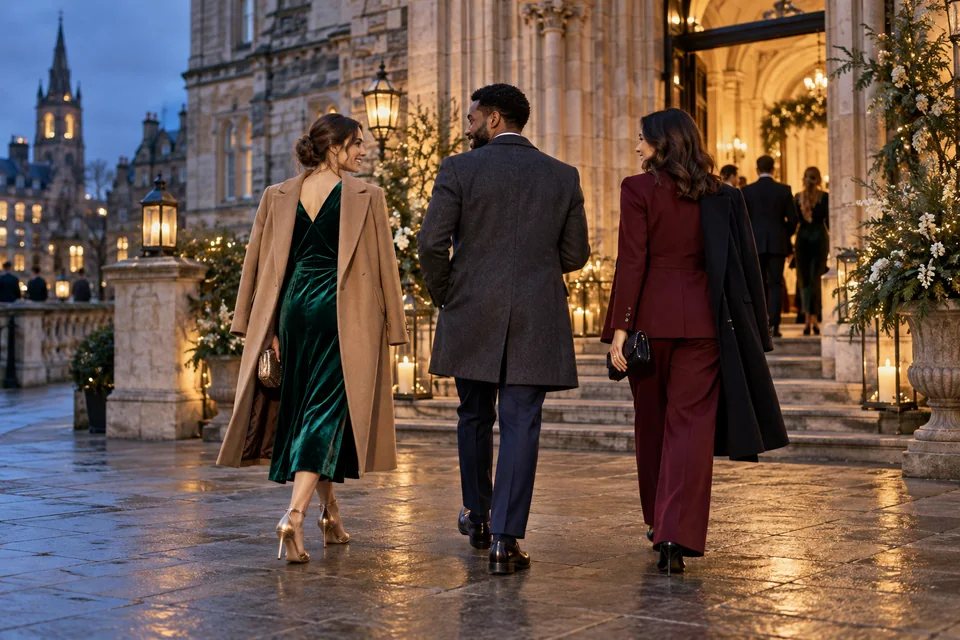
A winter wedding asks you to solve two jobs at once: respect the occasion and stay comfortable through the coldest parts of the day. The invitation still decides the level of formality. Winter simply changes the materials, outer layers and shoes that make that level workable. Think of your coat and footwear as part of the outfit, especially if there is a church step, garden photograph, taxi queue or walk between venues.
The most reliable rule is simple: build the dressed-up outfit first, then give it a graceful weather plan. That approach avoids both extremes—a flimsy party look that leaves you shivering, or a bulky layer that makes a beautiful outfit disappear.
Start with the invitation, venue and journey
Read the dress code before shopping. Black tie, formal, cocktail and smart casual are not interchangeable, even when the temperature drops. If the card names a theme, color palette or religious venue, let that information outrank generic seasonal advice. When the wording is vague, ask the couple or a member of the wedding party whether the ceremony or photographs will happen outdoors.
Then map the day in order: travel, arrival, ceremony, drinks, dinner and late departure. A heated hotel ballroom may need only a handsome coat for the door. A country-house ceremony with outdoor photographs needs a longer coat, a warmer base fabric and shoes with secure soles. Bring the coat even if you expect to take it off immediately; a thin wrap is rarely enough for a long wait outside.
Weather matters, but it should refine the plan rather than lower the formality. Check the forecast shortly before the event, including rain and wind. Carrying a compact umbrella for the journey is sensible; opening a sporty umbrella in formal photos is less helpful, so leave it with the cloakroom or car when you can.
Choose texture before adding extra layers
Winter-friendly fabric often solves warmth more elegantly than piling on knitwear. Velvet, substantial crepe, satin backed by a lining, fine wool, brocade and heavier suiting have enough visual depth for a celebration and tend to sit well under a coat. A velvet midi dress, a crepe jumpsuit or a wool-blend suit can look intentionally seasonal without turning into costume.
For a dress or skirt, consider a midi or maxi length when the venue is cool. It protects more of the leg and makes opaque tights or a discreet thermal layer easier to integrate. If you prefer trousers, a fluid wide-leg pair with a silk-feel top, or a sharply cut suit, looks equally celebratory. The key is an evening-appropriate finish: pressed seams, a considered neckline and accessories that are not office-default.
Skip fabrics that show every drop of rain, cling with static or feel transparent under indoor lighting. If a sleeveless dress is your favorite option, test it with its intended layer at home. A blazer, cropped jacket or evening wrap must sit cleanly over the shoulders; it should not force you to hold it in place all evening.
Use rich color and restrained shine
Deep jewel tones—emerald, sapphire, plum, oxblood and midnight blue—look natural beside winter light and candlelit rooms. Chocolate, charcoal and warm navy are excellent choices for suits and coats. A dark floral or an elegant small-scale pattern also works for a less formal reception. These are options, not rules: a pale shade can work when it clearly does not read bridal and the couple has not requested a specific palette.
Avoid wearing white, ivory or a look that could be mistaken for the bride unless the couple explicitly asks guests to do so. Let one element carry the shine. For example, pair a matte crepe dress with metallic earrings, or a velvet suit with a plain silk pocket square. Sequins can be appropriate for a black-tie evening reception, but balance them with a clean coat and simple shoes so the outfit still feels like a guest look.
For a quick color check, photograph your options in daylight and beside warm indoor light. Look Lens outfit analysis can help you compare the overall color balance and the formality of two complete options before you commit, especially when your coat and shoes change the impression.
Make outerwear part of the outfit
The best winter wedding coat is long enough to cover most of your outfit, clean enough for the dress code and easy to remove. A single-breasted wool coat, tailored wrap coat or sleek long overcoat gives dresses, suits and jumpsuits a finished arrival. Camel, black, navy, charcoal and deep brown work with many formal outfits; a coat in one of those colors is a better investment than a novelty cover-up worn once.
Fit is more important than extra bulk. You need room for a blazer sleeve or the volume of a dress, but not so much that the shoulders collapse. Try the coat while holding a clutch, sitting down and lifting your arms. Add leather gloves for the journey, then put them in your bag before the ceremony. A wool scarf is useful for an outdoor venue, but choose a narrow, quiet one rather than a large casual blanket scarf.
Do not rely on the venue cloakroom to solve every problem. Keep a small layer you can control, such as a fine merino cardigan under the coat or a polished wrap in your bag. It is easier to remove one discreet layer than to endure a chilly dinner.
Pick shoes for the real ground, not just the mirror
Winter wedding shoes should match the formality and the surface. Closed-toe pumps, block heels, polished ankle boots, dressy loafers and refined Chelsea boots can all work, depending on the invitation. A slim heel may be beautiful inside, but it is a poor choice for wet paving, gravel or icy steps. If you are unsure, a lower block heel or polished boot is usually the calmer decision.
Break in shoes before the wedding and use protective soles or weatherproofing only if it will not alter their finish. Pack foldable indoor shoes only when you genuinely need them; changing into obvious casual footwear can make an otherwise formal look feel unfinished. Bring a small cloth for damp shoes and use the cloakroom rather than placing a wet coat on your chair all night.
For trousers, check the hem with your actual footwear. A trouser that just skims a heel can drag on wet ground; a slightly shorter, tailored break is safer. For dresses, choose hosiery that looks intentional, not like an emergency add-on.
Three outfit formulas that adapt well
Winter cocktail: try an emerald or plum velvet midi dress, a camel wool coat, closed-toe heels and a compact metallic clutch. Swap the heels for pointed ankle boots if the venue has stone paths. The texture makes the dress feel festive, while the coat keeps the silhouette elegant in arrival photos.
Formal evening: choose a navy or charcoal suit in wool, a crisp white shirt, black leather boots and a matching dark overcoat. Add a tie or bow tie only when the invitation calls for it. For a more feminine formal option, use a floor-length crepe dress with a long black coat and a fine wrap kept for the dining room.
Daytime civil ceremony: wear a burgundy or ink-blue trouser suit with a silk camisole, pointed ankle boots and simple gold earrings. This option travels well, looks polished in daylight and can handle a long lunch. Exchange the camisole for a high-neck blouse if you want more coverage.
Avoid the common winter-wedding mistakes
First, do not dress for the outdoor minutes alone. A puffer, hiking boot or thick beanie may keep you warm but can undermine a formal invitation. Wear those only for a very casual event or the journey, then leave them in the car or cloakroom. Second, do not assume a heavy coat excuses a casual base outfit. The coat comes off; the outfit underneath still needs to suit the room.
Third, do not forget comfort. A restrictive dress, untested boot or coat that will not close can become all you think about during a long ceremony. Sit, walk and reach in the full outfit before the day. Finally, do not chase a seasonal trend if it conflicts with the couple's dress code or your own confidence. A well-fitted navy suit or a beautiful midi dress is more memorable than a dramatic piece you cannot move in.
A calm final check before you leave
Lay out the complete look the night before: base outfit, coat, shoes, warm layer, bag, gloves and any weather protection. Read the invitation one last time, check the route and decide where the coat will go once you arrive. That small rehearsal gives you a composed outfit and one less decision on the day.
Use winter as an excuse for richer fabric, clean tailoring and thoughtful layers, not for extra complication. If you want to test a dress, suit and coat as a full formula, Look Lens virtual wardrobe can help you see how the pieces work together before the invitation date. When your plan is set, download Look Lens on Google Play for a quick final outfit check while you pack.
Frequently asked questions
Can I wear black to a winter wedding?
Usually yes, especially for an evening or formal event, unless the couple has requested another palette. Add texture, jewelry or a rich-toned accessory so the outfit feels celebratory.
Are ankle boots appropriate for a winter wedding?
Yes when they are polished, streamlined and match the event's formality. Leather ankle boots work particularly well with trousers, jumpsuits and midi dresses at venues with damp or uneven ground.
What coat should a wedding guest wear in winter?
Choose a tailored wool coat or long overcoat that covers most of the outfit, fits over your layers and is easy to remove. A clean, neutral color is the most versatile choice.
How can I stay warm in a dress at a winter wedding?
Use a substantial fabric, a longer hem, discreet tights or a thin thermal layer, a tailored coat and shoes suited to the route. A polished wrap or fine cardigan can help indoors.