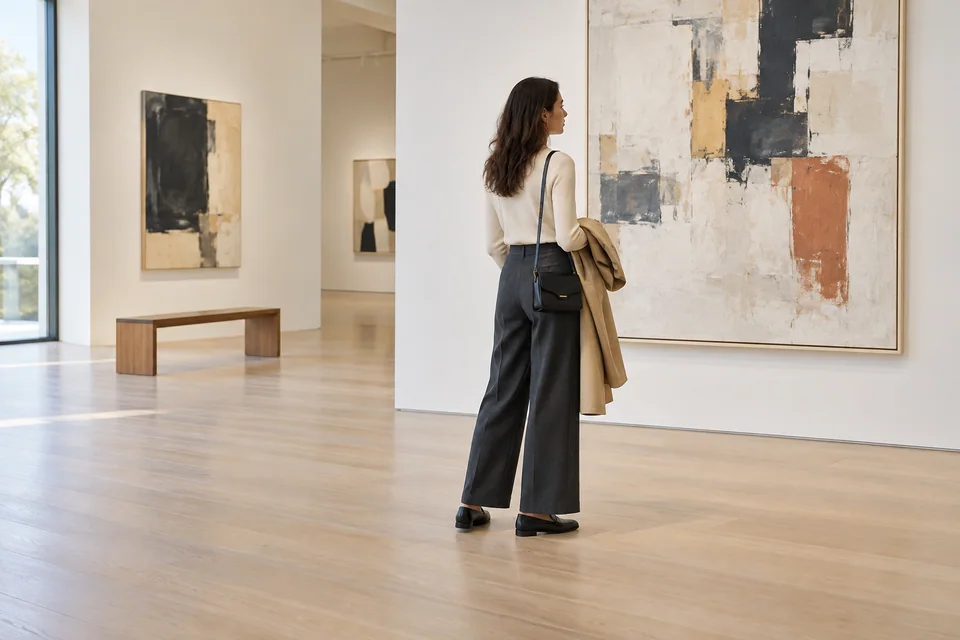
An art museum is one of the easiest places to dress with intention because the goal is not a costume. You want enough polish to feel present in a beautiful setting, enough comfort to stand and walk for hours, and enough flexibility for a cool gallery or a warm walk there. The most reliable answer to what to wear to an art museum is a simple outfit with one thoughtful detail: a strong trouser shape, a clean shoe, an interesting texture or a color combination you genuinely enjoy.
Start with the visit you are actually having. A daytime museum trip with friends calls for a different level of ease than an evening opening, a member preview or a museum date. The formulas below help you get dressed without defaulting to either overly formal or overly casual.
Start with the visit, not a fantasy dress code
Most daytime museums welcome smart casual clothing. Think neat denim, tailored trousers, uncomplicated dresses, knitwear, clean sneakers or loafers. The setting may feel special, but you are still likely to use public transport, wait in a queue, sit in a café and cover several rooms. Make your base practical before you make it expressive.
Check the museum’s own visitor guidance before you leave, especially if you are bringing a larger bag, umbrella, camera or coat. For example, MoMA’s visit information is a useful reminder that entry and bag arrangements can affect what feels convenient. A compact crossbody or shoulder bag that stays close to the body is usually easier than a bulky tote. If an evening opening is on your calendar, raise the polish with material and finish rather than by adding uncomfortable pieces: satin, a sharper jacket, a sculptural earring or a sleek boot works well.
Build a quiet base with shape and texture
A museum-ready outfit does not need to be monochrome, but a restrained base makes every choice look deliberate. Try an ivory tee with black wide-leg trousers, a navy knit with ecru jeans, or a chocolate column dress with a light trench. These combinations photograph well, feel calm around vivid work and give accessories room to do something interesting.
Pay attention to silhouette. A fitted or gently tucked top paired with a fuller trouser creates definition without stiffness. A straight jean looks considered with a fine-gauge sweater and a belt. A midi skirt works when the top is simple and the shoe is truly walkable. Texture is another quiet way to add depth: ribbed knitwear, washed denim, suede, poplin and soft leather all look more nuanced than a head-to-toe flat fabric match.
Choose shoes for looking, standing and walking
Gallery floors can be unforgiving when you underestimate distance. Choose shoes you have already worn for a few hours, then let the rest of the look build around them. Loafers, low-profile sneakers, ballet flats with support, low block heels and ankle boots are strong choices. A shoe can still feel stylish when it has a clean toe shape, a considered color and a sole you trust.
Save brand-new footwear and very high heels for a short opening where you know you will be mostly socializing. For a full afternoon, pack a slim pair of socks if loafers rub, and use a small bag that does not throw your posture off balance. A good museum outfit should allow you to stop in front of a painting without thinking about your feet. That ease changes how polished you look.
Use a layer as a tool, not an afterthought
Galleries can feel cool because of climate control, while the street outside may be much warmer. A layer solves that shift and adds structure to an otherwise simple outfit. A cropped cardigan over a tank, an unlined blazer over a tee, a denim jacket with a slip skirt, or a light trench over trousers all work. Avoid a heavy coat you will have to carry for the entire visit unless the weather truly demands it.
Let the layer create the visual line. A blazer makes relaxed jeans feel intentional; a soft cardigan makes tailored trousers less severe. If you tend to take photos, choose a layer that still looks good open. For an easy preview before you leave, use Look Lens outfit analysis to assess the balance of your layers, shoes and proportions from a full-length photo. Treat the result as a second set of eyes, then keep the version that feels most like you.
Add one personal detail instead of many competing ones
Museums are an ideal setting for a personal style note: a vintage ring, a bright sock under cropped trousers, a patterned scarf, an unusual bag shape or a lipstick color that makes a neutral outfit feel alive. The useful rule is one focal point. If your trousers have a bold print, keep the bag and shoe quiet. If your earrings are sculptural, choose a top with a neckline that lets them show.
Color can be more subtle than a statement piece. Try rust with navy, butter yellow with charcoal, burgundy with cream, or pale blue with chocolate. These pairings feel considered without asking for a full themed outfit. If you are unsure whether an accent has tipped into clutter, lay out the clothes together and remove the least useful item. Often that is the extra necklace, the second print or the oversized jacket.
Five reliable art museum outfit formulas
Use these as starting points, then swap the pieces you already own. First: ivory knit, charcoal trousers, black loafers and a camel trench. It is polished enough for lunch afterwards and comfortable enough for a large exhibition. Second: straight blue jeans, a black tee, an open striped shirt and clean white sneakers. This reads relaxed but not careless.
Third: a black midi dress, a cropped cardigan and low ankle boots. Add a small shoulder bag for an evening talk or opening. Fourth: a navy button-down, ecru jeans, a brown belt and suede loafers. It is a useful formula when you prefer a more classic look. Fifth: a wide-leg jumpsuit with a fitted long-sleeve layer and low-profile sneakers; the fitted layer prevents the silhouette from feeling too loose.
When you are choosing among similar options, a Look Lens virtual wardrobe can make the decision faster: group your reliable trousers, layers and walking shoes, then notice which combinations you have not tried. The point is not to buy a “museum outfit.” It is to make useful clothes work together in a new setting.
Dress for the whole afternoon
The best museum outfit has a life beyond the gallery. Ask whether you could sit in it, walk ten blocks in it and have coffee in it without adjusting it every few minutes. Bring only what earns its place: phone, cardholder, lip balm, keys, ticket and perhaps a compact layer. A smaller bag keeps your hands free and reduces the chance of bumping other visitors in narrow rooms.
Near the end of the visit, comfort matters more than an elaborate initial impression. If you feel relaxed, your posture improves and the outfit looks better. For your next day out, save the formula that worked and adjust only one element—a different shoe, a brighter bag or a lighter layer. If you would like a simple way to compare those options on your own clothes, try Look Lens on Google Play and build from what you already wear.
The takeaway: polished means prepared
What to wear to an art museum is ultimately a practical styling question. Choose a calm base, shoes you can walk in, a layer that handles changing temperatures and one detail that feels personal. You do not need to match the art or perform a certain kind of sophistication. A well-fitting outfit that lets you be curious, comfortable and present is more than enough.
Frequently asked questions
Can I wear jeans to an art museum?
Yes. Clean straight, relaxed or wide-leg jeans look appropriate with a knit, button-down, blazer or polished shoe. Avoid choosing jeans only if the event invitation names a more formal dress code.
Are sneakers okay for a museum visit?
Yes. Clean, low-profile sneakers are a practical choice for a long visit. Pair them with trousers, neat denim, a dress or a skirt so the overall outfit still feels intentional.
What should I wear to an evening gallery opening?
Use a daytime formula but add a sharper layer, richer fabric or more defined accessory. A blazer, sleek boot, satin top or sculptural earring can raise the look without sacrificing comfort.
What kind of bag is best for a museum?
A small crossbody, shoulder bag or compact top-handle bag is easiest. Check the museum’s visitor rules in advance, as bag-size and coat-check policies vary.