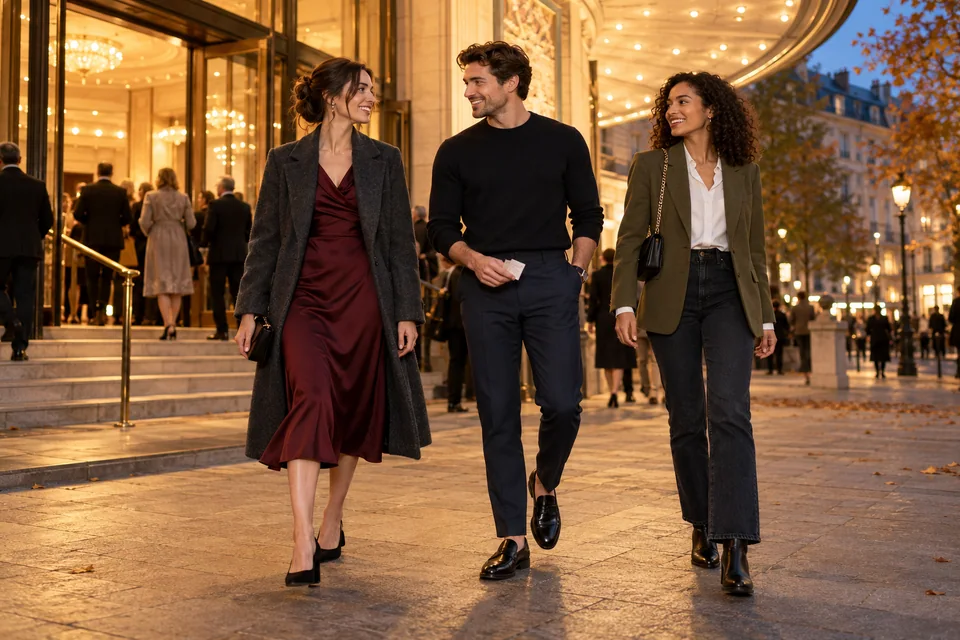
Start with the venue and ticket
Theatre outfits work best when they acknowledge the occasion without treating every show as a gala. Read the ticket, production page and venue notes before choosing clothes. A local studio theatre, an afternoon matinee, a first-night premiere and a formal opera can have very different moods. Some theatres explicitly say there is no fixed dress code, while also noting that many visitors enjoy dressing up; that makes polished comfort a better default than guessing at a uniform.
Use the room and the plan as useful clues. An evening performance in a historic auditorium may invite a little more finish than a casual daytime production, but it does not require clothing that prevents you from walking, sitting or taking public transport. A clean shirt, fine knit, tailored trousers, thoughtful dress or well-cut dark denim can all belong here. The goal is to look like you planned for the occasion, not like you are competing with the stage.
Choose the right level of polish
Think in three useful levels. For a relaxed matinee or experimental theatre, smart casual is often enough: dark straight jeans without distressing, a crisp shirt or knit, a blazer or tidy jacket, and clean shoes. For an evening play, build one step up with a midi dress, tailored trousers and a silk-like blouse, a matching knit and skirt, or a dark suit worn without overly formal accessories. This is the versatile middle ground for most tickets.
For a premiere, opera, ballet opening or invitation that mentions formal dress, follow the stated guidance first. A long dress, sharper tailoring or a suit can feel fitting, but texture is usually more useful than glitter. Velvet, crepe, fine wool, satin accents and polished leather look composed under foyer lighting. If you are unsure between two options, choose the more tailored version, then keep the accessories quiet. Looking comfortable in good proportions is more convincing than adding a last-minute dramatic detail.
Build a base that works in the seat
A theatre outfit is experienced from the chair as much as in the mirror. Choose a waistband that still feels comfortable after dinner or a two-hour show, sleeves that do not require constant adjustment and a fabric that will not leave you overheated under stage-adjacent heating. A fine merino knit with wide-leg trousers, a knit midi dress with a belt you can loosen slightly, or a shirt with a relaxed blazer are reliable starting points.
Check the silhouette while sitting down before leaving. A short skirt that rides up, a rigid jacket that pulls across the back or trousers that only work while standing can turn a good entrance into an awkward evening. If your preferred dress is sleeveless, bring a layer that works on rather than merely over it. A charcoal wool coat, navy blazer, cropped jacket or simple wrap is easier to manage than continually balancing a bulky sweater on your lap.
Use colour and texture with restraint
Deep burgundy, forest green, navy, charcoal, chocolate and ink blue have enough presence for an evening show without asking for a complicated outfit. They are also easy to rewear with pieces you own. A black outfit can look excellent when the fabrics vary: for example, black trousers, a soft knit and smooth leather loafers. If you prefer lighter colours, a stone trouser with a navy jacket or a dusty-pink blouse with dark trousers creates contrast while still looking deliberate.
One texture is often enough. A satin skirt with a fine crewneck knit, corduroy trousers with a simple shirt, or a velvet blazer over a plain dress gives the outfit a reason to feel special. Keep shine in one place rather than combining high-gloss shoes, sequins, metallic bag and statement jewellery. The theatre is a social occasion, but it is also a shared, relatively close space. The most memorable element should be the clean line of the outfit, not a collection of competing details.
Choose shoes and a bag for the actual journey
Footwear needs to handle steps, pavements, narrow rows and the walk home. Low block heels, polished loafers, neat ankle boots, ballet flats and clean leather sneakers can all make sense, depending on the venue. A brand-new high heel or hard-soled shoe is a poor experiment before a long performance. Wear the pair for a short walk at home, go up stairs and sit down in it; those checks reveal more than a mirror does.
Use a compact bag that leaves your hands free for a ticket and coat check. A small shoulder bag, crossbody worn under the coat, clutch with a strap or slim top-handle is usually enough for phone, keys, wallet, tissues and medication. Many theatres ask visitors to use the cloakroom for bulky outerwear or large bags, so check the venue before taking a tote or backpack. Keep the coat-check token in an easy pocket, and do not assume you will have a table-sized space around your seat.
Three outfit formulas for real plans
For a daytime matinee, try a navy fine-gauge knit, camel tailored trousers, brown loafers and a light trench. The knit is neat but not stiff; the trousers make the outfit feel chosen even if you arrive by train or walk through the city. If trousers are not your preference, swap them for a dark denim midi skirt and opaque tights, then keep the loafer or choose a smooth ankle boot.
For an evening play, build around a burgundy midi dress, charcoal wool coat, low black block heel and small black shoulder bag. The colour gives the look warmth without needing obvious eveningwear. Replace the dress with a black satin skirt and fitted grey knit if you prefer separates. For a contemporary theatre or a relaxed after-work ticket, use dark straight jeans, a white shirt, olive blazer and black ankle boots. The jeans stay intentional because every other item is structured and clean; avoid distressed denim, a sports hoodie or shoes that look like gym gear.
Plan for arrival, cloakroom and room temperature
Arrive early enough to handle the practical parts of the evening without rushing. Theatre etiquette pages regularly encourage guests to allow time for the cloakroom, and large bags or coats may not be welcome in the auditorium. That is another reason to make the outer layer part of the outfit: choose a coat you can remove without revealing a less-finished base, and use a bag that holds the essentials after your coat is checked.
Plan for a temperature change rather than dressing only for the weather outside. The walk to the venue might be cold, while the auditorium can feel warm after a few minutes. A breathable blouse beneath a blazer, a fine knit beneath a coat or a sleeved dress with a removable layer is more flexible than one very heavy piece. Avoid strong fragrance as well; close seating means it travels farther than intended. These small choices protect your own comfort and make the shared space easier for everyone.
Compare what you already own before buying
Lay out two complete options with shoes, bag and coat included. Take a full-length photo in each, then look for the practical difference: does the coat overwhelm the hem, do the shoes make the trousers too casual, and can you sit down easily? The Look Lens outfit analyzer can give you a second view of the colour balance and proportions when you are deciding between a dress and tailored separates for the same show.
If theatre tickets are part of your regular plans, group dependable pieces in the Look Lens virtual wardrobe: one dark trouser, one smart knit, a blazer, a coat and two shoe options can create several distinct looks. Changing the texture, colour or shoe is usually more useful than buying something new for every evening. Keep a note of what stayed comfortable through a full performance, then repeat that formula with different colours.
Dress for the performance, not a costume
The right theatre outfit is thoughtful rather than theatrical. Begin with the show and the venue, choose the level of polish that fits the plan, then make sure the clothes work while seated, walking and checking your coat. One good layer, shoes you trust and a small practical bag will do more than a complicated look.
Make the final choice the day before so you can test the complete outfit calmly. If you want help comparing pieces from your own wardrobe, try Look Lens on Google Play and save a theatre-ready combination before the evening rush.
Frequently asked questions
Is there a dress code for the theatre?
Many theatres have no fixed dress code. Check your ticket and venue, then choose a clean, comfortable outfit that feels a little more considered than your everyday errand clothes.
Can I wear jeans to the theatre?
Dark, well-fitting jeans can work for a relaxed venue or matinee when paired with a shirt, knit, blazer or polished jacket and clean shoes. Avoid distressed denim and athletic styling for a more formal evening.
What shoes are best for a theatre night?
Choose shoes you can walk, use stairs and sit in comfortably, such as loafers, flats, polished ankle boots or low block heels. Match the formality to the venue and test the pair before the show.
What bag should I take to the theatre?
A small shoulder bag, crossbody, clutch with a strap or slim top-handle is practical for essentials. Check the venue’s bag and cloakroom rules before bringing a large tote or backpack.