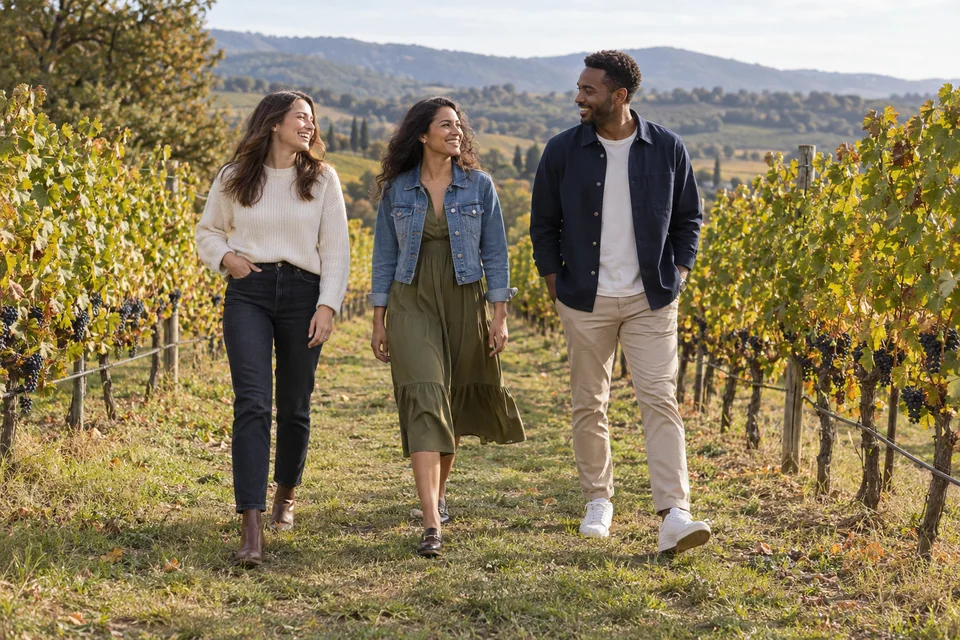
Getting dressed for a winery is less about a themed outfit and more about reading the practical parts of the day. You may be on a sunny terrace at lunch, walk between vines, stand for a tour, sit in a cooler indoor room or take a few group photographs. An outfit that is tidy enough for the setting but still comfortable on gravel, grass and uneven paving lets you pay attention to the visit instead of your clothes.
Start with the invitation and the forecast, not a social-media image. A relaxed afternoon tasting, a restaurant reservation, an outdoor harvest event and a formal private dinner can all happen at the same place but need different levels of polish. In most cases, a clean everyday base plus one purposeful layer is a more useful choice than buying something special. The goal is to feel like yourself, only prepared for the location.
Read the plan before you build the outfit
Look for the parts of the plan that change your choices: Will you be walking through a vineyard? Is lunch outside? Is there a dress code or a long drive? A tasting-room visit may need only an easy smart-casual outfit, while a tour adds steps, dust and standing time. If the venue has an outdoor terrace, bring a layer even when the day starts warm. Shade, wind and late-afternoon temperature can make a sleeveless outfit feel less easy than it did at home.
Think in one level above your ordinary errand outfit. Dark straight jeans, relaxed trousers, a simple dress, a neat knit or an open shirt are usually enough. The difference comes from fit and finish: clean shoes, a bag that leaves your hands free and fabrics you can sit in. Avoid an outfit that needs you to hold a skirt in place, repeatedly pull down a hem or worry about a very pale fabric on a dusty bench. Those details are not rules; they are a way to remove friction from the day.
Choose shoes for the ground, not just the photo
Shoes are the decision worth making first. Vineyards and outdoor venues can involve gravel, grass, steps, decks or cobblestones. Low boots, loafers, clean leather sneakers, supportive flats and low block heels are often more practical than a narrow heel or a brand-new sandal. If the day includes a tour, wear the pair you have already walked in for a few hours. A shoe that is lovely at the table but changes how you walk will make the whole outfit feel less relaxed.
Let the shoe help set the mood. Brown ankle boots make dark jeans and a cream knit feel grounded for cooler weather. Loafers can make a midi dress or tailored trouser look composed without becoming formal. Leather sneakers work with neat denim, chinos or a casual overshirt when the venue is informal. If you want a dressier shoe for lunch, keep a lower, stable heel and check the route from car to table. You do not have to sacrifice comfort to look considered.
Build an easy base in colors that travel well
Muted colors tend to sit naturally in an outdoor setting without turning the outfit into a costume. Cream, navy, olive, denim blue, camel, chocolate, soft black and burgundy are flexible starting points. Pair two or three of them rather than matching every item. For example, a cream knit, dark jeans and brown boots has enough contrast to look finished. Olive trousers with an ecru T-shirt and a navy jacket work in the same calm way.
A dress is also a strong option when it lets you move freely. Try a midi dress with a short denim jacket, a lightweight utility jacket or a cardigan that can come off. A very long hem can pick up dust on paths, while a very short skirt may feel less practical on a tour; choose the length you genuinely enjoy wearing. If you are deciding between two familiar combinations, take a full-length photo. The Look Lens AI outfit analyzer can help you compare the balance of your shoes, layer and colors in your own version before you leave. Treat its feedback as another view, then choose the outfit that feels easiest to wear.
Add a layer that can earn its place
A useful layer does more than look good in the first photo. A cropped denim jacket gives a dress a clear shape and handles a mild temperature drop. A cardigan softens jeans and a tee, while an overshirt can work open over a tank or T-shirt and look complete if you take it off later. For a cooler forecast, choose a light jacket or a coat that you are happy to carry once you are indoors. Bulky outerwear can be sensible for travel but may not need to be part of the outfit all day.
Check proportion before you go. If your trousers are wide, a closer knit or a light tuck can keep the middle of the outfit visible. If your dress is fluid, a waist-length layer often gives it structure. You do not need a tightly defined waist; you only need to know where the shapes begin and end. Keep accessories simple enough to manage: a crossbody, a small shoulder bag or a compact tote is easier than a bag that occupies one arm while you are carrying a coat.
Use three reliable winery outfit formulas
For a casual tasting, start with dark straight jeans, a cream or soft-grey knit and brown ankle boots. Add a light jacket if the weather asks for one. This works because the jeans are familiar, the knit has a little texture and the boot has enough substance for a path. If jeans are not your thing, swap in tapered olive trousers and keep the same knit and boots.
For a terrace lunch, try an olive, navy or muted-print midi dress with loafers or supportive flats and a cropped denim jacket. The jacket makes the dress feel relaxed, gives you a layer for shade and keeps the look from becoming overly occasion-specific. For a group visit or a mixed-gender easy formula, wear beige chinos or dark trousers with a white tee, navy overshirt and leather sneakers. The open layer adds polish without forcing a formal shirt.
When you have a wardrobe full of near-matches, use the Look Lens virtual wardrobe to put your actual trousers, shoes and layers beside one another before the day. You may find that the boot you already own works better than a new shoe, or that a familiar jacket solves the temperature question. A good outfit plan makes substitutions easy instead of requiring an exact shopping list.
Avoid common winery-outfit missteps
The most common problem is dressing for one moment rather than the whole itinerary. A delicate heel may be fine for a seated meal but awkward for a walk. A heavy jacket may be useful in the morning but frustrating if you have nowhere to put it. A very structured outfit can feel unlike you by the end of a long afternoon. Solve these issues with a tested shoe, a removable layer and a base you can sit and move in comfortably.
Also avoid treating the setting as a request for a costume. You do not need a hat, a flowing dress or a specific palette to belong there. Wear colors and shapes that are already part of your wardrobe, then make one considered choice: better shoes, a cleaner bag, a textured knit or an easy jacket. Check the forecast, bring sunglasses if they help you, and wear sun protection appropriate to your plans. The day will feel more polished when you are not negotiating with your clothes.
Finish with comfort, context and a simple check
Before leaving, do a practical five-minute test. Walk in the exact shoes, sit down in the trousers or dress, put on the layer and see whether you can hold your bag without fuss. Think about the ride home too: an outfit that feels good after several hours is more useful than one designed for a single photograph. If the invitation specifies a dress code, it is the deciding detail; otherwise, neat, comfortable smart casual is a dependable middle ground.
The best winery outfit is one that supports the plan rather than announcing itself. Start with clothes you know, choose footwear for the ground, add a layer for the change in temperature and let one small detail make the combination feel yours. For a quick way to save and compare your own versions before the next visit, get Look Lens on Google Play. Build from the pieces already in your rotation, and leave room for a relaxed day out.
Frequently asked questions
Can I wear jeans to a winery?
Yes. Clean dark or mid-wash jeans with a knit, shirt or simple jacket are a practical choice for most casual winery visits. Choose a comfortable fit for walking and sitting.
What shoes should I wear to a vineyard?
Choose shoes that handle uneven ground and standing time, such as low boots, loafers, clean leather sneakers, supportive flats or stable low block heels. Avoid untested shoes when a tour is planned.
Is a dress appropriate for wine tasting?
A comfortable midi or easy day dress can work well. Add a short jacket or cardigan and choose shoes you can walk in; a hem that does not drag is more practical outdoors.
What should I bring for an outdoor winery visit?
Bring a removable layer, sunglasses or weather protection if useful, and a compact bag. Check the forecast and the route so your shoes and outerwear match the actual plan.