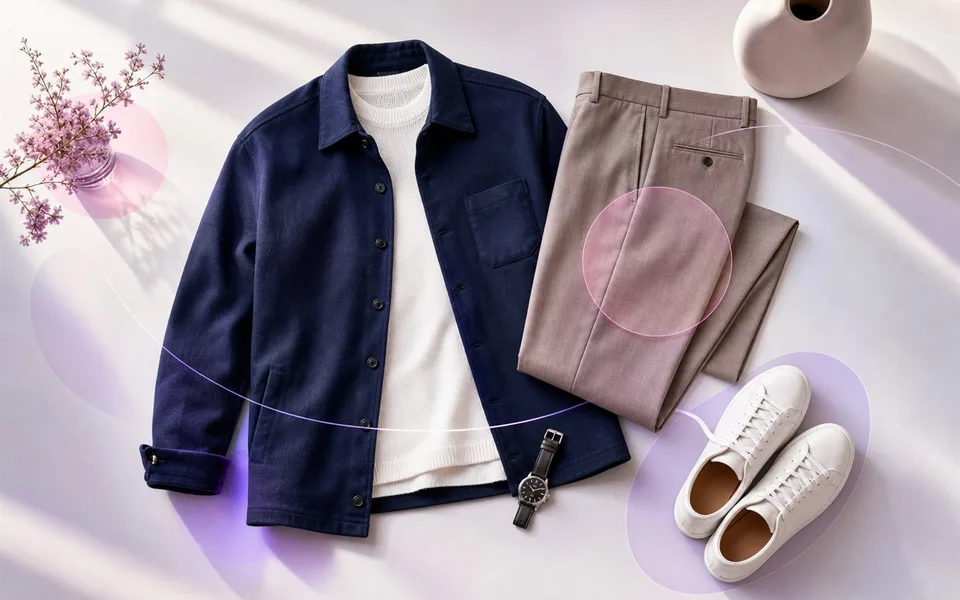
An AI outfit analyzer reviews the visible styling choices in a full-look photo and organizes them into useful feedback. Instead of asking a friend “Does this look okay?” and receiving a vague yes or no, you can examine specific areas: color coordination, fit, proportion, balance, presentation, and whether the outfit suits the occasion.
That does not make the score an objective measure of taste. Personal style is personal, cultural, and contextual. A helpful analyzer should act like a second set of eyes—not a rulebook.
What does an AI outfit analyzer look at?
Color harmony
Color harmony describes how the visible colors relate to one another. An analyzer may notice whether the palette feels cohesive, whether one bright item has support elsewhere in the look, or whether several competing colors make the outfit feel busy. “Matching” does not mean every item must be the same color; contrast can be the strongest part of an outfit when it looks deliberate.
Fit and proportions
Fit is about how the clothing sits and moves, while proportion is about the visual relationship between pieces. A boxy jacket with wide trousers can feel strong and modern, but it may need a shorter hem or a more defined inner layer to avoid losing structure. Likewise, slim pieces can look balanced with one relaxed layer. The goal is not to make every outfit tight—it is to make the silhouette feel intentional.
Outfit balance
Balance includes visual weight, texture, volume, and focal points. Heavy shoes can anchor a wide-leg trouser. A bold patterned shirt may work best when the rest of the look is calm. A statement accessory can finish a simple outfit, while several statement pieces may compete for attention.
Occasion and presentation
The same outfit can be excellent for a creative office and too relaxed for a formal interview. Occasion feedback asks whether the level of polish, comfort, and formality fits your plan. Photo lighting and framing matter too: if key details are hidden, no analyzer can assess them reliably.
How to take a better outfit-analysis photo
- Show the full look from head to shoes. Footwear changes the balance and formality of an outfit.
- Use even light. Stand near a window or in open shade rather than under harsh backlight.
- Keep the outfit visible. Avoid crossed arms, large bags covering the torso, or extreme camera angles.
- Use a simple background when possible. The clothing should be easy to separate from the scene.
- Choose the intended occasion. Advice for a wedding guest should not be the same as advice for a relaxed weekend.
How to turn feedback into a better outfit
Start with the smallest high-impact change. If the palette is coherent but the proportions feel heavy, try a shorter outer layer, a partial tuck, or a more streamlined shoe. If the silhouette works but the look feels unfinished, add one purposeful accessory. If several colors compete, repeat one accent or remove one unrelated shade.
Change one variable at a time. That makes it easier to understand why the outfit improved. It also stops you from replacing a look you liked with something that no longer feels like you.
What an outfit analyzer should not decide
It should not decide your worth, attractiveness, gender expression, or whether your body is “good.” It cannot know every dress code, cultural detail, sensory need, or personal memory attached to a piece. Treat suggestions as options. Keep what helps and ignore what does not.
Where Look Lens fits
Look Lens combines full-look analysis with an AI Stylist, visual ideas, saved looks, and a virtual wardrobe. You can scan an outfit, understand the feedback, then ask a follow-up question or explore combinations using clothes you own. The Android app is available on Google Play; the App Store version is coming soon.