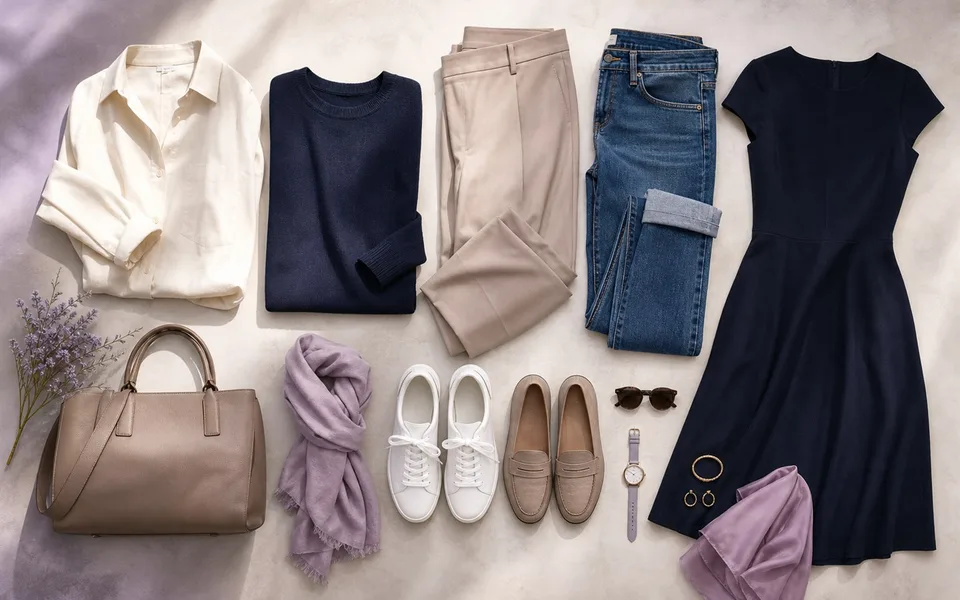
The point of a capsule wardrobe is not minimalism for its own sake. It is to reduce disconnected purchases and make more of your clothes work together. A useful capsule should help you get dressed faster while leaving room for personality.
Start with your real week
Before counting shirts or choosing a color palette, list what you actually dress for. A typical week may include office days, school runs, workouts, dinners, religious or cultural occasions, and relaxed time at home. Give the most wardrobe space to the activities that occur most often.
If eighty percent of your week is casual, a capsule built around formal blazers will look impressive but feel impractical. Start with life, then choose clothing.
Choose a flexible color structure
Pick two or three main neutrals that already appear in your wardrobe. Black, navy, charcoal, cream, white, camel, olive, and denim can all serve as neutral foundations. Then choose two or three accent colors you enjoy wearing.
You do not need a perfectly restricted palette. The goal is simply to make sure most tops can work with most bottoms and most layers can work over both.
The practical capsule checklist
5–8 tops
- Two simple everyday tops
- One polished shirt or blouse
- One textured or knitted top
- One personal statement top
- Optional seasonal layers such as a turtleneck or linen shirt
3–5 bottoms
- One reliable dark trouser or jean
- One lighter or softer neutral bottom
- One relaxed option
- One dressier option
- Optional skirt or short that matches several tops
2–4 layers
- A structured layer such as a blazer or overshirt
- A relaxed knit, cardigan, or lightweight jacket
- A weather layer suitable for your climate
- One layer that adds color or texture
3–4 pairs of shoes
- An everyday walking shoe
- A polished flat, loafer, boot, or low heel
- A weather-appropriate option
- An activity-specific shoe if your week requires it
Accessories with a job
Choose bags, belts, jewelry, scarves, and watches that either repeat your palette, add a purposeful accent, or solve a practical need. Accessories are often the easiest way to make repeated clothing combinations feel different.
Audit before you buy
Lay out or photograph the pieces you wear most. Notice repeated shapes, colors, and fabrics. Then identify genuine gaps. Perhaps you have five good bottoms but no layer that works with them. Perhaps your tops are strong but every shoe changes the look in the wrong direction.
A digital wardrobe can make this easier because you can view categories side by side. Look Lens lets you organize clothing and ask for outfit ideas using pieces you already own.
Keep the capsule personal
A successful capsule does not need to look quiet. If you love color, use a repeated color family. If you love streetwear, build around strong trousers, sneakers, tees, and outerwear. If you dress modestly, focus on compatible lengths, layers, and fabrics. If sensory comfort matters, make fabric and ease part of the checklist.
Maintain it without constant shopping
- Save combinations that worked.
- Repair useful pieces before replacing them.
- Review seasonal gaps at the start of a season, not every week.
- Remove items only when they no longer fit your life, comfort, or style.
- Use accessories and styling changes to refresh repeated outfits.
Ready to see more combinations from the clothes you own? Explore the Look Lens virtual wardrobe and AI Stylist, available on Google Play.