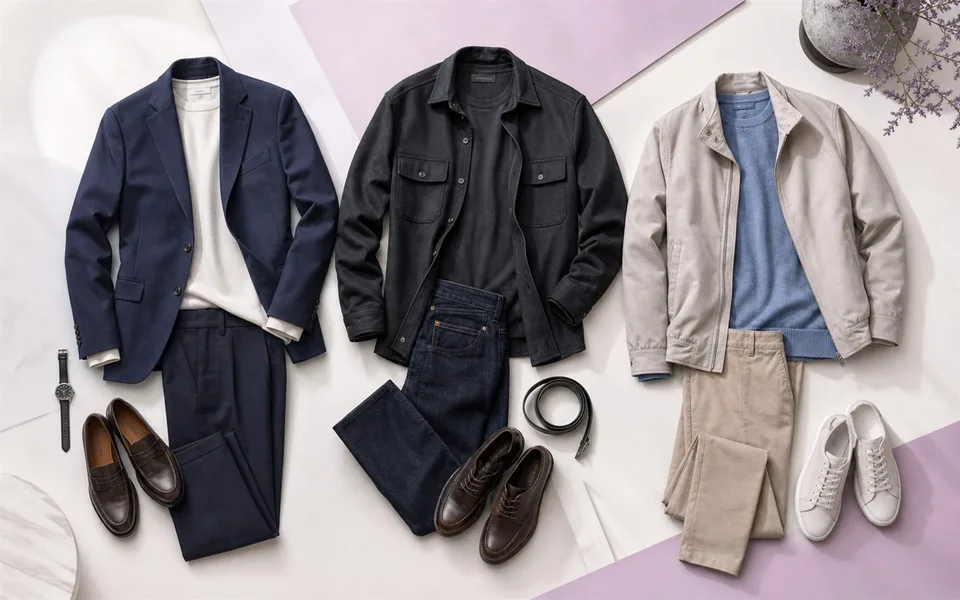
“Smart casual” creates confusion because it changes with the setting. At a creative office it may mean dark jeans and a refined knit. At a dinner it may mean tailored trousers with a simple top. The useful question is not “Is this item smart casual?” but “Does the whole outfit feel polished enough for this situation?”
The one-up, one-down principle
Pair one structured or refined piece with one relaxed piece. A blazer can elevate a T-shirt. Clean sneakers can relax tailored trousers. A silky skirt can balance a knit. An overshirt can make a plain shirt and chinos feel considered without becoming formal.
This contrast is what keeps smart casual from looking like a full suit or an ordinary weekend outfit.
Smart casual outfit ideas for work
- Tailored trouser + knit top + loafer: comfortable, polished, and easy to layer.
- Dark straight jean + oxford shirt + blazer: useful where denim is accepted but presentation still matters.
- Midi skirt + tucked tee + structured cardigan: clean lines with a relaxed base.
- Chino + polo or fine knit + leather sneaker: a simple formula that avoids feeling overdressed.
For meetings, increase structure through the shoe, outer layer, or fabric. For a normal desk day, keep the same color palette and replace one formal piece with a softer alternative.
Smart casual dinner outfits
Dinner outfits can use richer texture and stronger contrast. Try dark trousers with a satin or textured top, a monochromatic outfit with jewelry, or a relaxed shirt with an elegant shoe. For men, an open-collar shirt, dark trouser, and loafer works across many settings. For women, a knit dress with a structured bag or wide-leg trouser with a fitted top can feel equally balanced.
If the venue is unfamiliar, choose a darker palette and one refined accessory. It is easier to relax a polished outfit by removing a jacket than to make an overly casual look formal at the last minute.
Weekend smart casual
The weekend version should still feel comfortable. Use clean denim, elevated basics, overshirts, simple dresses, minimal sneakers, boots, or flats. The difference between casual and smart casual is often maintenance: clean shoes, intentional proportions, and one layer or accessory that completes the look.
Smart casual for travel
Choose pieces that resist wrinkles and combine in several ways: dark relaxed trousers, a comfortable base layer, one overshirt or blazer, and a clean walking shoe. Keep the palette connected so every top works with every bottom. A scarf, watch, earring, or compact bag can shift the same base outfit from transit to dinner.
Common smart casual mistakes
- Combining too many formal items, which makes the look feel corporate rather than relaxed.
- Using athletic shoes that are visibly worn or technically designed for training.
- Ignoring fit because the pieces are “basic.” Simple outfits depend heavily on proportion.
- Adding every accessory at once. One or two clear finishing details are usually stronger.
- Following a formula that does not match your comfort, culture, climate, or workplace.
Adapt the formula to your style
Minimalists can focus on tonal colors and clean lines. Streetwear lovers can use refined trousers with a strong sneaker and cropped jacket. Romantic style can combine a fluid skirt or dress with a structured knit. Modest styling can use longer layers, coordinated sets, and texture to create interest without relying on exposure.
If you want feedback on a specific outfit, Look Lens can analyze the full look and suggest focused improvements. Explore all Look Lens features or download it from Google Play.