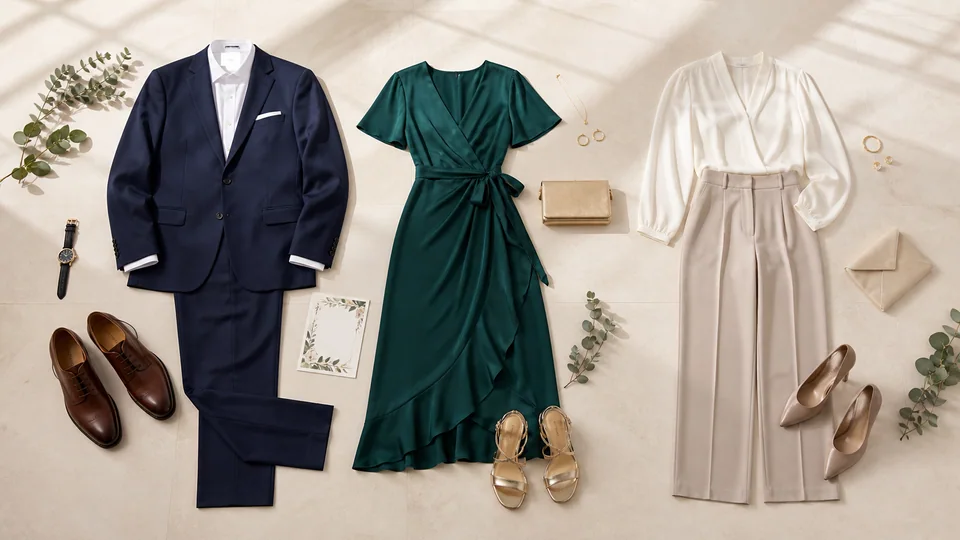
Start with the invitation, not the shopping tab
Getting dressed for a wedding is easier when you treat the invitation as a brief, not a test. Read every clue before deciding that you need a new outfit: the stated dress code, ceremony time, venue, location, and whether the celebration moves outdoors. A daytime garden ceremony and an evening ballroom reception can both say ‘formal,’ yet the fabric weight, shoe choice, and layer you need may be completely different.
If the invitation includes a wedding website, look there before guessing. Couples sometimes name a color palette, explain that a ceremony is on grass or sand, or ask guests to dress with a religious or cultural setting in mind. Emily Post also points to the invitation, time of day, service, and local custom as useful signals. That is a good order of priority: follow a clear request first, then make an outfit that lets you be present and comfortable.
Build from pieces you already trust. A well-fitting dark suit, tailored trousers with a refined top, a jumpsuit in a dressier fabric, or a midi dress with a simple layer can all be excellent starting points. The goal is not to imitate every other guest. It is to look considered while leaving the focus where it belongs: on the couple and the occasion.
How to decode the most common wedding dress codes
Black tie calls for the most evening-leaning version of your wardrobe. A traditional tuxedo with formal shirt and bow tie is the conventional reference point; a long evening dress, an elegant dressy cocktail look, or a formal separates combination can work on the other side of the dress spectrum. The finish matters: choose polished shoes, an intentional bag, and fabrics that hold their shape. If the invitation says black tie optional, a tuxedo or long dress is welcome, but a dark, sharply tailored suit or a refined cocktail-length look is usually a practical alternative.
Formal or cocktail leaves more room to work with. For cocktail, try a midi or knee-length dress, a clean jumpsuit, or tailored separates with a special texture; a suit or blazer with dress trousers and a neat shirt also fits comfortably. For formal, move the line a little more polished rather than automatically more ornate: darker colors, a longer hem, a tailored jacket, or elevated footwear can make an outfit feel right. Avoid treating the labels as universal measurements. The couple’s setting and stated preferences should settle close calls.
Semiformal, dressy casual, or casual does not mean careless. A breezy midi, coordinated skirt or trousers and blouse, polo or button-down with pressed trousers, or a relaxed suit can meet the moment without looking stiff. Clean, well-kept shoes usually make the difference. Denim, sneakers, and T-shirts may be appropriate only if the hosts clearly signal a genuinely relaxed celebration. When the wording is broad, it is safer to be one thoughtful step more polished than the everyday version of your outfit.
Use the venue and weather to make the outfit workable
Dress code determines the level of formality; the venue determines how you make that level practical. On grass, a block heel, dressy flat, loafer, or stable shoe is more useful than a narrow heel that sinks. For a beach or waterside ceremony, a breathable fabric and a shoe you can carry or clean easily can prevent the outfit from becoming a distraction. A city venue may call for a layer you can take off inside, while a barn, terrace, or garden often asks for both polish and a real weather plan.
Think in complete outfits before you leave home. Try on the clothing with the shoes, bag, outer layer, and any shapewear or hosiery you plan to use. Sit down, take several steps, raise your arms, and check whether the hem, neckline, and waistband still feel easy. Pack a small backup: blister patches, a compact umbrella when rain is likely, or a light wrap for air-conditioned rooms. These details are not glamorous, but they protect the parts of the day you actually want to remember.
Color deserves the same contextual approach. If the couple has shared a requested palette, honor it. If they have not, choose a color you enjoy that photographs well in the expected light and coordinates with your layer. Very white, ivory, or bridal-looking looks can be distracting in many settings, so a colored piece or a clearly contrasting print is a considerate default unless the couple specifically says otherwise. For more ideas on combining shades you already own, see our guide to matching clothing colors.
Three reliable outfit formulas when the details are fuzzy
The tailored formula: start with a suit or structured blazer and trousers in navy, charcoal, espresso, or another deep neutral. Add a crisp shirt, fine knit, silk-like blouse, or simple top with a clean neckline; finish with leather shoes, loafers, or a refined flat. This formula adapts easily: add a tie and dressier accessories for formal, or soften it with an open collar and lighter fabric for cocktail or dressy casual.
The one-piece formula: choose a dress or jumpsuit that feels secure through the ceremony and reception. A midi length, considered sleeve or strap treatment, and an easy-to-walk-in shoe cover many cocktail and daytime events. For a more formal invitation, use a longer hem or richer fabric and keep accessories restrained. A layer that complements rather than hides the outfit makes temperature changes much easier.
The elevated separates formula: pair tailored trousers or a full skirt with a blouse, refined knit, or matching jacket. The pieces should look deliberate together, not like rushed office clothes. One point of contrast—a satin texture, sculptural earring, pocket square, or polished belt—adds occasion without making movement difficult. It is especially useful when you want to rewear each item later; the same wardrobe-minded thinking appears in our outfit-building guide.
A five-minute check before you go
Ask five quiet questions: Does this follow the couple’s instructions? Does it match the setting and temperature? Can I stand, sit, walk, and dance in it? Are the shoes genuinely workable for the venue? Does the outfit feel like me without competing for attention? If the answer is yes, stop adjusting. The most convincing wedding guest outfit is usually the one that looks intentional, feels comfortable, and lets you celebrate generously.
Frequently asked questions
What should I wear if a wedding invitation has no dress code?
Use the venue, ceremony time, and wedding website as clues. A polished midi dress, tailored separates, or a suit with clean shoes is a dependable middle ground when the setting is unclear.
Can I wear black to a wedding?
Often, yes. A black outfit can be elegant for an evening or formal celebration. Consider the couple’s cultural context, any requested palette, the season, and whether a lighter accessory would better suit a daytime setting.
Do I need to buy a new wedding guest outfit?
Usually not. Rework a comfortable dress, suit, jumpsuit, or tailored separates with polished shoes, a fresh layer, or a simple accessory. Buy only when your current options do not meet the stated dress code or practical needs.
What shoes should I wear to an outdoor wedding?
Choose a stable option that suits the ground, such as block heels, refined flats, loafers, or dressy sandals. Test them with your complete outfit and bring a backup if you expect a long walk or uneven terrain.