When people say they have “nothing to wear,” the problem is often not the number of clothes. It is that the wardrobe does not present clear combinations. Favorite pieces may be separated across categories, useful basics may be overlooked, and a few difficult items may take up more attention than the clothes that actually work.
The solution is to stop searching for a completely new outfit every morning. Instead, use a repeatable outfit-building system. The goal is not to dress the same way every day. It is to reduce the number of decisions between opening the wardrobe and finding a combination that feels right for your plans.
The five-part outfit formula
Build each look in five small decisions: anchor, base, layer, shoe, finish. You do not need every category in every outfit, but the sequence gives you a reliable place to start.
- Anchor: the piece you want or need to wear—a trouser, dress, jacket, shoe, or color.
- Base: the simple item that supports it, such as a T-shirt, shirt, knit, skirt, or jean.
- Layer: an overshirt, cardigan, blazer, coat, vest, or scarf that changes structure and temperature.
- Shoe: the item that decides how relaxed, polished, practical, or formal the outfit feels.
- Finish: one purposeful detail such as a belt, bag, watch, jewelry, or repeated accent color.
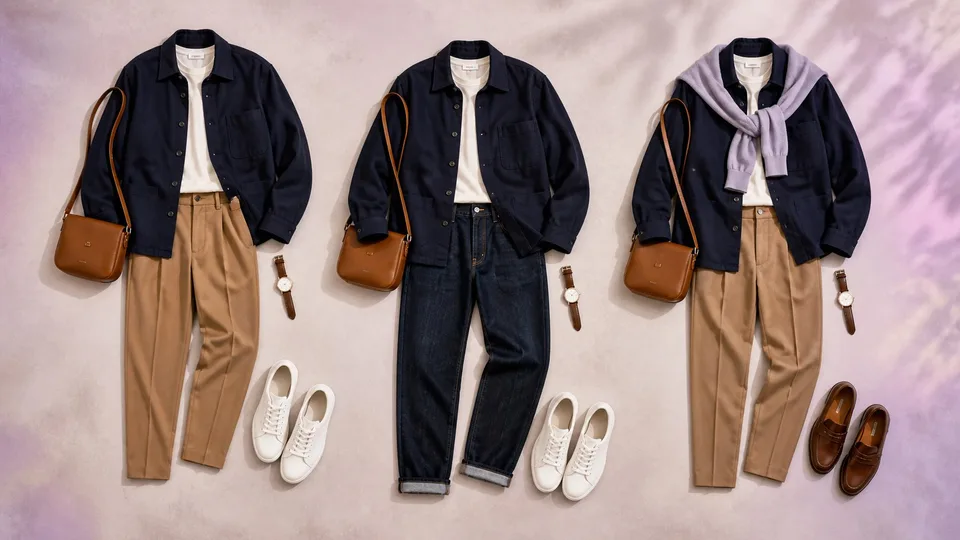
For example, start with camel trousers as the anchor. Add an ivory T-shirt, a navy overshirt, white sneakers, and a tan bag. Change only the trousers to dark jeans and the same pieces become a more relaxed outfit. Keep the trousers but replace the sneakers with loafers and add a watch; now the formula feels more polished.
Start with a real wardrobe inventory
You do not need to empty every drawer onto the floor. Begin with the pieces you wore in the last two weeks and the items you reach for when time is short. These are your working wardrobe, even if they are not the most exciting pieces you own.
Group them by function rather than only by category:
- Reliable bases: comfortable tops, trousers, jeans, skirts, or dresses that fit your normal day.
- Structure pieces: layers that sharpen or reshape a simple base.
- Comfort pieces: shoes and fabrics you can wear for the actual length of your day.
- Personality pieces: colors, textures, prints, jewelry, or silhouettes that make an outfit feel like yours.
This method reveals whether your wardrobe has balance. Ten statement tops cannot solve the absence of a dependable bottom. Five pairs of similar sneakers cannot replace the one comfortable shoe needed for work or dinner.
Create a small outfit matrix
Choose three tops, three bottoms, two layers, and two pairs of shoes from your working wardrobe. You now have a practical test set. Try each top with each bottom, then use the layers and shoes to adjust the result. You do not need to love every combination; you are looking for patterns.
Photograph the combinations that work. A simple image gallery is faster to scan than a written list and helps you remember proportions, sleeve choices, tucks, and shoe pairings. If a combination is close but not complete, note the smallest change it needs.
Color makes the matrix easier. A neutral foundation—navy, charcoal, cream, camel, brown, black, white, or denim—lets one accent color appear in several outfits. If color combinations are the difficult part, use the repeatable methods in our guide to matching clothing colors.
Let the occasion choose the final 20 percent
Most outfits can share an 80 percent base. The final 20 percent decides where the outfit belongs. Dark jeans, a clean T-shirt, and an overshirt can move between errands, travel, and a casual dinner when the shoe, bag, and level of structure change.
- For work: add cleaner lines, a structured layer, and a refined shoe.
- For weekends: keep the same palette but choose softer fabrics and practical footwear.
- For dinner: use stronger contrast, richer texture, or one intentional accessory.
- For travel: prioritize layers, repeatable colors, wrinkle tolerance, and a shoe you can walk in.
If your dress code sits between formal and casual, the smart casual outfit formulas show how one polished piece and one relaxed piece can work together.
Find wardrobe gaps without shopping blindly
A wardrobe gap is not something missing from a generic checklist. It is a missing function that repeatedly blocks real outfits. “I need a new top” is too broad. “I need a breathable light layer that works with my navy, cream, and denim bases” is a useful requirement.
Wait until the same gap appears in at least three combinations. Then ask four questions:
- Will the new item work with at least three pieces I already own?
- Does it suit the climate, care routine, and comfort of my real life?
- Is it meaningfully different from what I already have?
- Can I name at least three situations in which I would wear it?
If the answer is no, the purchase may create another isolated item instead of making the wardrobe more connected. For a broader planning framework, use our practical capsule wardrobe checklist.
Common reasons outfits feel disconnected
- Every piece is competing: use one focal point and let the rest support it.
- The proportions repeat awkwardly: vary length or volume—structured with fluid, fitted with relaxed, cropped with high rise.
- The shoe belongs to a different level of formality: let footwear deliberately dress the outfit up or down.
- The colors do not repeat: echo one shade in a shoe, belt, bag, print, or layer.
- The outfit ignores the actual day: comfort, weather, walking, culture, and dress code are part of good styling.
Use a visual wardrobe, not just memory
Memory tends to favor the newest or most visible items. A visual wardrobe lets you compare pieces without pulling everything out, save combinations that worked, and notice which items never connect to the rest.
In Look Lens, you can organize wardrobe pieces, scan a complete outfit, and ask the AI Stylist for combinations or missing functions using the context you choose to provide. Treat the suggestions as a starting point, then adjust for your comfort, identity, culture, body, and day. The Android app is available on Google Play.
Frequently asked questions
How do I make more outfits with the clothes I already own?
Start with one anchor piece, add a simple base, choose a layer that changes the structure, then finish with shoes and one purposeful accessory. Repeat the formula while changing only one or two pieces at a time.
What should I do when I feel like I have nothing to wear?
Choose the occasion and comfort level first, then build from a reliable bottom or one favorite piece. Limiting the decision to a color family and outfit formula makes the wardrobe easier to use.
How can I identify wardrobe gaps without overbuying?
Track the outfits you repeatedly try to make and note the exact missing function, such as a light layer or comfortable smart shoe. Buy only when one item would complete several real outfits.