Interview clothing can feel unusually difficult because the outfit has two jobs. It should fit the culture of the workplace, but it should also help you feel composed in an unfamiliar situation. Dressing too casually may suggest that you missed the context; dressing far more formally than everyone else can make you feel disconnected from the room.
A useful target is one step more polished than the normal working dress code. That does not always mean a suit. It can mean a clean knit with tailored trousers for a creative studio, a structured layer for a business-casual office, or coordinated tailoring for a conservative professional environment.
Read the workplace before choosing the outfit
Start with evidence rather than stereotypes about an industry. Look at the company’s careers page, team photos, recruitment videos, public events, and the wording of the invitation. Notice whether employees wear matching suits, separate tailoring, smart knitwear, uniforms, practical footwear, or casual layers.
Then account for the role. A client-facing finance position and an internal design position at the same company may have different expectations. If you are still uncertain, asking the recruiter about the dress code is professional preparation—not a failure of style.
Three reliable interview outfit formulas
1. Relaxed professional
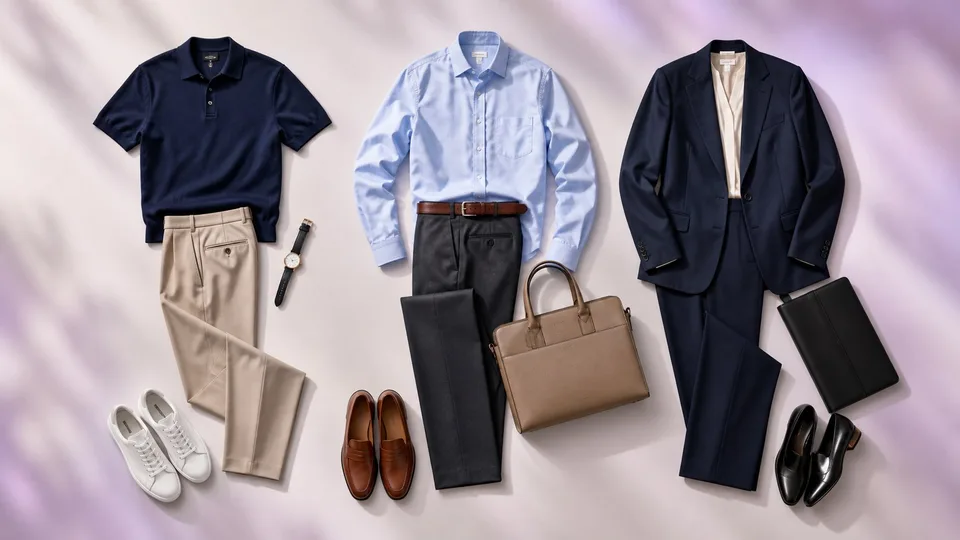
For a casual office, startup, retail conversation, or creative environment, begin with a refined top and a clean trouser. Try a knit polo, fine-gauge sweater, simple blouse, or crisp crew-neck top with tailored chinos or straight trousers. Add minimalist leather sneakers, loafers, flats, or another clean closed shoe.
The difference between casual and careless is condition. Avoid stretched collars, obvious creasing, distressed denim, worn soles, and pieces that need constant adjustment. A watch, simple jewelry, or an uncluttered bag can add intention without making the outfit formal.
2. Business casual
A button-down shirt, blouse, knit shell, or neat fine-gauge sweater works with tailored trousers, a midi skirt, or a restrained dress. Add a blazer, cardigan, or structured overshirt if it improves the silhouette. Finish with loafers, low heels, polished boots, flats, or clean leather shoes.
Business casual should communicate control rather than complexity. Choose two or three coordinated colors and let the strongest line come from the layer or trouser. If you need more examples, our smart casual outfit guide explains how to balance one polished piece with one relaxed piece.
3. Formal professional
For law, finance, senior leadership, government, or another conservative setting, coordinated tailoring is the most dependable choice. A navy, charcoal, or deep neutral suit can be worn with a light shirt, blouse, or fine knit. Select polished shoes and a structured portfolio or bag that holds documents without becoming overfilled.
Fit matters more than an expensive label. Check that the jacket closes without pulling, trouser and sleeve lengths look intentional, and you can sit comfortably. If a full suit does not suit you, use a blazer and trousers in closely related tones to create a similarly controlled visual line.
Choose colors that support the conversation
Navy, charcoal, medium blue, cream, camel, brown, black, and white are common interview colors because they combine easily. They are not mandatory. Muted green, burgundy, dusty rose, or another restrained accent can make an outfit feel more personal.
Use a simple hierarchy: one dominant neutral, one supporting neutral, and—if you want it—one accent. Repeat the accent once through a small accessory or pattern. Avoid forcing every item to match exactly; coordination usually looks more natural than a perfect color set. Our guide to matching clothing colors offers a reusable method.
Prioritize fit, movement, and comfort
An interview may involve commuting, waiting, walking through an office, sitting under bright lighting, or meeting several people. Test the full outfit in those positions. Sit down, reach forward, carry your bag, and walk in the shoes for at least ten minutes.
- Choose waistbands and necklines you will not repeatedly adjust.
- Check that fabrics remain reasonably neat after sitting.
- Wear shoes you can walk in at your normal pace.
- Keep pockets and bags organized so documents are easy to reach.
- Prepare for the temperature with one removable layer.
Comfort is not separate from confidence. When the outfit behaves predictably, your attention stays with the interviewer.
What to wear for a video interview
A video interview changes what the viewer sees, but it does not remove the need for a complete outfit. Wear the full combination so you are prepared to stand or move. Position the camera at eye level and preview the frame before the call.
Choose a top that contrasts with the background. Very small stripes and dense patterns can shimmer on camera, while pure white may appear too bright under direct light. A medium solid color or calm texture usually reads clearly. Keep accessories quiet near the microphone and make sure your face—not a window behind you—is the brightest part of the frame.
Common interview outfit mistakes
- Buying an entirely unfamiliar outfit: new pieces may fit or move differently than expected. Test them before the day.
- Ignoring the journey: plan for weather, walking, public transport, security checks, and coat storage.
- Using fragrance as part of the outfit: shared spaces and sensitivities make little or no fragrance the considerate choice.
- Letting accessories compete: choose pieces that support the outfit instead of becoming the first topic in the room.
- Confusing formality with discomfort: a polished outfit should still let you sit, breathe, walk, and think normally.
The night-before checklist
- Confirm the address, format, weather, and expected dress code.
- Try on the complete outfit, including socks, underlayers, coat, bag, and shoes.
- Steam or press what needs attention and check for lint, loose threads, and marks.
- Pack documents, identification, water, charger, and any role-specific materials.
- Photograph the outfit so you can reassemble it quickly in the morning.
You usually do not need a new wardrobe. Start with the most reliable pieces you already own and identify the smallest missing function. Our guide to building outfits from clothes you own can help you make that decision without unnecessary shopping.
Use a visual check before the interview
A photo often reveals proportion, creasing, color balance, or shoe formality more clearly than a quick mirror check. Take one full-look photo in neutral light and ask: does the outfit suit the workplace, does it fit cleanly, is the color hierarchy calm, and can I move comfortably?
Look Lens can analyze a complete outfit, organize wardrobe pieces, and help you explore alternatives before the interview. Treat suggestions as options and keep the final decision grounded in your comfort, culture, identity, and knowledge of the role. The Android app is available on Google Play.
Frequently asked questions
What is the safest color to wear to a job interview?
Navy, charcoal, medium blue, cream, camel, and other controlled neutrals are dependable because they combine easily and keep attention on the conversation. A restrained accent color can add personality.
Can I wear jeans to a job interview?
Clean, dark, non-distressed jeans can work for a genuinely casual workplace when paired with a polished top, intentional layer, and clean shoes. When the dress code is uncertain, tailored trousers are the safer choice.
What should I wear for a video interview?
Choose a top with clear contrast from the background, a neat neckline, and minimal visual noise. Dress the complete outfit so you remain prepared if you need to stand or move during the call.